

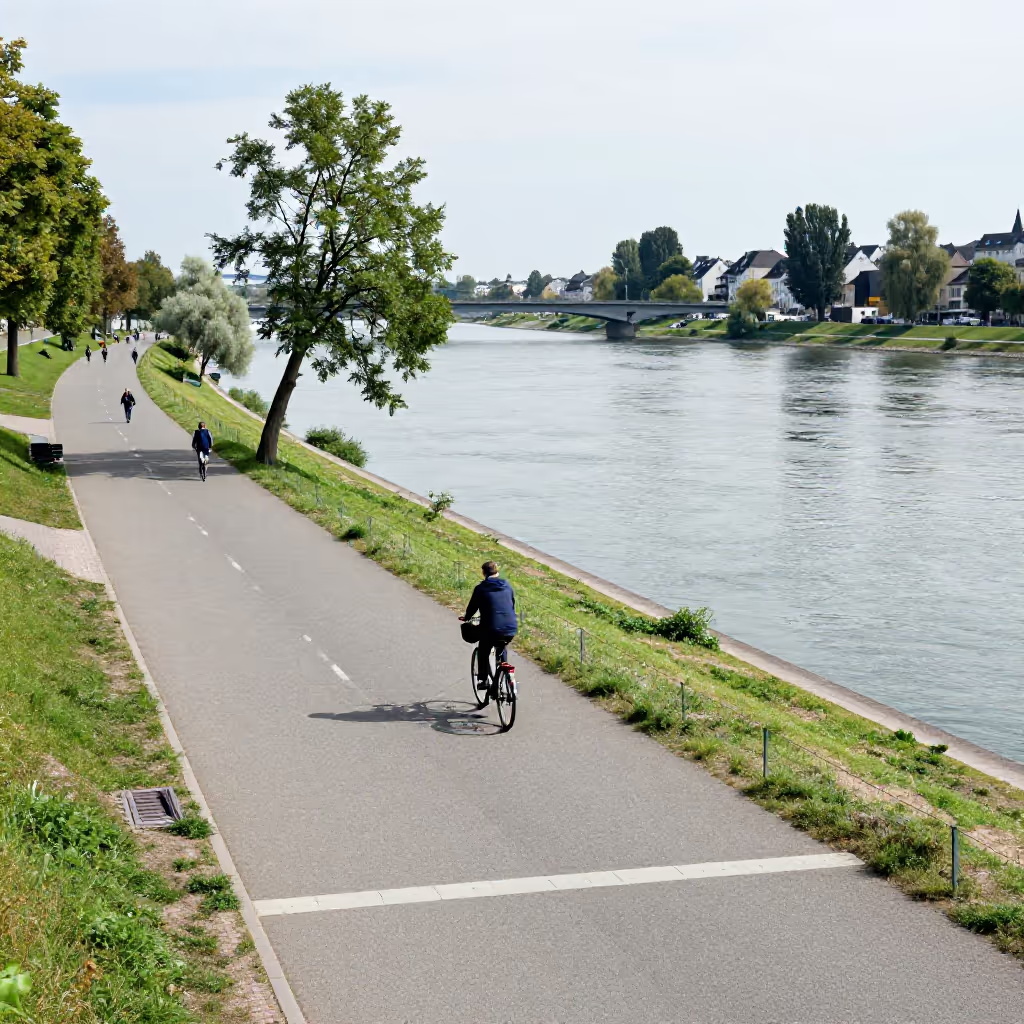
The riverbank area, that is, the land directly bordering the Rhine River.
example
Im Sommer sitzen viele Menschen am Rheinufer in Köln und genießen die Sonne.
In summer, many people sit on the Rhine riverbank in Cologne and enjoy the sun.
Usage tips
Word composition
The word consists of the name of the river 'Rhein' (Rhine) and the noun 'Ufer' (bank/shore). So it literally means the bank of the Rhine.
EXAMPLE
Die Promenade am Rheinufer ist bei Touristen sehr beliebt.
The promenade along the Rhine riverbank is very popular with tourists.
Important prepositions
Pay attention to the difference between 'am Rheinufer' (on/at the Rhine riverbank, dative) for a location and 'ans Rheinufer' (to the Rhine riverbank, accusative) for a direction.
EXAMPLE
Wir treffen uns am Rheinufer.
We are meeting at the Rhine riverbank.
Typical activities
The Rhine riverbank is often associated with leisure activities. Typical verbs are 'spazieren gehen' (to go for a walk), 'sitzen' (to sit), 'flanieren' (to stroll), or 'grillen' (to barbecue).
EXAMPLE
An warmen Abenden gehen viele Leute am Rheinufer spazieren.
On warm evenings, many people go for a walk along the Rhine riverbank.
Compare with
near_synonym · confusable
Rheinufer vs Ufer
bank / shore
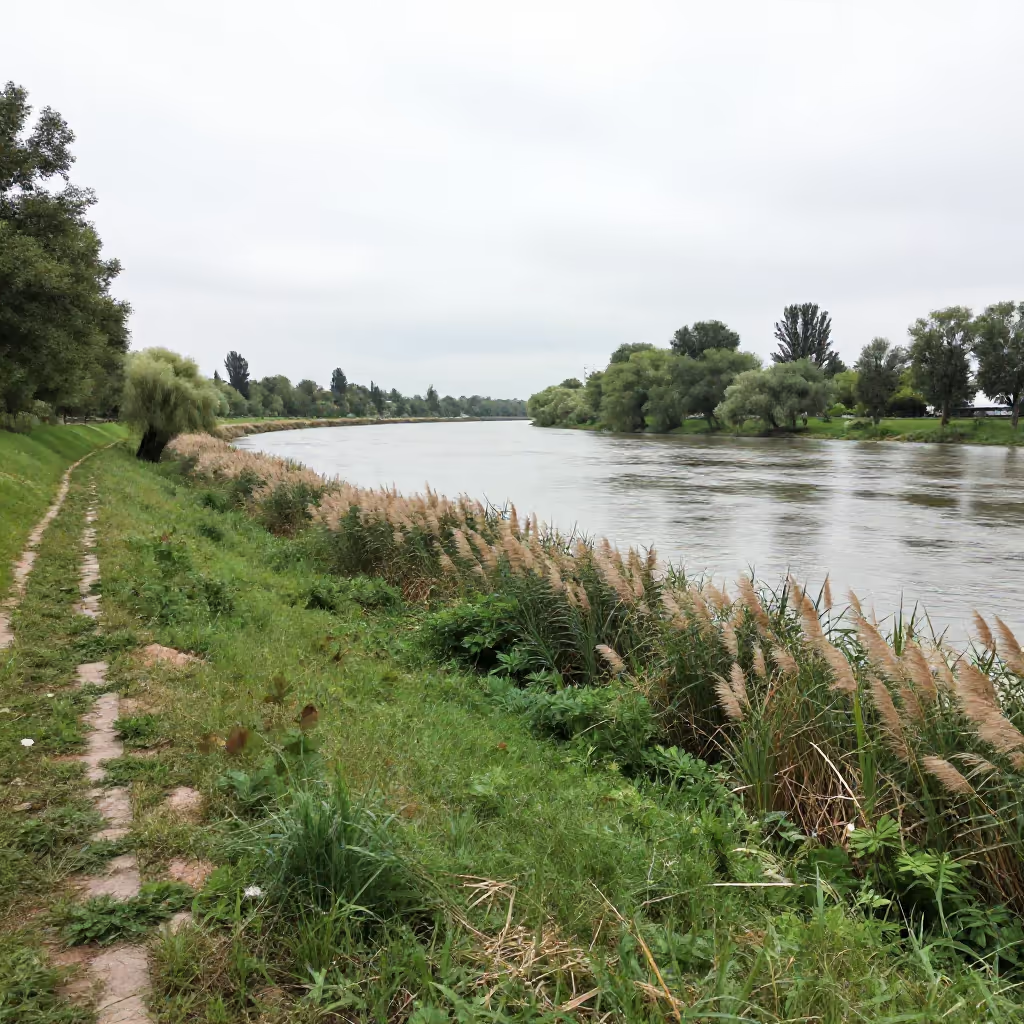
'Ufer' and 'Rheinufer' both refer to land directly by a body of water. 'Ufer' is general and can be along a river, lake, or the sea. 'Rheinufer' is much more specific: it is only the bank of the Rhine. The words can be confused because every 'Rheinufer' is also an 'Ufer'. But not every 'Ufer' is a 'Rheinufer'. If the exact river is important, you say 'Rheinufer'. If the body of water does not matter or is already known, 'Ufer' is enough.
Rheinufer
Am Rheinufer in Köln machen viele Menschen eine Pause in der Sonne.
On the Rhine riverbank in Cologne, many people take a break in the sun.
Ufer
Nach dem Spaziergang setzten wir uns ans Ufer und sahen auf den See.
After the walk, we sat down on the shore and looked out over the lake.