


der Rheinländer
Rhinelander
A resident of, or a person from, the Rhineland region.
EXAMPLE
Als gebürtiger Rheinländer ist er für seine fröhliche und offene Art bekannt.
As a native Rhinelander, he is known for his cheerful and open manner.
Rhinelander
Loading your saved state.
Rhinelander
A resident of, or a person from, the Rhineland region.
Als gebürtiger Rheinländer ist er für seine fröhliche und offene Art bekannt.
As a native Rhinelander, he is known for his cheerful and open manner.
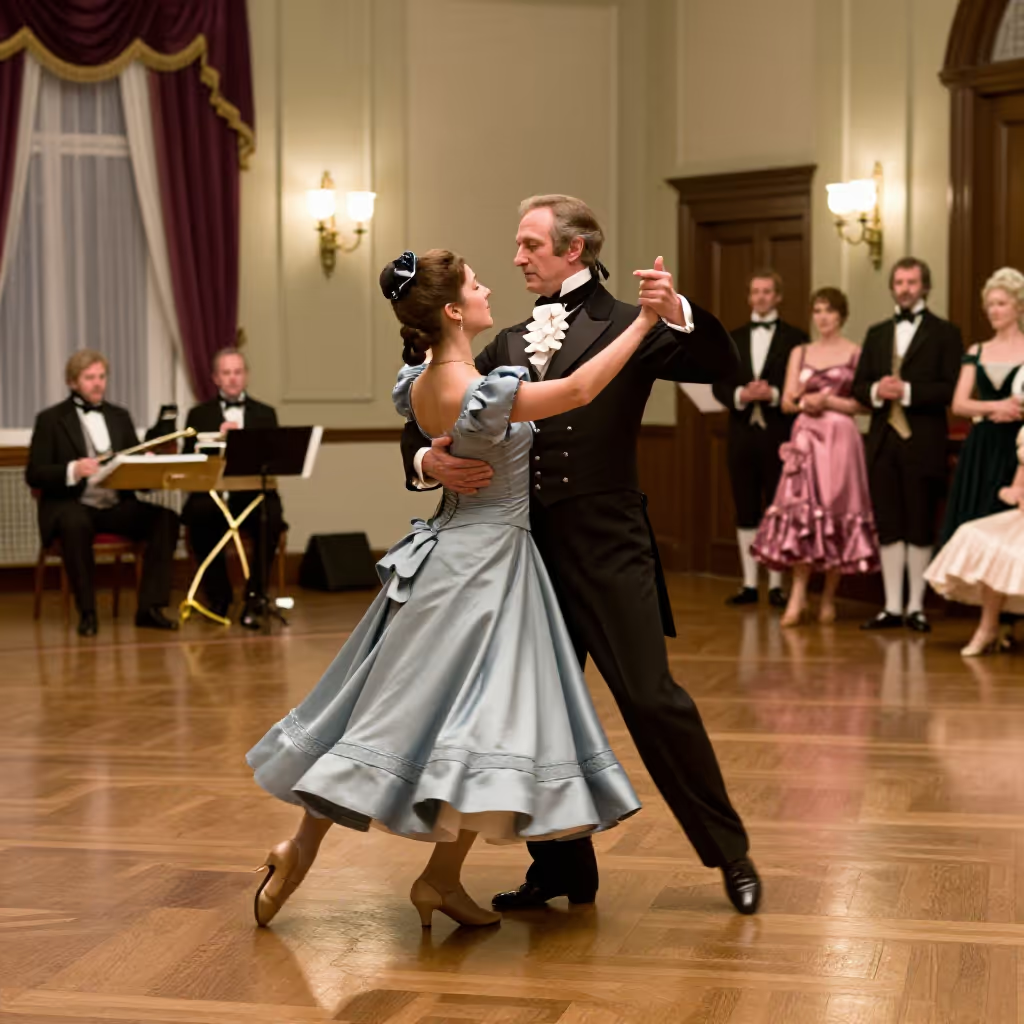
Rhinelander dance
A partner dance related to the polka in 2/4 time that was popular in the 19th century.
Auf dem Dorffest tanzten die älteren Paare noch einen traditionellen Rheinländer.
At the village festival, the older couples still danced a traditional Rhinelander dance.

Rhinelander chicken
A specific breed of domestic chicken that originally comes from the Rhineland.
Der Züchter ist stolz auf seine seltenen Hühnerrassen, darunter auch der Rheinländer.
The breeder is proud of his rare chicken breeds, including the Rhinelander.
The word is derived from the region 'Rheinland' (Rhineland). The ending '-er' is often used in German to refer to male residents of a city or region.
Ein Kölner ist auch ein Rheinländer.
Someone from Cologne is also a Rhinelander.
The meaning becomes clear from the context. If it is about people, it means the resident. If it is about music and celebrations, it means the dance. In the context of animals and agriculture, it means the chicken breed.
Mein Nachbar ist ein echter Rheinländer und feiert gerne Karneval.
My neighbor is a real Rhinelander and likes celebrating Carnival.
A stereotype is often associated with 'Rheinländer' (Rhinelander): a cheerful, sociable, and open person. This is especially connected with the tradition of Carnival in the Rhineland.
Man sagt den Rheinländern nach, dass sie das Leben zu genießen wissen.
People say that Rhinelanders know how to enjoy life.
When referring to the dance, the fixed combination is 'einen Rheinländer tanzen' (to dance a Rhinelander dance). The verb 'tanzen' (to dance) is the key clue for this meaning.
Meine Großeltern können immer noch perfekt einen Rheinländer tanzen.
My grandparents can still dance a Rhinelander dance perfectly.
Scottish
Schottisch and der Rheinländer can both occur in the context of a dance, but they have different functions. Schottisch is an adjective for Scotland or its culture, whereas der Rheinländer is a noun referring to a specific partner dance. Use them to describe the origin or type of a dance, or to name the dance itself.
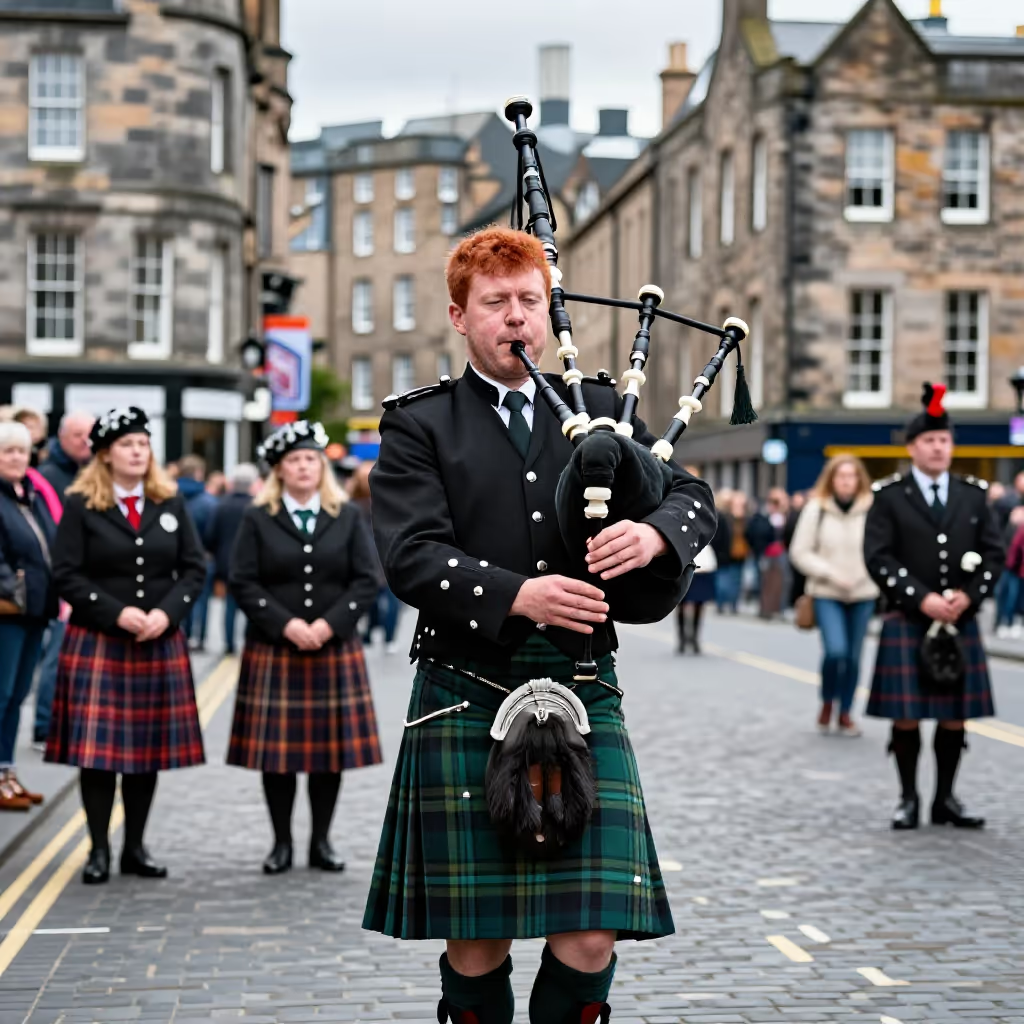
Bei der Feier spielte die Kapelle einen Rheinländer zum Tanzen.
At the celebration, the band played a Rhinelander for dancing.
Bei der Feier tanzten wir einen schottischen Paartanz.
At the celebration, we danced a Scottish partner dance.