

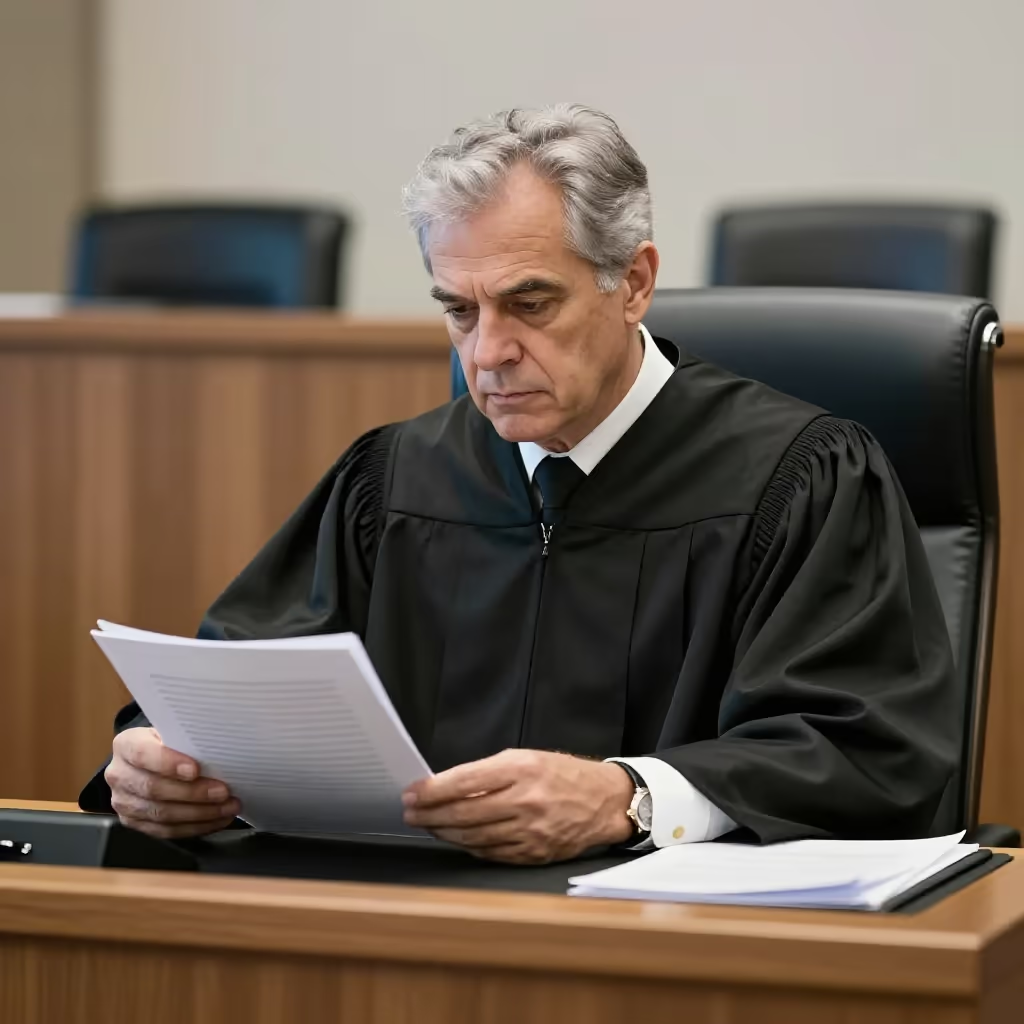
der Richter
judge
A person who works at a court and whose task is to make judgments in legal disputes.
EXAMPLE
Der Richter verkündete das Urteil am Ende der Verhandlung.
The judge announced the verdict at the end of the trial.
judge
Loading your saved state.
judge
A person who works at a court and whose task is to make judgments in legal disputes.
Der Richter verkündete das Urteil am Ende der Verhandlung.
The judge announced the verdict at the end of the trial.
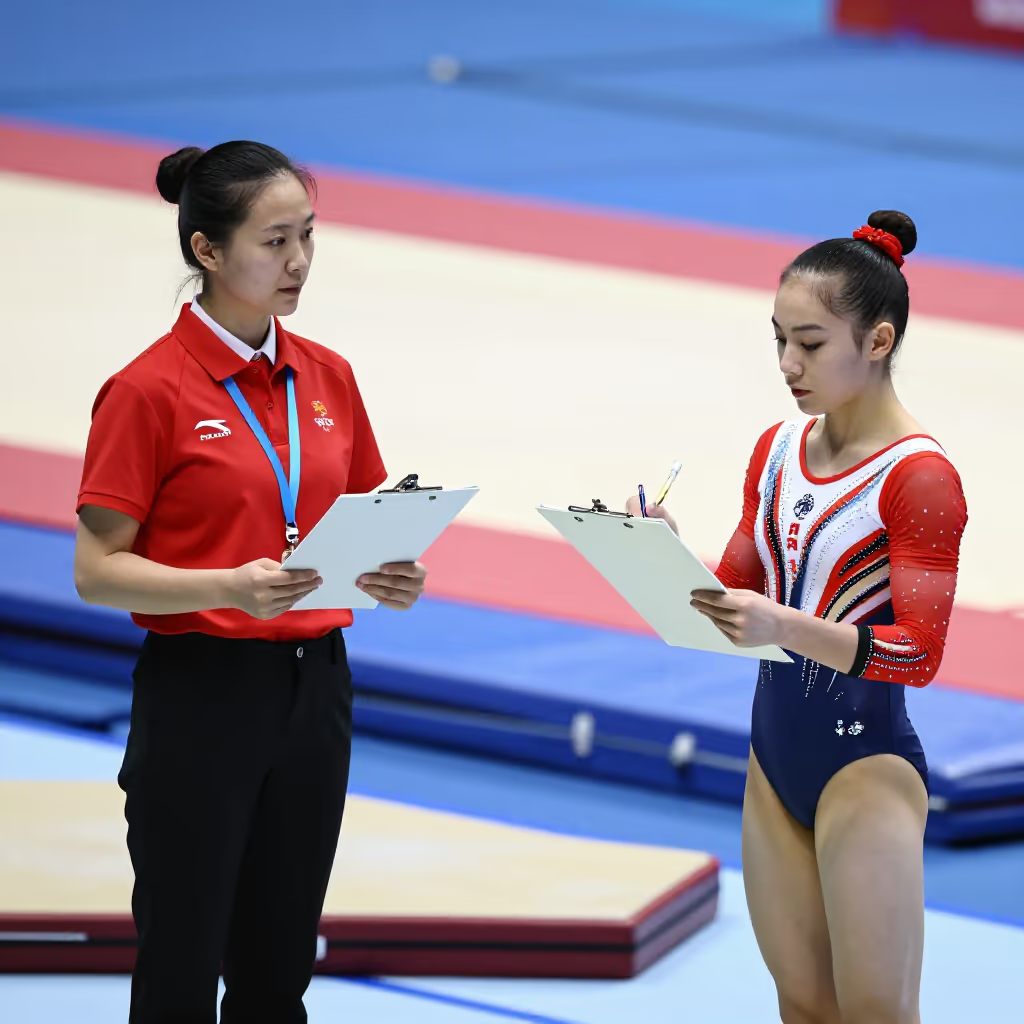
judge
A person who evaluates performances in a competition, especially in sports, and decides the ranking.
Die Richter beim Turmspringen vergaben für den Sprung die Höchstnote.
The judges in the diving competition awarded the highest score for the dive.
The noun 'der Richter' (judge) derives directly from the verb 'richten' (to judge). In this context, 'richten' means something like 'to pass judgment' or 'to evaluate.' A 'Richter' is therefore a person who judges.
Es ist die Aufgabe des Gerichts, über den Fall zu richten.
It is the court's task to rule on the case.
The context makes clear which kind of judge is meant. Words like 'Gericht' (court), 'Urteil' (verdict/judgment), or 'Angeklagter' (defendant) point to a judge in the legal sense. Terms like 'Wettbewerb' (competition), 'Punkte' (points), or 'Sportart' (sport) indicate the evaluator in a competition.
Der Angeklagte wartete nervös auf die Entscheidung des Richters.
The defendant waited nervously for the judge's decision.
In a legal context, there are fixed expressions with 'Richter' (judge). These include 'vor dem Richter stehen' (to stand before the judge / be accused) and 'der Richter fällt ein Urteil' (the judge passes a judgment).
Wegen des Diebstahls musste er vor dem Richter erscheinen.
Because of the theft, he had to appear before the judge.
When a judge evaluates a competition, the verbs 'bewerten' (to evaluate) or 'Punkte vergeben' (to award points) are often used. The subject is usually 'die Richter' (the judges) in the plural.
Die Richter bewerteten die technische Ausführung des Sprungs.
The judges evaluated the technical execution of the jump.
referee / arbitrator
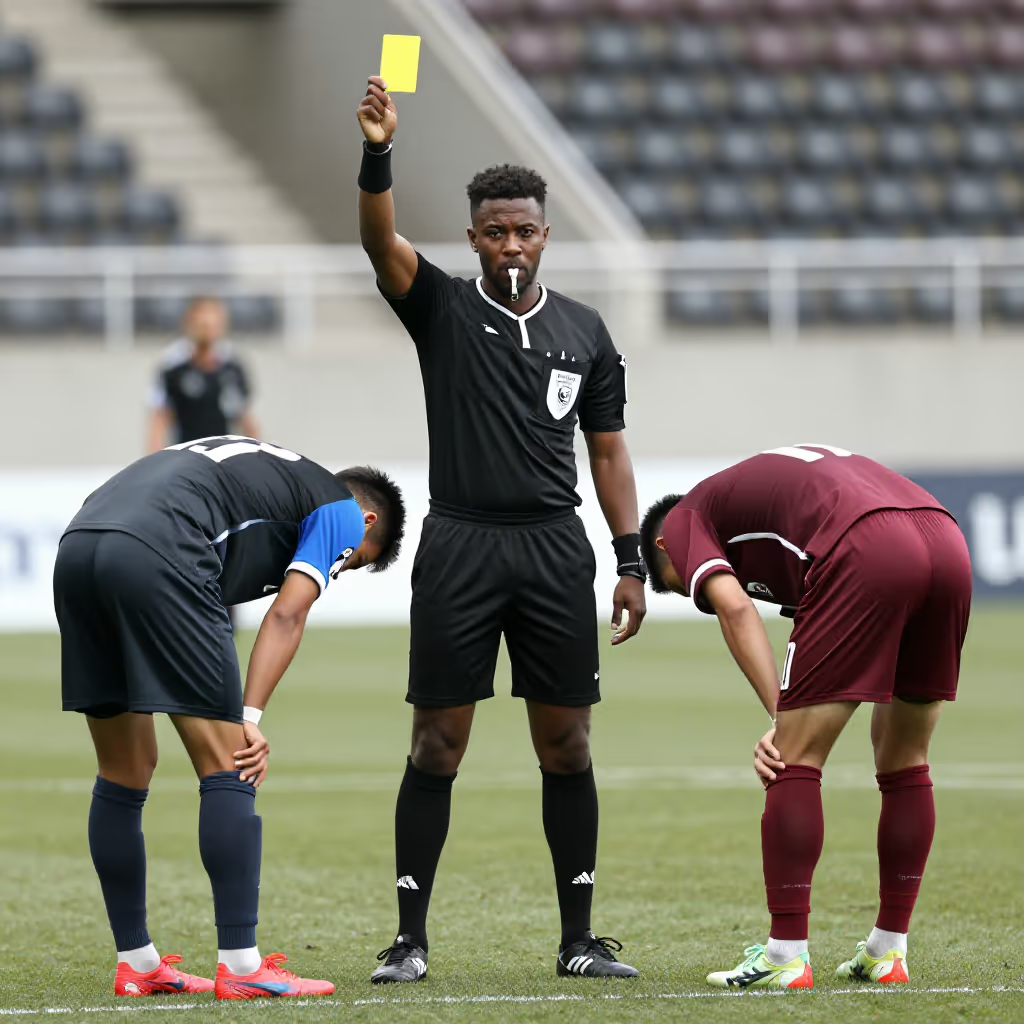
Richter and Schiedsrichter can both make decisions in sports competitions. A Richter mainly evaluates the performance shown and decides the ranking. A Schiedsrichter, by contrast, oversees a game or fight and ensures that the rules are followed.
Der Richter bewertete die Übung der Turnerin mit neun Punkten.
The judge awarded the gymnast nine points for her routine.
Der Schiedsrichter unterbrach das Fußballspiel nach einem Foul.
The referee stopped the soccer match after a foul.