

der Riesling
Riesling
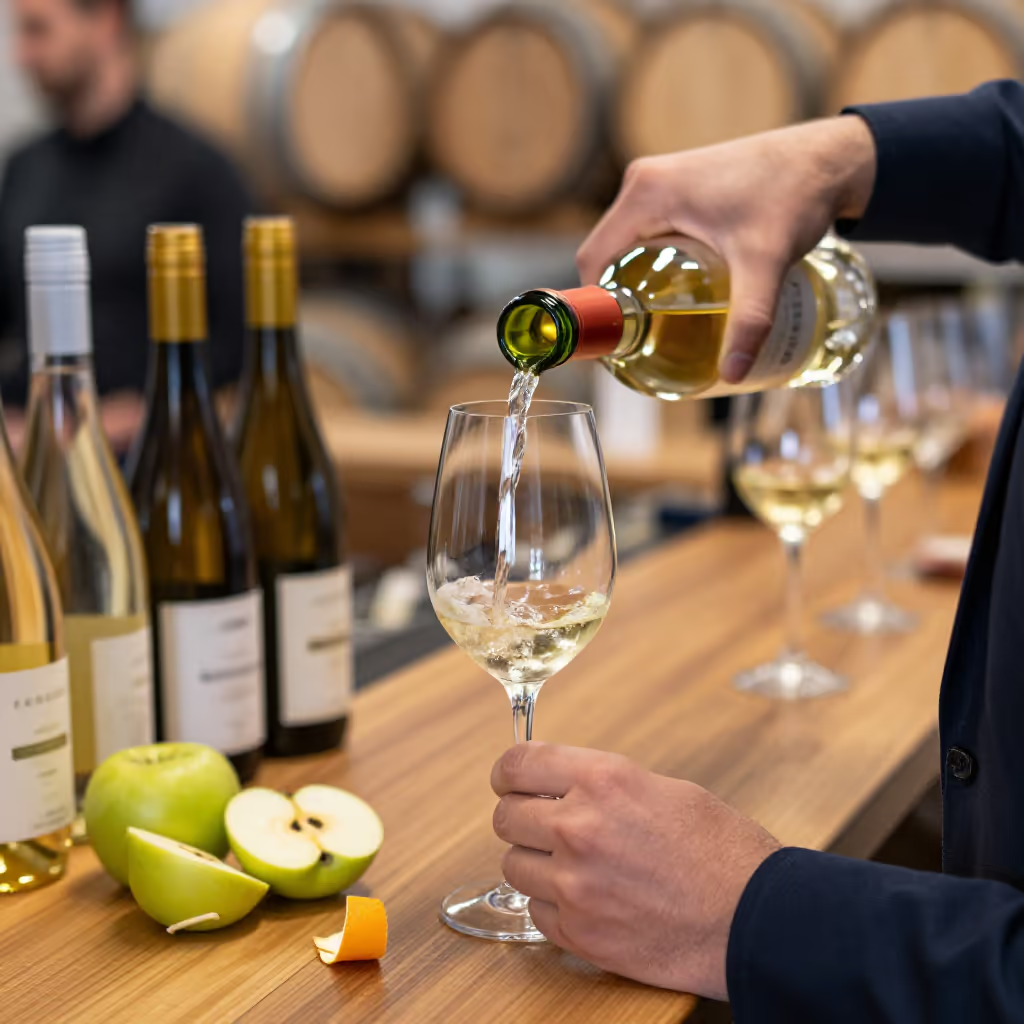
The wine made from the Riesling grape. It is often characterized by pronounced acidity and fruity aromas.
EXAMPLE
Zum Fisch bestellte sie ein Glas trockenen Riesling.
She ordered a glass of dry Riesling with the fish.
Riesling
Loading your saved state.
Riesling
The wine made from the Riesling grape. It is often characterized by pronounced acidity and fruity aromas.
Zum Fisch bestellte sie ein Glas trockenen Riesling.
She ordered a glass of dry Riesling with the fish.
Riesling
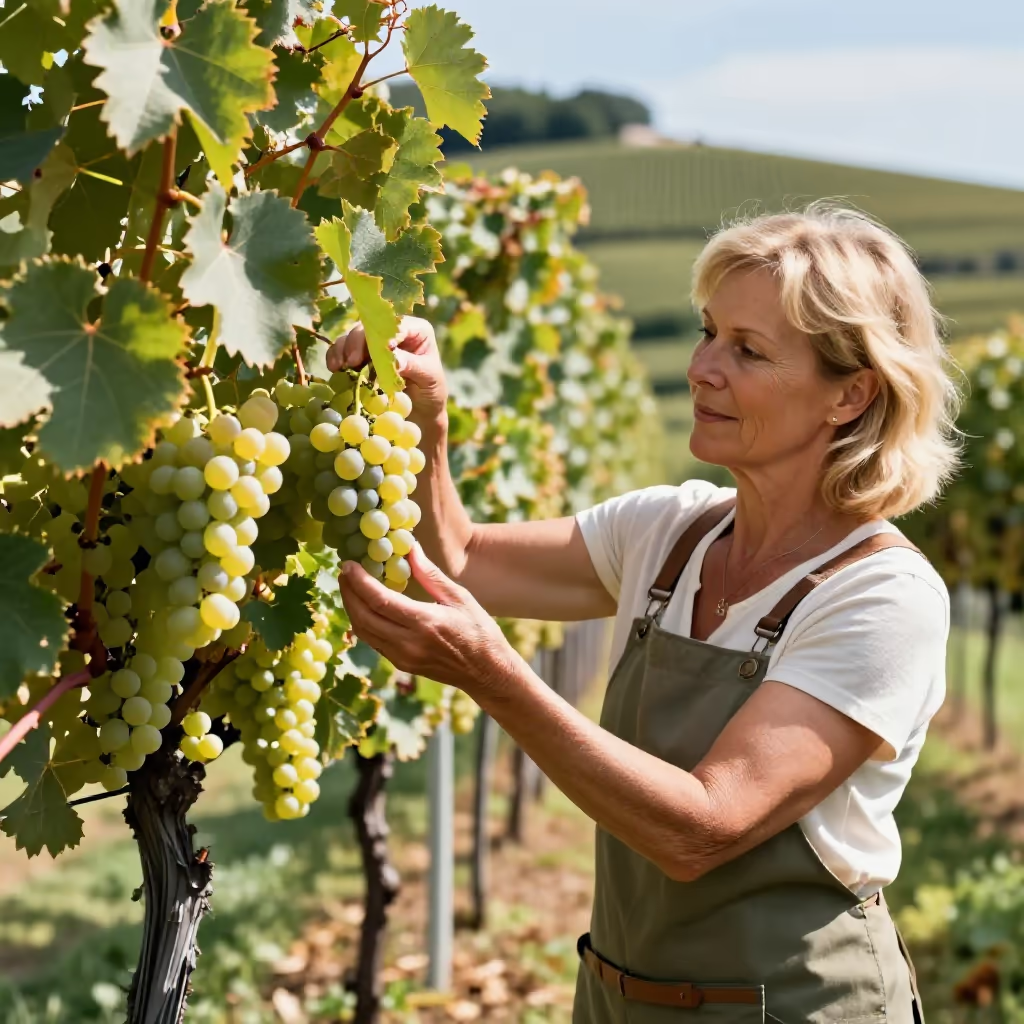
A white grape variety that is among the best-known and highest-quality German grape varieties.
In dieser Region wird hauptsächlich Riesling angebaut.
Riesling is grown mainly in this region.
The verbs in the sentence make the meaning clear. Verbs like 'trinken' (to drink), 'bestellen' (to order), or 'probieren' (to try) refer to the wine. Verbs like 'anbauen' (to grow/cultivate), 'wachsen' (to grow), or 'ernten' (to harvest) refer to the grape variety.
In dieser Region wird seit Jahrhunderten Riesling angebaut.
Riesling has been grown in this region for centuries.
To describe the taste of the wine, 'Riesling' is often combined with adjectives such as 'trocken' (dry), 'halbtrocken' (semi-dry), 'lieblich' (sweet/mild), or 'fruchtig' (fruity).
Ich bevorzuge einen trockenen Riesling zum Essen.
I prefer a dry Riesling with food.
Riesling is one of Germany's best-known and most important grape varieties and an important part of German wine culture, especially in the wine-growing regions along the Moselle and Rhine.
Eine Reise entlang der Mosel ist ohne eine Riesling-Probe unvollständig.
A trip along the Moselle is incomplete without a Riesling tasting.