

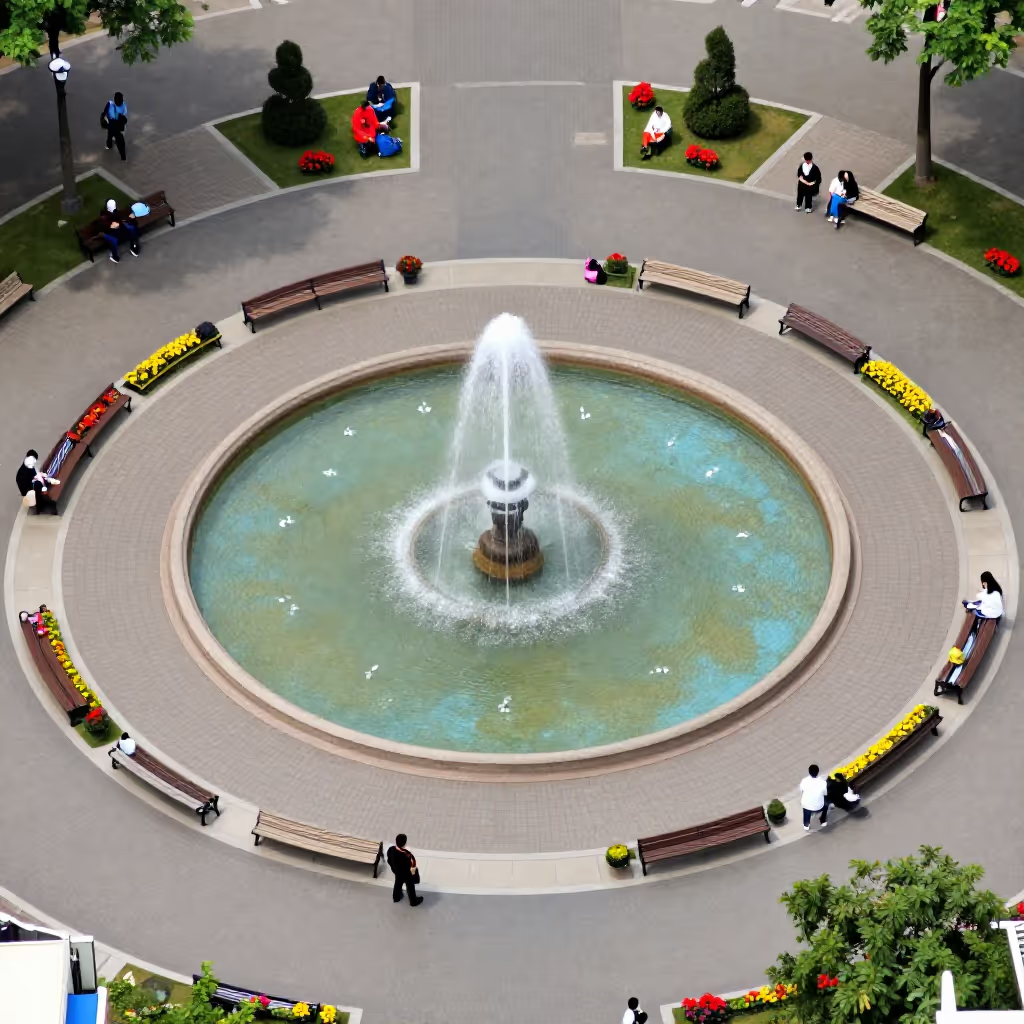
ringsum
all around
In all directions around a central point or thing; all around.
EXAMPLE
Ringsum das Haus wurde ein neuer Zaun gebaut.
A new fence was built all around the house.
all around
Loading your saved state.
all around
In all directions around a central point or thing; all around.
Ringsum das Haus wurde ein neuer Zaun gebaut.
A new fence was built all around the house.
The word 'ringsum' (all around) is made up of 'Rings' and 'um'. 'Rings' is an old genitive form of 'der Ring' (the ring), meaning 'in a circle'. Literally, then, it means 'in a circle around something'.
Ringsum das Lagerfeuer saßen die Kinder und sangen Lieder.
The children sat all around the campfire and sang songs.
As an adverb, 'ringsum' (all around) can stand at the beginning of a sentence, which leads to inversion (verb in position 2). But it can also be placed after the verb and the subject.
Ringsum herrschte Stille.
All around, there was silence.
'Ringsum' (all around) is often used to describe a landscape or the arrangement of objects. Typical verbs are 'liegen' (to lie), 'stehen' (to stand), or 'sich erstrecken' (to extend/stretch).
Das Tal war ringsum von hohen Bergen umgeben.
The valley was surrounded all around by high mountains.
completely / all around
Rundum and ringsum both describe a spatial extent on all sides. Ringsum is more specifically limited to the area around a central point or thing and often sounds somewhat more formal. Rundum therefore also fits more general statements, while ringsum makes the spatial position especially clear.
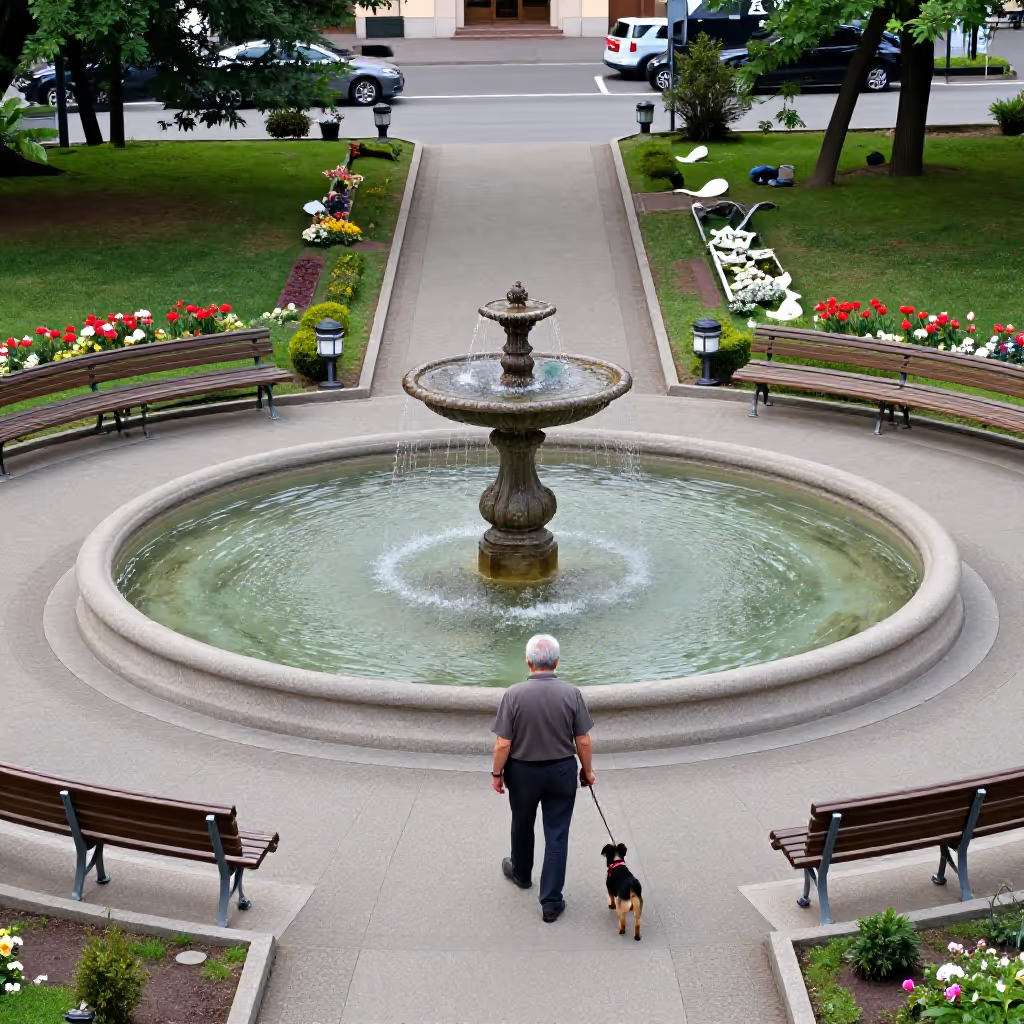
Ringsum den See stehen inzwischen viele neue Häuser.
Many new houses have now been built all around the lake.
Rundum den See stehen inzwischen viele neue Häuser.
Many new houses have now been built all around the lake.