

rotieren
to rotate
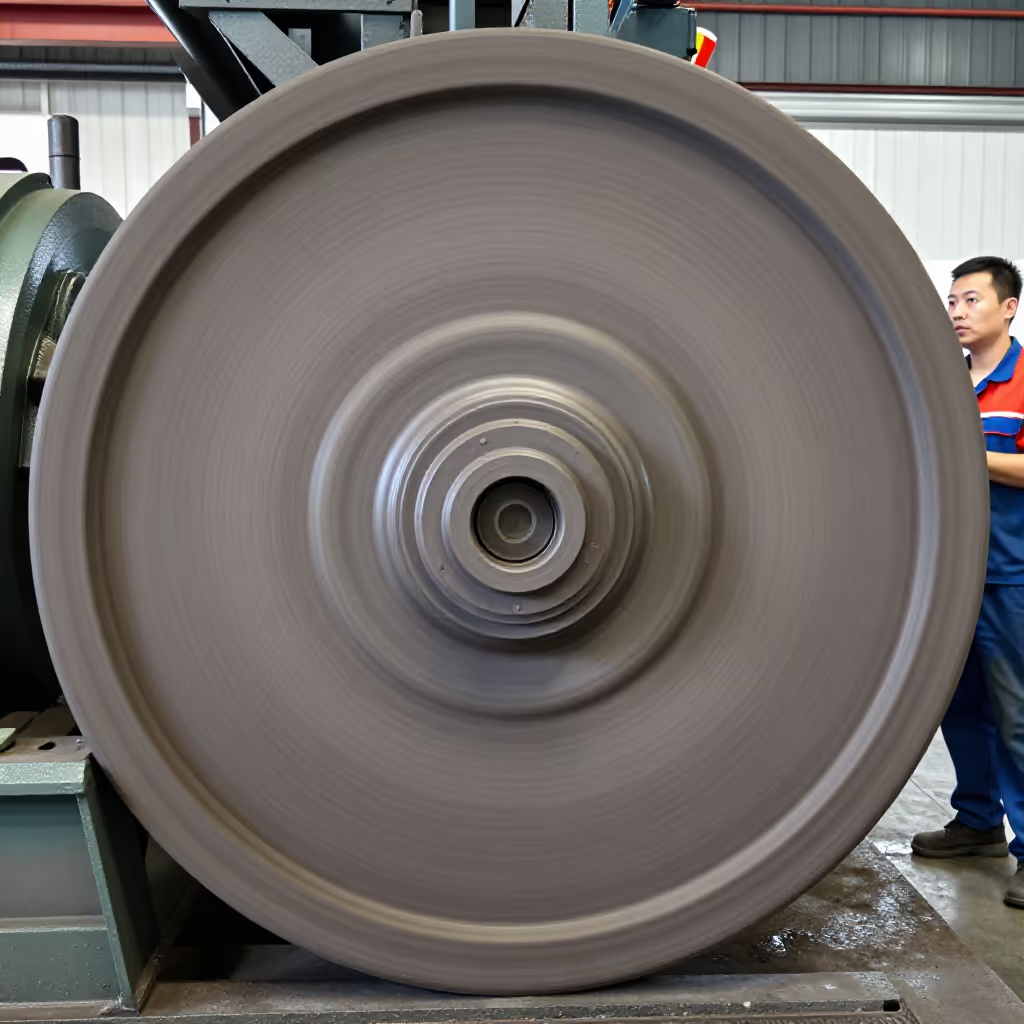
To turn evenly around one's own axis or around a central point.
EXAMPLE
Die Erde rotiert in 24 Stunden einmal um sich selbst.
The Earth rotates once on its own axis in 24 hours.
to rotate
Loading your saved state.
to rotate
To turn evenly around one's own axis or around a central point.
Die Erde rotiert in 24 Stunden einmal um sich selbst.
The Earth rotates once on its own axis in 24 hours.

to be rushed
Colloquial for being very busy, hectic, or stressed and taking care of many things at the same time.
Vor der Feier ist die ganze Familie am Rotieren, um alles vorzubereiten.
Before the party, the whole family is rushed off their feet getting everything ready.
to rotate
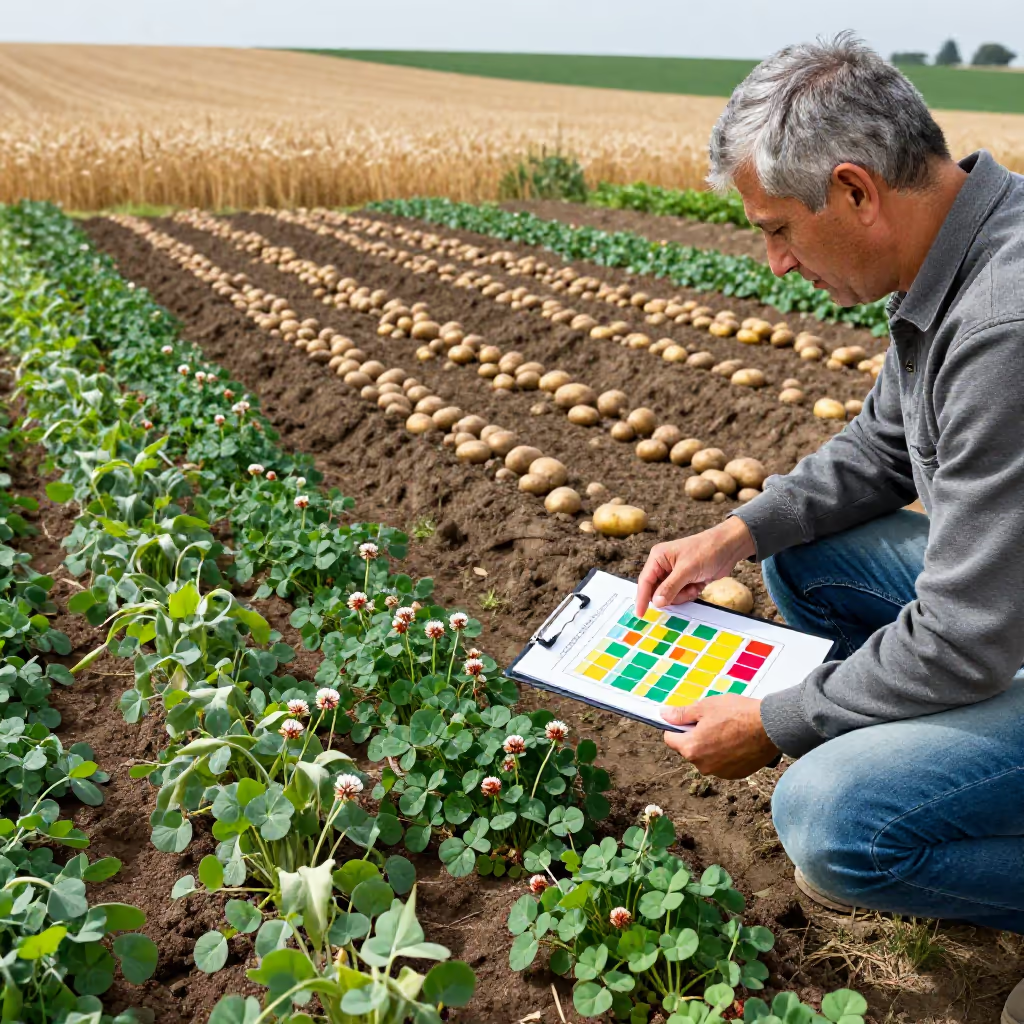
In agriculture, to systematically change the crops grown on a piece of land in order to maintain soil fertility (crop rotation).
Der Bauer lässt die Kulturen auf seinen Feldern rotieren, um den Boden nicht auszulaugen.
The farmer rotates the crops in his fields so as not to deplete the soil.
The verb 'rotieren' (to rotate) is related to the noun 'die Rotation' (rotation). Both words come from the Latin word 'rotare' (to turn), which explains the basic meaning of a rotating movement.
Die Rotation der Planeten ist ein faszinierendes Phänomen.
The rotation of the planets is a fascinating phenomenon.
You can recognize the meaning from the context: If it is about technology or physics, it means rotational movement. If a person is talking about themselves or others in a stressful situation, the colloquial meaning 'to be very busy' is meant. In an agricultural context, it refers to changing crops.
Der Motor rotiert mit 3000 Umdrehungen pro Minute.
The motor rotates at 3,000 revolutions per minute.
In the physical meaning, 'rotieren' (to rotate) is often used with the preposition 'um' + accusative to describe the axis or central point of rotation.
Der Mond rotiert nicht um seine eigene Achse, sondern um die Erde.
The moon does not rotate around its own axis, but around the Earth.
The meaning 'to be very busy' is colloquial. In this use, the verb describes a state and is usually used without an object.
Vor der Prüfung hat er richtig rotiert, um den ganzen Stoff zu lernen.
Before the exam, he was really rushed off his feet trying to learn all the material.
to turn / film
Both words describe something moving around an axis. Drehen is the general everyday word and can also refer to a single change of direction, while rotieren places particular emphasis on an even, regular movement. For an ongoing process like this, rotieren is more precise, although drehen is also possible.
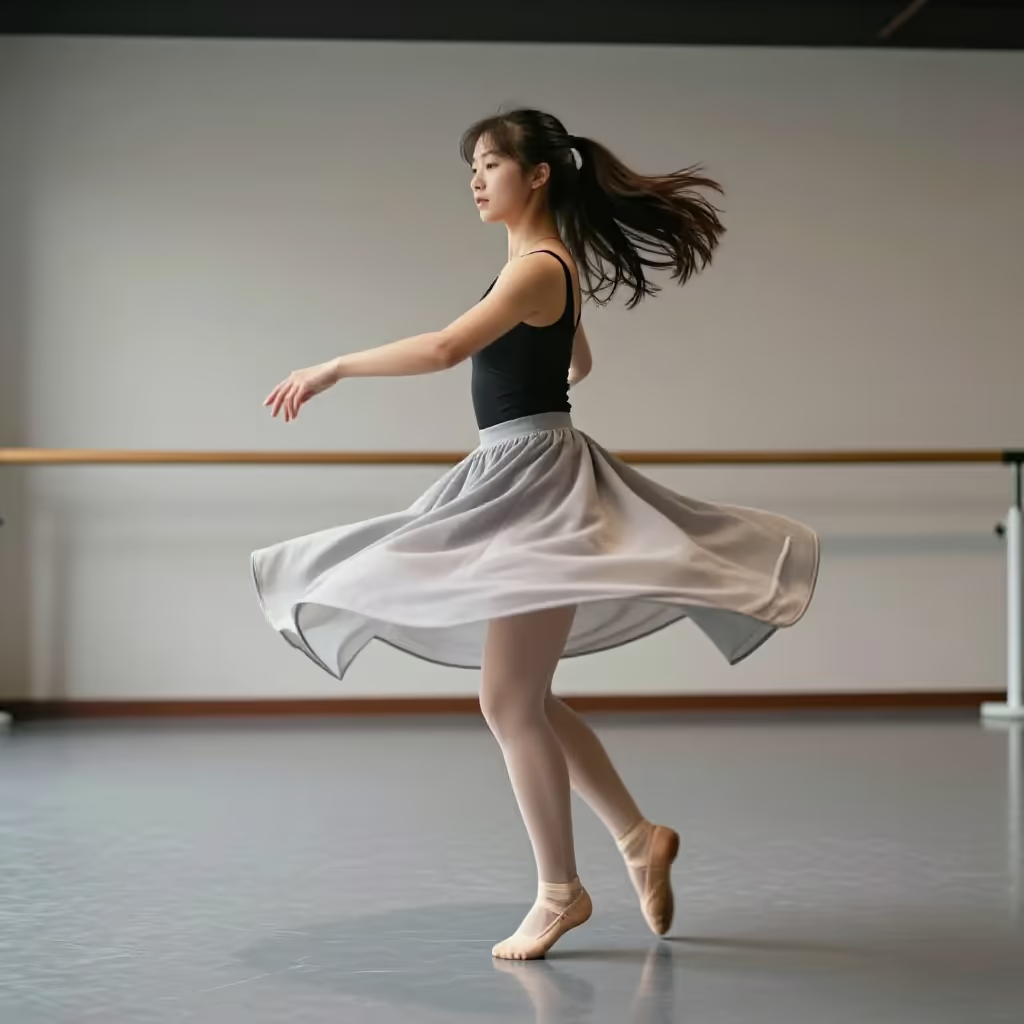
Das Rad rotiert gleichmäßig, während die Maschine läuft.
The wheel rotates evenly while the machine is running.
Das Rad dreht sich gleichmäßig, während die Maschine läuft.
The wheel turns evenly while the machine is running.