

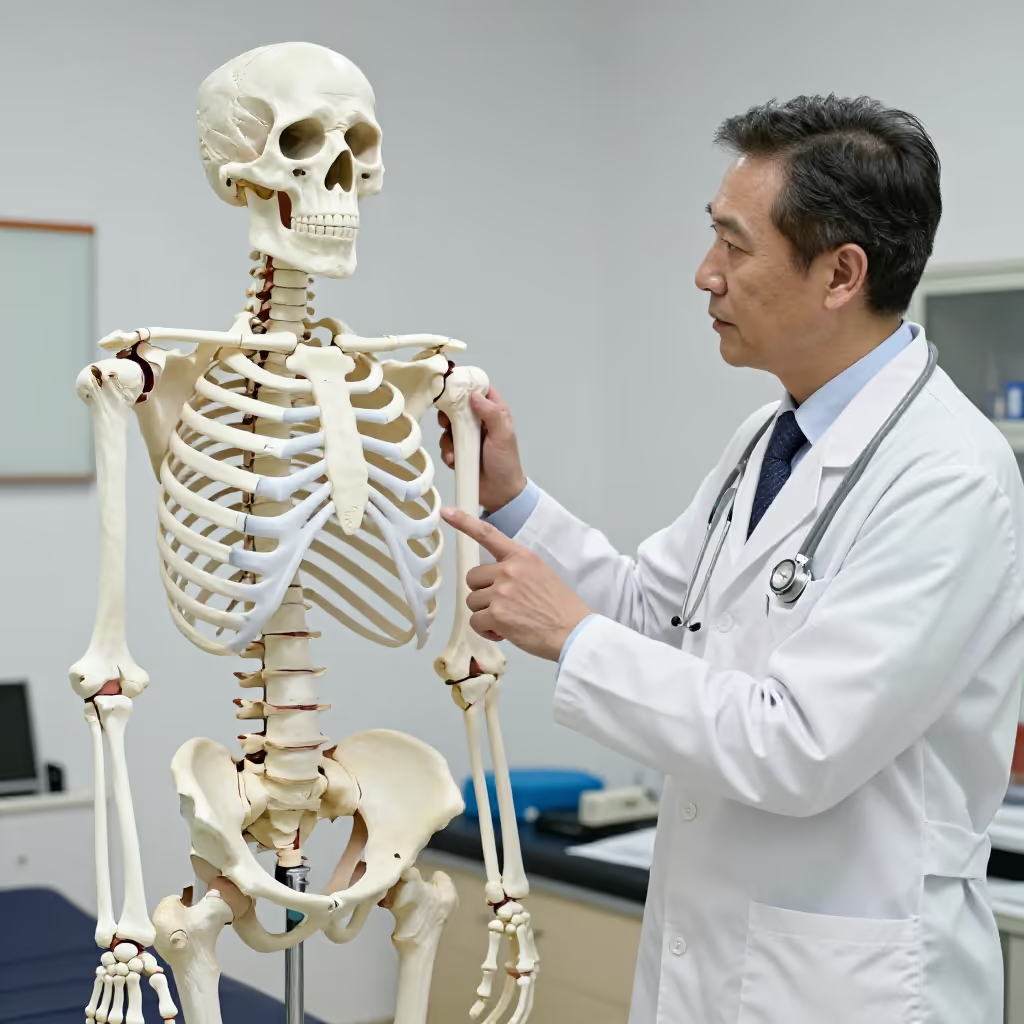
die Rippe
rib
One of the curved bones that form the rib cage of humans and animals and protect the internal organs.
EXAMPLE
Er hat sich beim Fahrradunfall eine Rippe gebrochen.
He broke a rib in the bicycle accident.
rib
Loading your saved state.
rib
One of the curved bones that form the rib cage of humans and animals and protect the internal organs.
Er hat sich beim Fahrradunfall eine Rippe gebrochen.
He broke a rib in the bicycle accident.
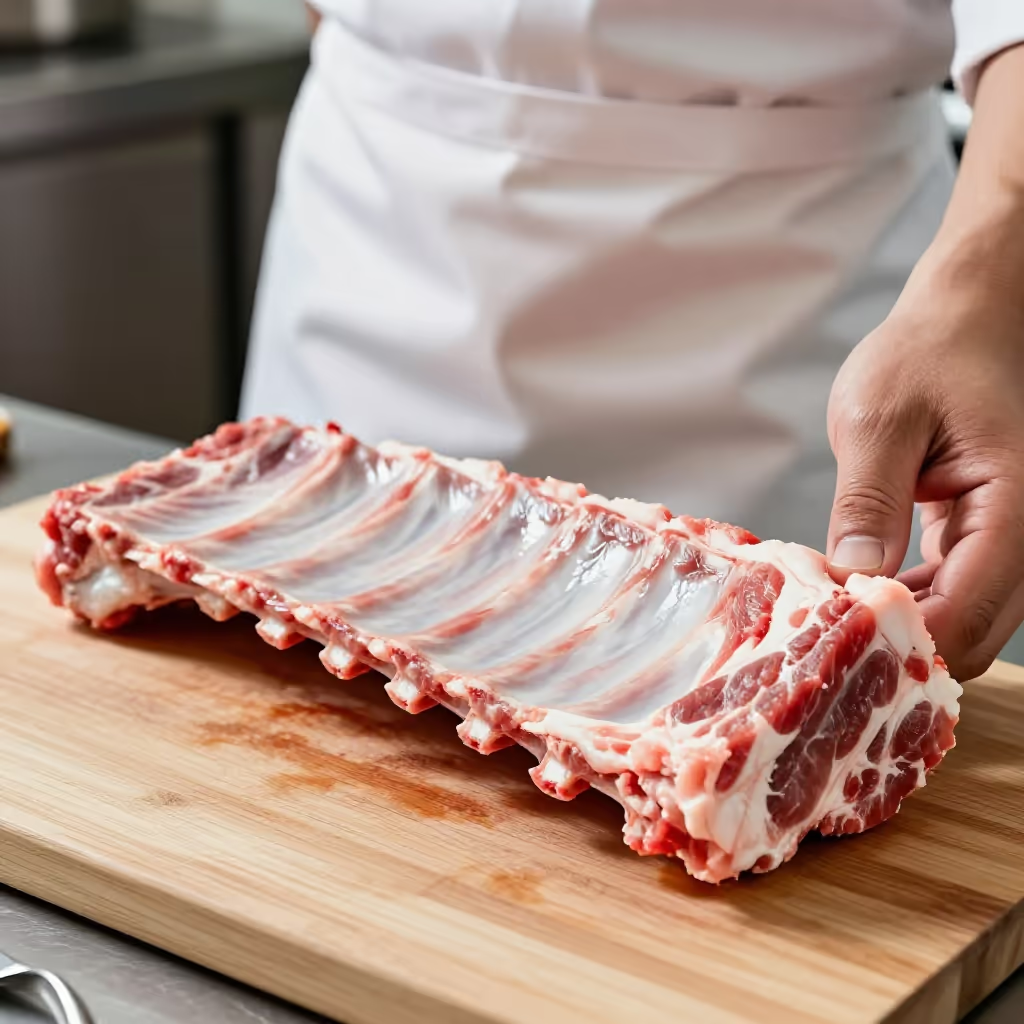
rib
A piece of meat that contains the rib bone and is intended for cooking or roasting. Often known in the plural as 'Rippchen' (small ribs/ribs).
Im Sommer grillen wir gerne marinierte Rippen vom Schwein.
In the summer, we like to grill marinated pork ribs.
You can recognize the meaning from the verb and the context. In a medical context with verbs like 'brechen' (to break) or 'prellen' (to bruise), the bone is meant. In a culinary context with verbs like 'grillen' (to grill) or 'essen' (to eat), the meat dish is meant.
Atmen Sie tief ein. Spüren Sie einen Schmerz an der Rippe?
Take a deep breath. Do you feel pain in your rib?
In connection with the bone, the most common collocations are injuries. Typically, you say 'sich eine Rippe brechen' (to break a rib) or 'sich eine Rippe prellen' (to bruise a rib).
Der Fußballspieler hat sich im Spiel zwei Rippen geprellt.
The soccer player bruised two ribs during the game.
When 'Rippe' (rib) refers to a dish, it is often used in the plural ('Rippen' (ribs)) or as the diminutive 'Rippchen' (small ribs/ribs). 'Rippchen' sounds more typical for a prepared dish.
Diese marinierten Rippchen sind eine Spezialität des Hauses.
These marinated ribs are a house specialty.
The idiom 'sich etwas aus den Rippen schneiden müssen' literally means having to cut something out of one's ribs. It means that you can only pay for or manage something with great sacrifice or a lot of effort.
Für das neue Auto musste er sich das Geld wirklich aus den Rippen schneiden.
He really had to scrape together the money for the new car.