


sarg
miserable
(Swiss, colloquial, very rare) Bad, wretched, or miserable.
EXAMPLE
Nach der langen Krankheit war ihm ganz sarg zumute.
After the long illness, he felt completely miserable.
miserable
Loading your saved state.
miserable
(Swiss, colloquial, very rare) Bad, wretched, or miserable.
Nach der langen Krankheit war ihm ganz sarg zumute.
After the long illness, he felt completely miserable.
This word is very rare and is used exclusively in Swiss colloquial speech. In Germany and Austria, it is unknown and would probably be confused with the noun 'der Sarg' (coffin).
Nach der schlechten Nachricht war ihm den ganzen Tag sarg zumute.
After the bad news, he felt miserable all day.
The adjective 'sarg' (miserable) is typically used in the fixed expression 'jemandem ist sarg zumute' (someone feels miserable) to express a feeling of dejection or misery. The person is in the dative.
Mir ist heute irgendwie sarg zumute, ich bleibe lieber zu Hause.
I somehow feel miserable today; I'd rather stay at home.
The meaning 'elend' (wretched) or 'miserabel' (miserable) can be derived from the noun 'der Sarg' (coffin). The idea is to feel so bad that it is as if you were already lying in a coffin.
Warum schaust du so sarg drein? Ist etwas passiert?
Why do you look so miserable? Did something happen?
sarcophagus
Sarg is the general term for the container in which a deceased person is buried. Sarkophag, by contrast, is usually made of stone, often decorated, and especially associated with ancient cultures. Sarg is therefore normally the appropriate term for burials today, while Sarkophag is used for corresponding historical finds.
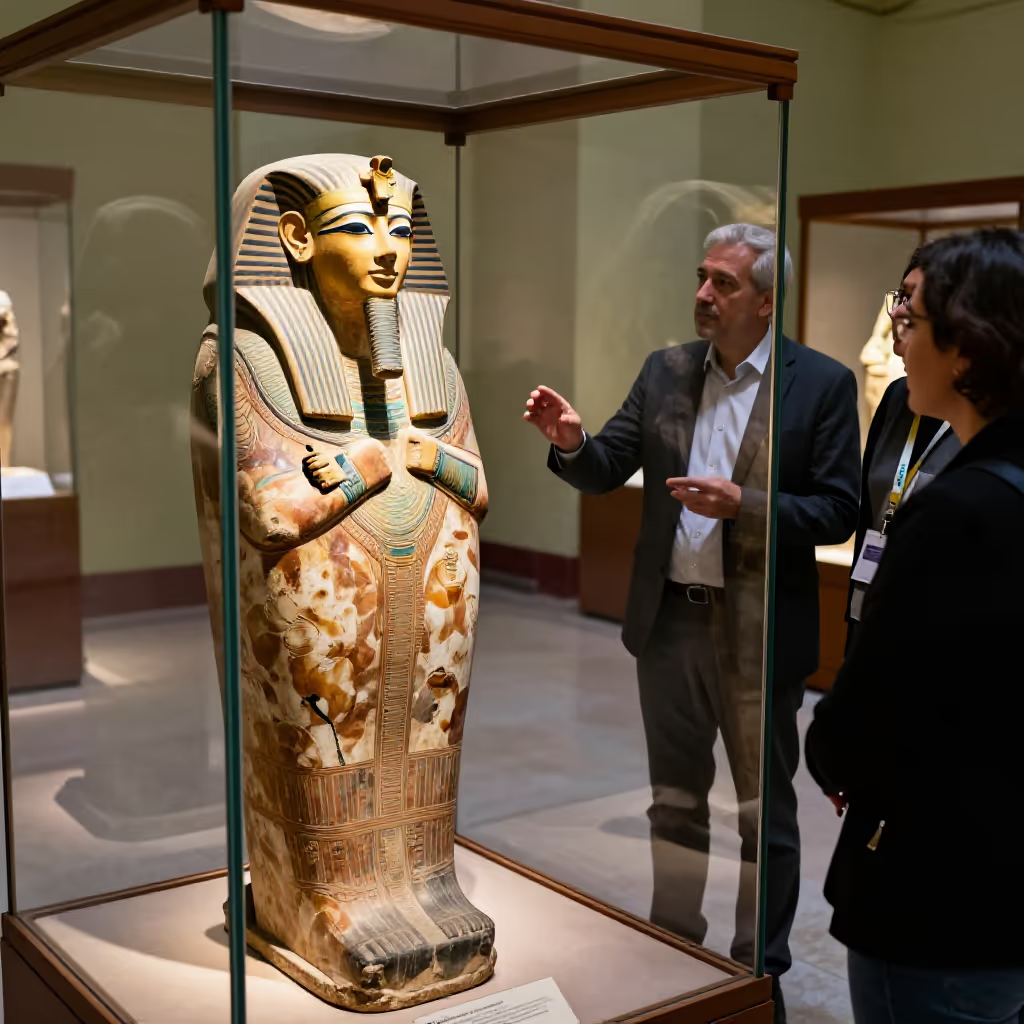
Bei der heutigen Beerdigung wurde der hölzerne Sarg ins Grab gesenkt.
At today’s funeral, the wooden coffin was lowered into the grave.
Im antiken Grab entdeckten die Forscher einen verzierten Sarkophag aus Stein.
In the ancient tomb, the researchers discovered an ornate stone sarcophagus.