

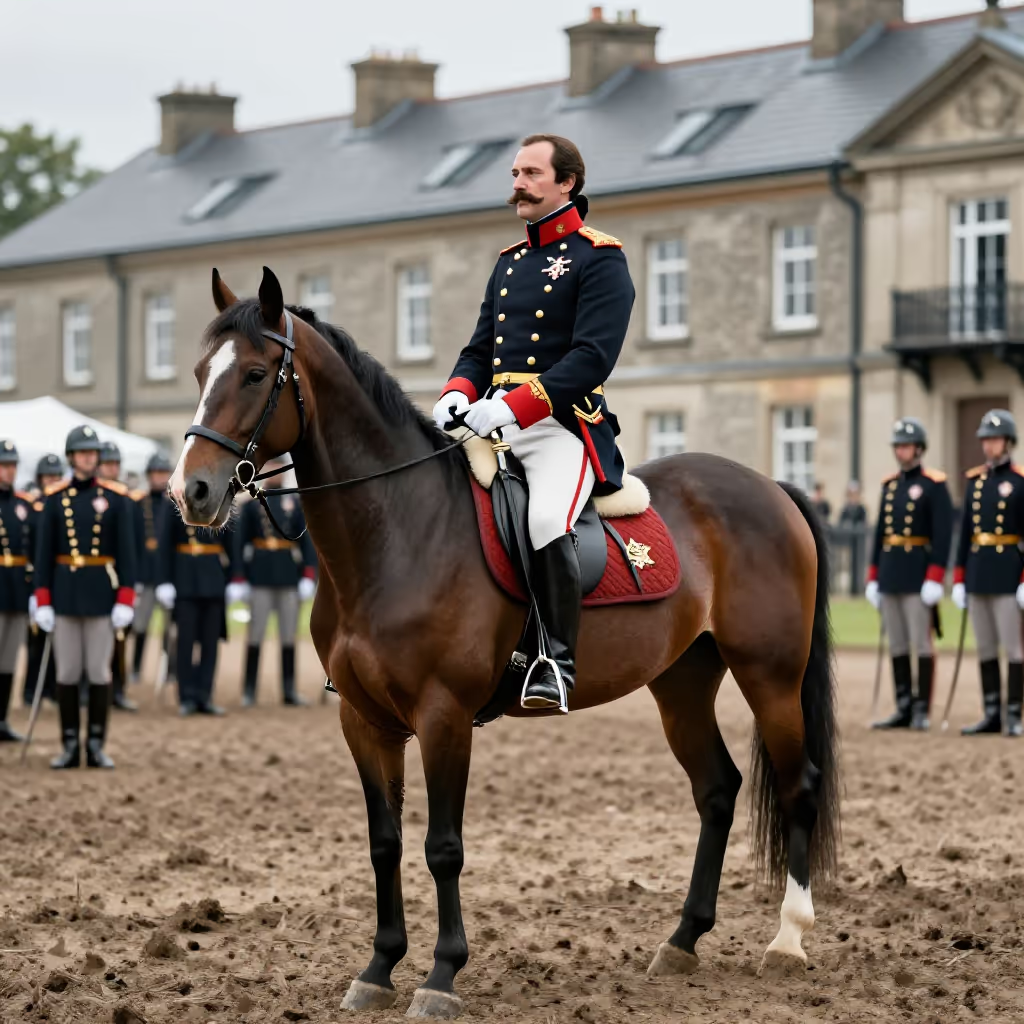
A historical rank for an officer in the cavalry (mounted troops), corresponding to a captain in the infantry.
example
Der Rittmeister von und zu der Tann führte seine Schwadron in die Schlacht.
Rittmeister von und zu der Tann led his squadron into battle.
Usage tips
Word composition
The word is made up of 'Ritt' (ride, from 'reiten' (to ride)) and 'Meister' (master). So a Rittmeister was literally the 'master of riding' or the leader of a mounted unit.
EXAMPLE
Als Offizier der Kavallerie war er ein ausgezeichneter Reiter.
As an officer in the cavalry, he was an excellent rider.
Historical term
'Rittmeister' (cavalry captain) is a historical rank that no longer exists in today's Bundeswehr. You mainly find it in texts, films, or conversations about the period before the Second World War.
EXAMPLE
Mein Urgroßvater war Rittmeister im Ersten Weltkrieg.
My great-grandfather was a cavalry captain in the First World War.
Typical context
The term 'Rittmeister' (cavalry captain) is inseparably linked with the cavalry, that is, the mounted troop units of the army. His unit was often called a squadron.
EXAMPLE
Der Rittmeister befahl seiner Schwadron den Angriff.
The cavalry captain ordered his squadron to attack.
Compare with
near_synonym · confusable
Rittmeister vs Hauptmann
captain
'der Hauptmann' and 'der Rittmeister' both refer to a similar officer rank. The difference is the historical and military context. 'Hauptmann' is the normal rank in the army or air force. 'Rittmeister' is a historical rank in the cavalry, that is, the former mounted troops, and corresponded there to a Hauptmann. The words can be confused in historical texts. For modern situations, people normally say 'Hauptmann', not 'Rittmeister'.
Rittmeister
Im historischen Roman reitet der Rittmeister mit seinen Soldaten durch das Dorf.
In the historical novel, the cavalry captain rides through the village with his soldiers.
Hauptmann
Im Bericht wird ein Hauptmann der Luftwaffe genannt.