

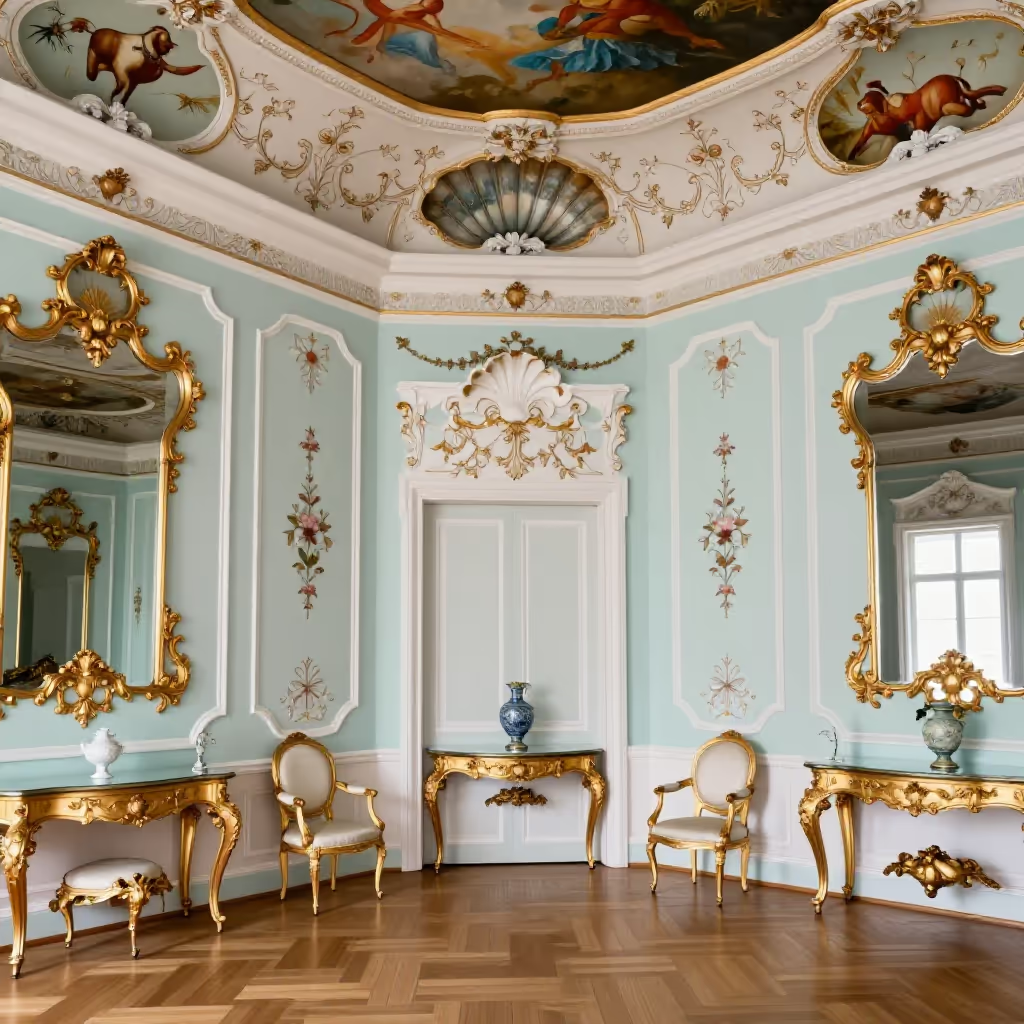
A stylistic period in 18th-century European art and architecture, characterized by playful, elegant, and richly decorated forms, and following the Baroque.
example
Das Schloss Sanssouci in Potsdam ist ein berühmtes Beispiel für die Architektur des Rokoko.
Sanssouci Palace in Potsdam is a famous example of Rococo architecture.
Usage tips
In compound words
The word 'Rokoko' (Rococo) is often used as the first part of compound nouns to describe objects, styles, or concepts from this period. This creates terms such as Rokoko-Architektur (Rococo architecture), Rokoko-Möbel (Rococo furniture), or Rokoko-Malerei (Rococo painting).
EXAMPLE
Im Museum bewunderten wir ein Sofa im Rokoko-Stil.
In the museum, we admired a sofa in the Rococo style.
Use with prepositions
To describe the period, you use the preposition 'in', often with an article: 'im Rokoko' (in the Rococo). When describing the style, the phrase 'im Stil des Rokoko' (in the Rococo style) is common.
EXAMPLE
Im Rokoko waren verspielte und asymmetrische Formen sehr beliebt.
In the Rococo period, playful and asymmetrical forms were very popular.
Typical adjectives
Since the Rococo is known for its distinctive aesthetic, it is often combined with descriptive adjectives such as 'verspielt' (playful), 'elegant' (elegant), 'dekorativ' (decorative), or 'üppig' (lavish).
EXAMPLE
Das verspielte Rokoko löste den strengeren Barock ab.