

römisch
Roman
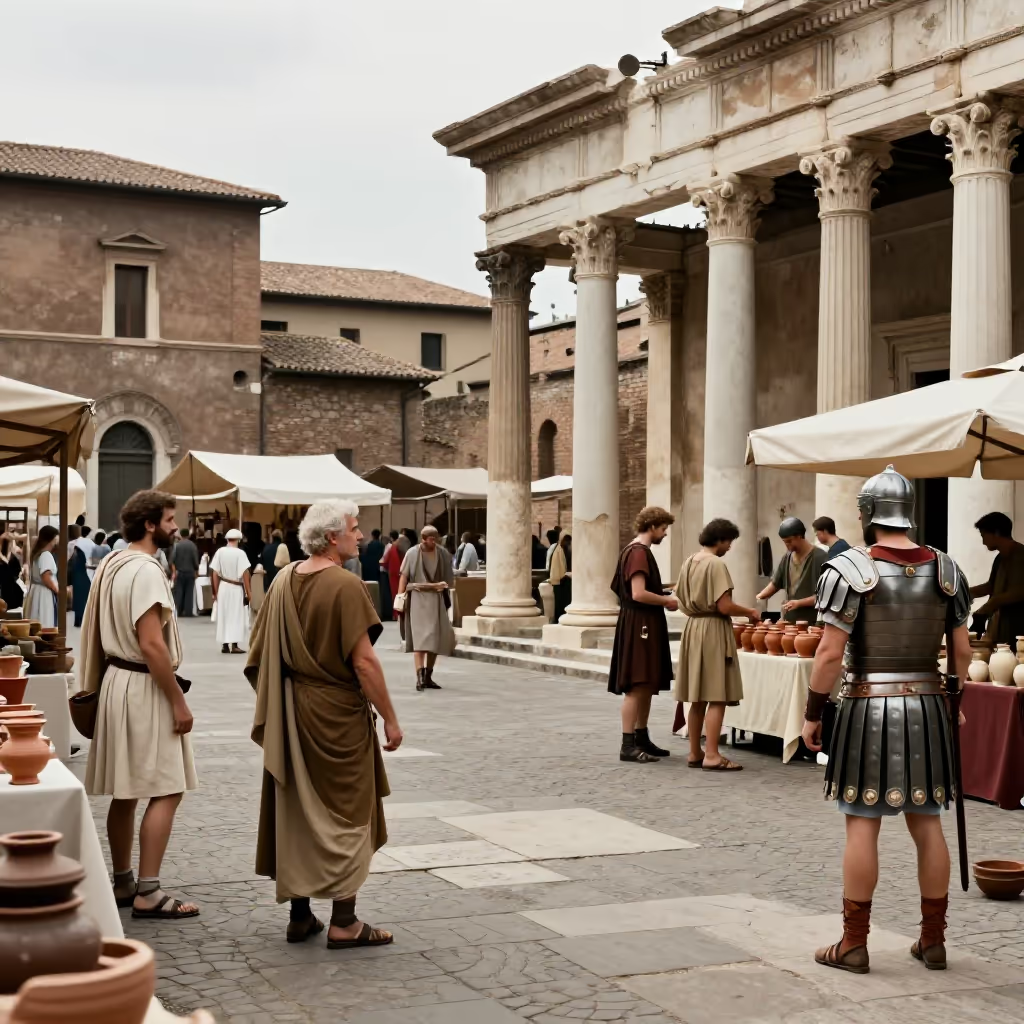
Relating to ancient Rome, its inhabitants, or its empire.
EXAMPLE
Die römischen Ziffern werden heute nur noch selten verwendet.
Roman numerals are used only rarely today.
Roman
Loading your saved state.
Roman
Relating to ancient Rome, its inhabitants, or its empire.
Die römischen Ziffern werden heute nur noch selten verwendet.
Roman numerals are used only rarely today.
Roman
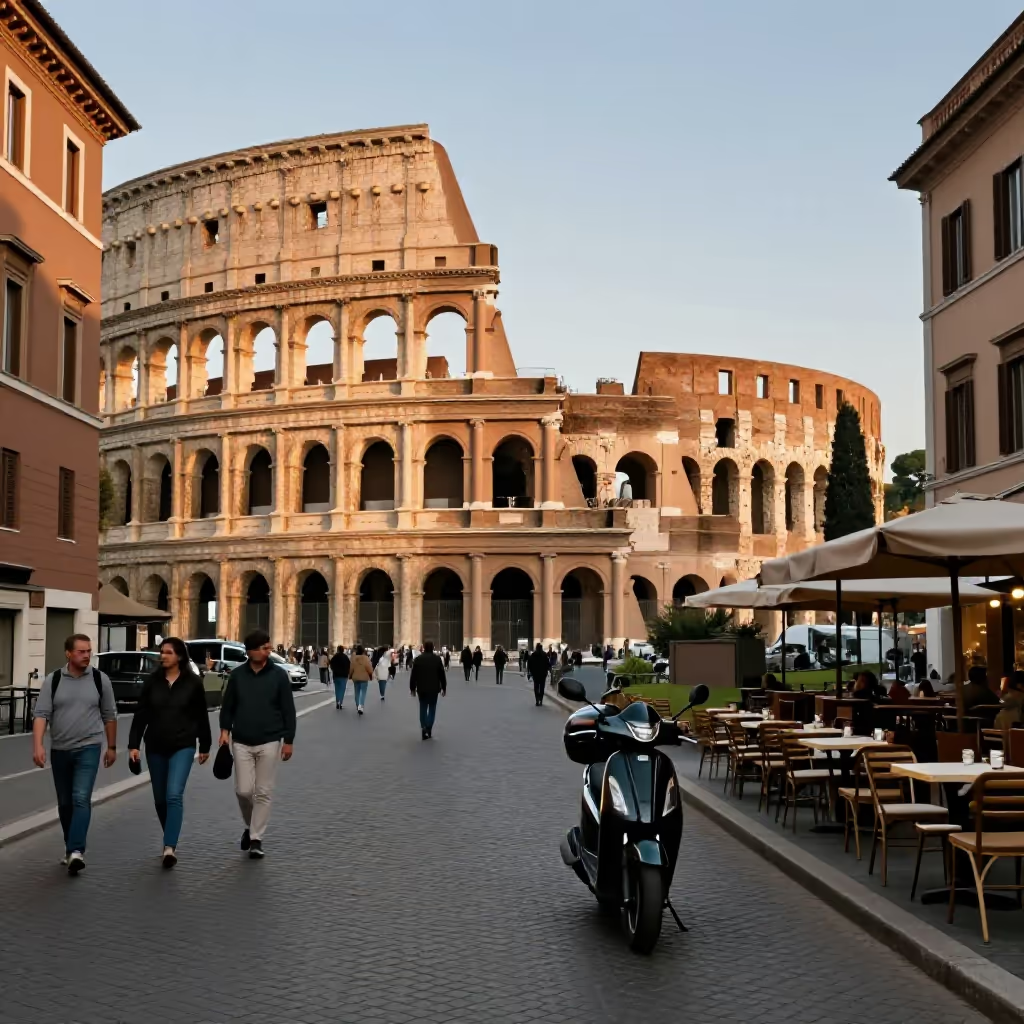
Relating to the present-day city of Rome in Italy.
Der römische Stadtverkehr ist für sein Chaos bekannt.
Roman city traffic is known for its chaos.

Roman
Relating to the Roman Catholic Church.
Der Papst ist das Oberhaupt der römisch-katholischen Kirche.
The pope is the head of the Roman Catholic Church.
The meaning of 'römisch' (Roman) becomes clear from context. Words like 'Reich' (empire) or 'Legionär' (legionary) point to antiquity, 'Verkehr' (traffic) or 'Restaurant' (restaurant) to the modern city, and 'Kirche' (church) or 'katholisch' (Catholic) to religion.
Die römischen Aquädukte sind beeindruckende Bauwerke.
The Roman aqueducts are impressive structures.
The adjective 'römisch' (Roman) is derived from the city name 'Rom' (Rome) with the ending '-isch' (-ic/-ish). This ending is often used to form adjectives from geographical names.
Die römische Kunst hat viele spätere Epochen beeinflusst.
Roman art influenced many later eras.
When referring to ancient Rome, 'römisch' (Roman) often appears in fixed combinations such as 'das Römische Reich' (the Roman Empire), 'römische Götter' (Roman gods), or 'römisches Recht' (Roman law).
In der Schule lernen wir viel über das Römische Reich.
At school, we learn a lot about the Roman Empire.
In a religious context, the combination 'römisch-katholisch' (Roman Catholic) is a fixed unit. It is treated like a single adjective and describes the largest denomination of Christianity.
In Bayern sind viele Menschen römisch-katholisch.
In Bavaria, many people are Roman Catholic.
Latin
Römisch and lateinisch can both refer to the world of ancient Rome. Römisch emphasizes the connection to Rome, its inhabitants, or its empire. Lateinisch is used when the culture of the ancient Romans is the focus.
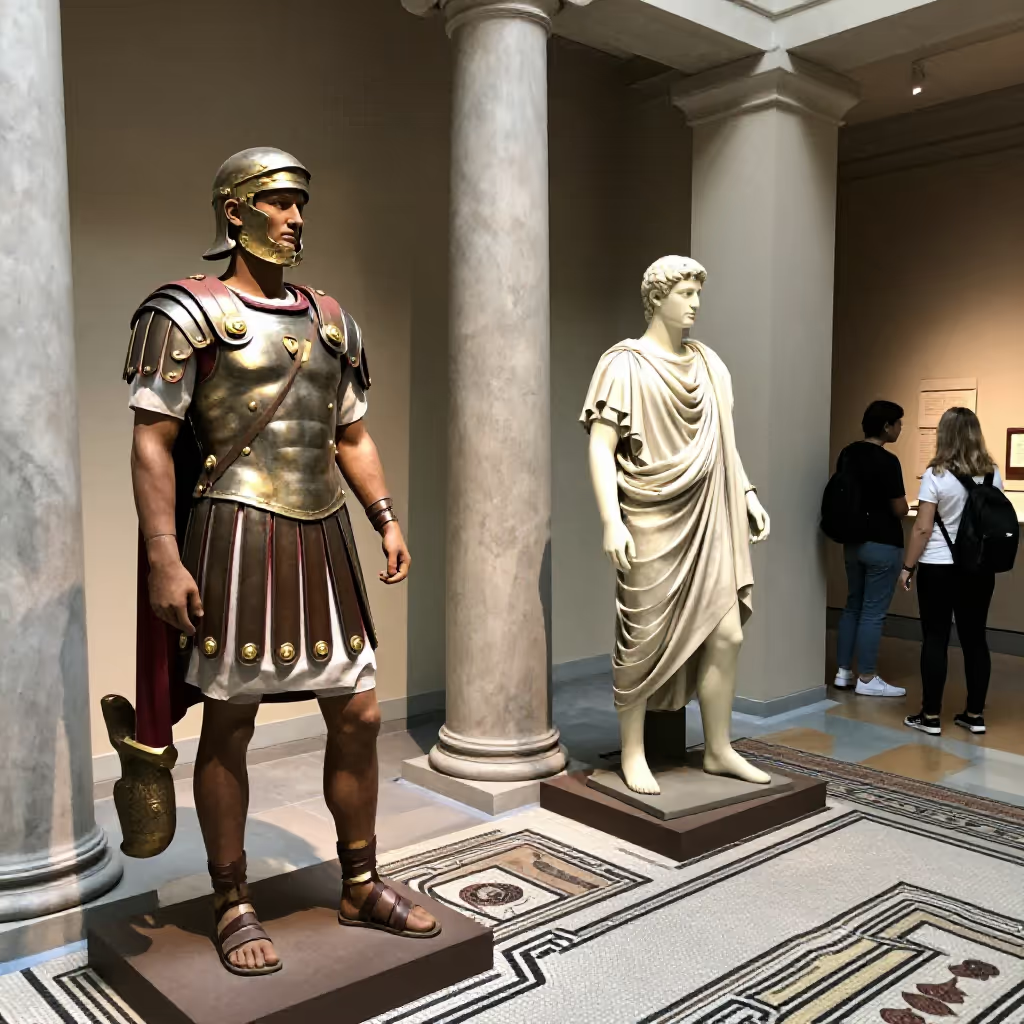
Die römische Verwaltung organisierte das große Reich.
The Roman administration organized the vast empire.
Die lateinische Dichtung war ein wichtiger Teil dieser Kultur.
Latin poetry was an important part of this culture.