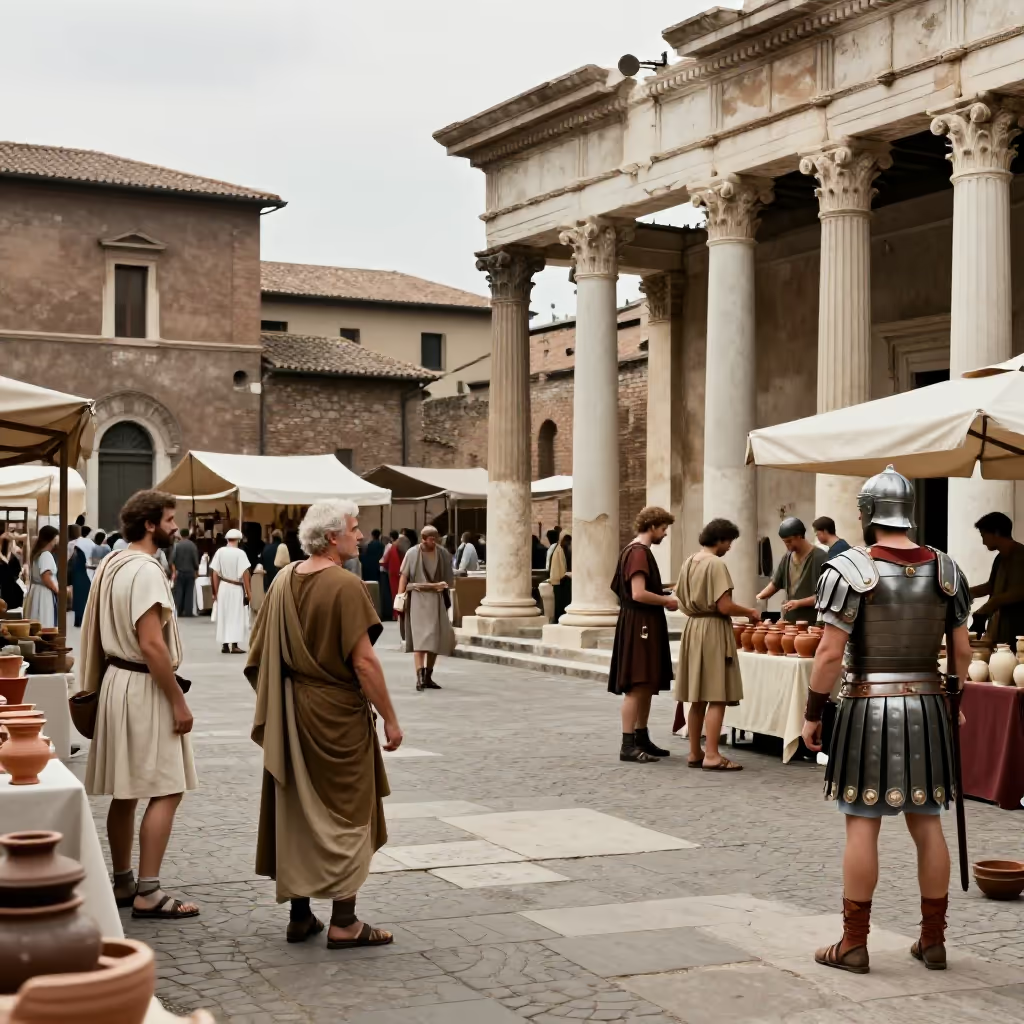
Refers to the group of languages that developed from Latin, such as French, Spanish, Italian, Portuguese, and Romanian.
example
Obwohl sie in verschiedenen Ländern gesprochen werden, haben alle romanischen Sprachen einen gemeinsamen Ursprung.
Although they are spoken in different countries, all Romance languages have a common origin.
Usage tips
Connection to Rome
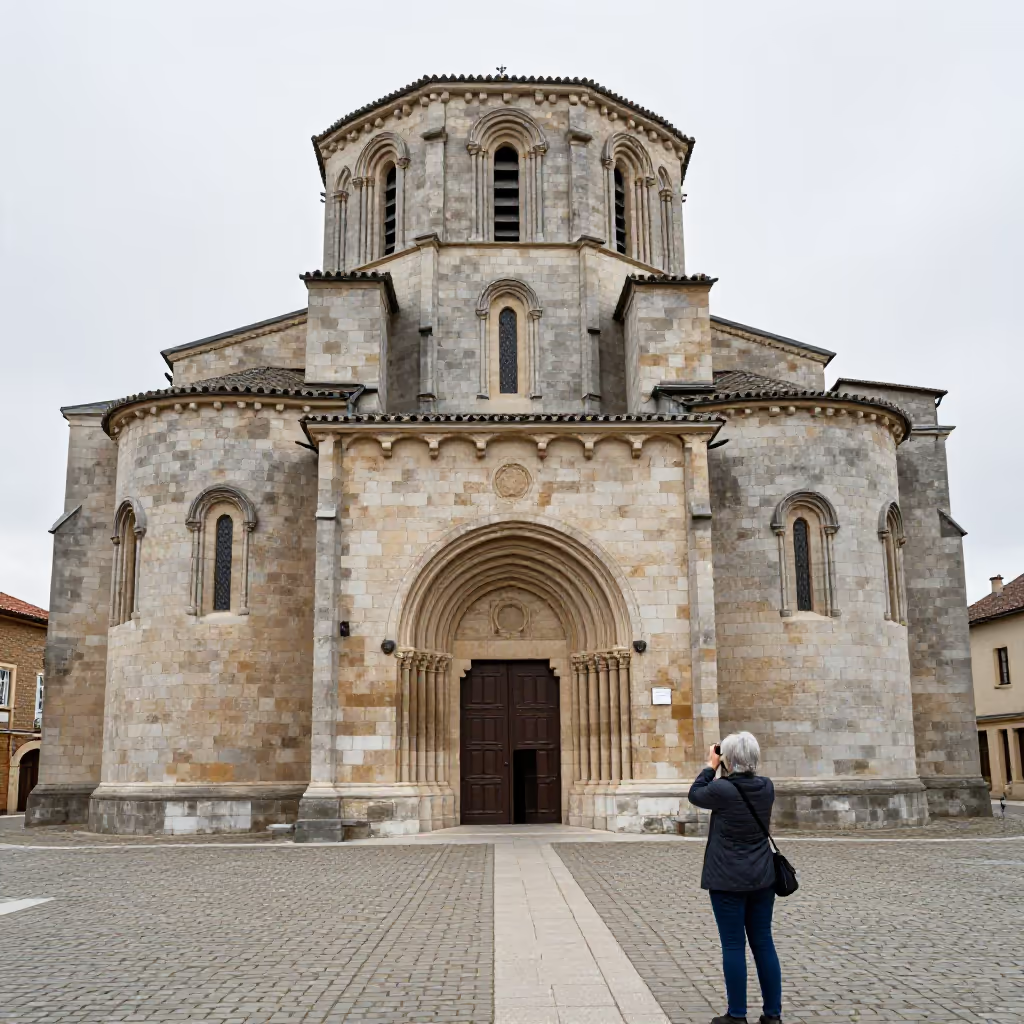
The word derives from 'Rom' (Rome). It describes things that developed from the culture or language (Latin) of the Roman Empire, but belong to a later era, mainly the Middle Ages.
EXAMPLE
Die Kathedrale zeigt typisch romanische Bauelemente.
The cathedral shows typical Romanesque architectural elements.
Context clue: languages
When the topic is languages, you can recognize this meaning from words like 'Sprache' (language), 'Französisch' (French), 'Italienisch' (Italian), or 'Ursprung' (origin). The most common combination is 'romanische Sprachen' (Romance languages).
EXAMPLE
Spanisch und Portugiesisch sind eng verwandte romanische Sprachen.
Spanish and Portuguese are closely related Romance languages.
Context clue: art history
When the topic is art or architecture, you will find the word in the context of 'Kirche' (church), 'Dom' (cathedral), 'Baustil' (architectural style), 'Architektur' (architecture), or 'Mittelalter' (Middle Ages).
EXAMPLE
Wir besichtigten eine kleine romanische Kirche aus dem 11. Jahrhundert.
We visited a small Romanesque church from the 11th century.
Typical collocations
In an art-historical context, typical combinations are 'romanische Architektur' (Romanesque architecture), 'romanischer Baustil' (Romanesque architectural style), or 'ein romanisches Portal' (a Romanesque portal).
EXAMPLE
Das massive Mauerwerk und die Rundbögen sind typisch für den romanischen Baustil.
The massive masonry and the round arches are typical of the Romanesque architectural style.
Compare with
confusable
romanisch vs römisch
Roman
'römisch' and 'romanisch' look similar, but they do not mean the same thing. 'römisch' refers to Rome, especially ancient Rome or the present-day city of Rome. 'romanisch' is used mainly for languages that developed from Latin, such as Spanish or French, or for a medieval architectural style. The risk of confusion comes from their similar form and from the fact that both can somehow be connected with Latin and Europe. For Rome itself, you say 'römisch'; for language groups or the architectural style, you say 'romanisch'.
romanisch
Die kleine Kirche hat romanische Bögen und sehr dicke Mauern.
The small church has Romanesque arches and very thick walls.
römisch
Am Wochenende besuchst du mit einem Freund eine römische Ausgrabung.
At the weekend, you visit a Roman excavation with a friend.