

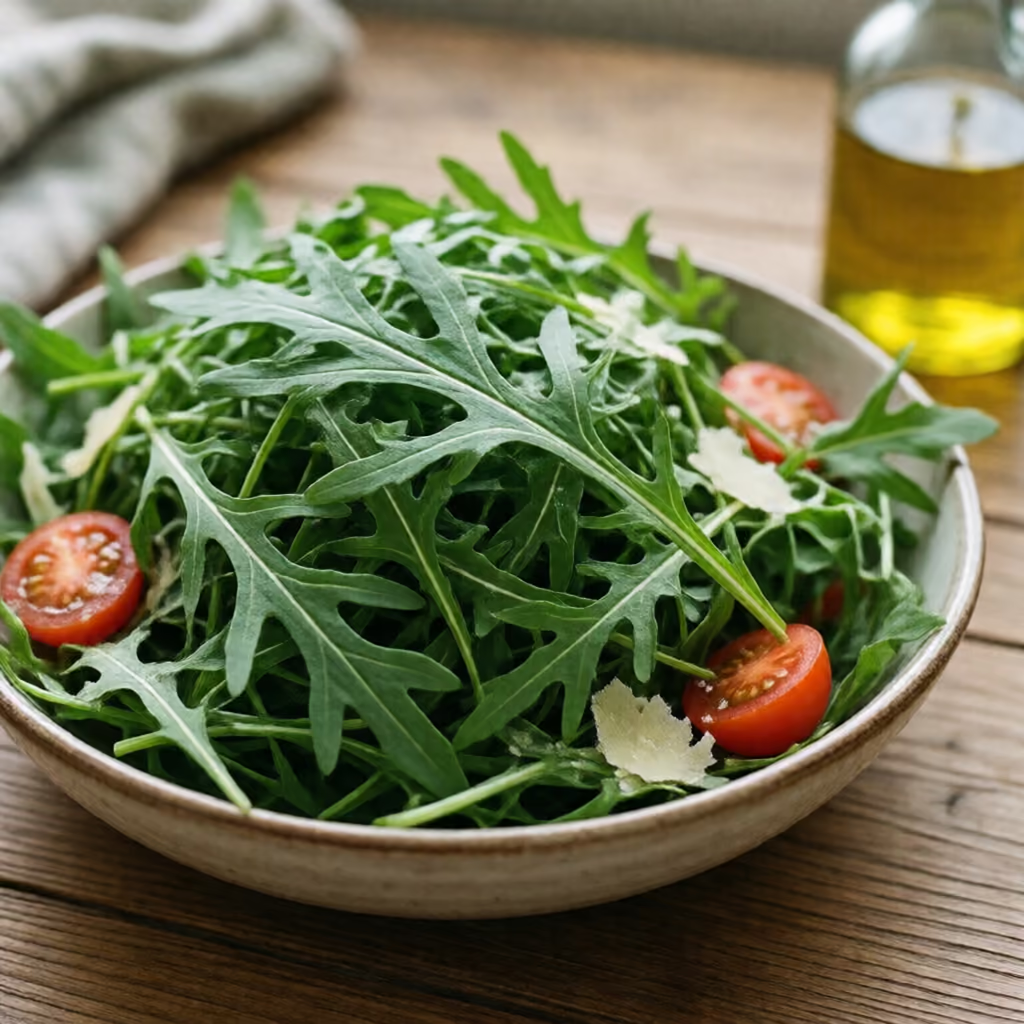
der Rucola
arugula
A plant with spicy-tasting leaves, mainly used in salads or as a seasoning.
EXAMPLE
Der Rucola schmeckt besonders gut mit Tomaten und Parmesan.
Arugula tastes especially good with tomatoes and Parmesan.
arugula / rocket
die Rucola
Loading your saved state.
arugula
A plant with spicy-tasting leaves, mainly used in salads or as a seasoning.
Der Rucola schmeckt besonders gut mit Tomaten und Parmesan.
Arugula tastes especially good with tomatoes and Parmesan.
| gender | feminine die |
|---|---|
| genitive | der Rucola |
| singular | plural | |
|---|---|---|
| nominative | die Rucola | – |
| accusative | die Rucola | – |
| dative | der Rucola | – |
| genitive | der Rucola | – |
The article changes with the case; it is shown in colour.
| gender | masculine der |
|---|---|
| genitive | des Rucola |
| singular | plural | |
|---|---|---|
| nominative | der Rucola | – |
| accusative | den Rucola | – |
| dative | dem Rucola | – |
| genitive | des Rucola | – |
The article changes with the case; it is shown in colour.
“Rucola” (arugula) is often used with food preparation verbs: “Rucola waschen” (to wash arugula), “Rucola trocken schleudern” (to spin arugula dry), and “Rucola unterheben” (to fold in arugula). “Frischer Rucola” (fresh arugula) is also a very common collocation.
Für die Vorspeise muss ich den Rucola gründlich waschen.
For the appetizer, I have to wash the arugula thoroughly.
“Rucola” (arugula) is often eaten raw and added to a dish shortly before serving. This means it is not cooked for long, even when added to hot dishes.
Die Köchin gab den Rucola erst nach dem Backen auf die Pizza.
The chef added the arugula to the pizza only after baking it.
“Rucola” (arugula) easily forms compounds with words from the kitchen, such as “Rucola-Salat” (arugula salad) or “Rucola-Pesto” (arugula pesto). In these words, “Rucola” refers to the ingredient.
Für das Abendessen bereite ich einen Rucola-Salat mit Kirschtomaten zu.
For dinner, I’m preparing an arugula salad with cherry tomatoes.