

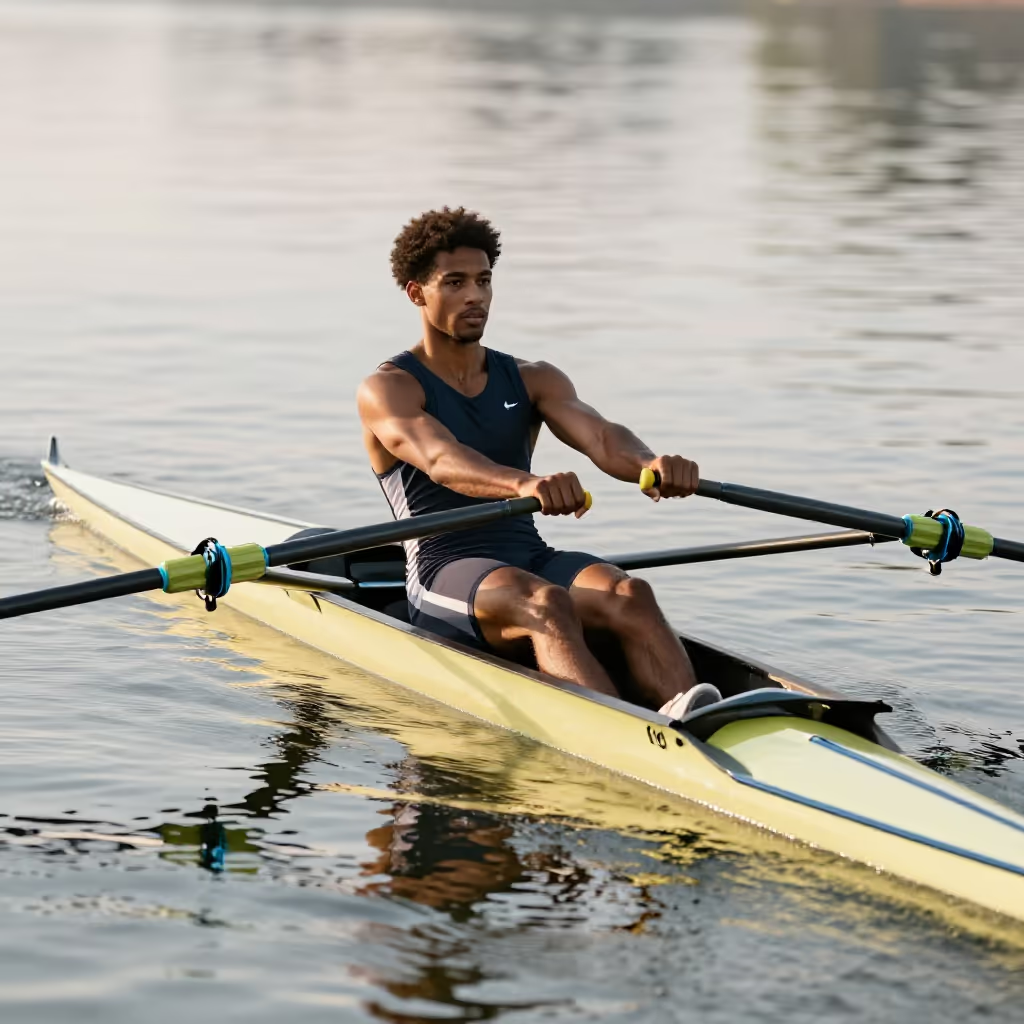
A person who moves a boat with oars, whether as a sport or for transportation.
example
Die Ruderer des Deutschland-Achters trainierten auf dem See für die bevorstehende Regatta.
The rowers of the German eight trained on the lake for the upcoming regatta.
Usage tips
Derived from the verb
The word 'Ruderer' (rower) is derived directly from the verb 'rudern' (to row). The ending '-er' refers to a male person who performs the activity, a very common pattern in German.
EXAMPLE
Wer rudert, ist ein Ruderer.
Someone who rows is a rower.
Word family
'Der Ruderer' (the rower) belongs to a word family related to movement on water. This includes the verb 'rudern' (to row), the tool 'das Ruder' (the oar/rudder), and the boat 'das Ruderboot' (the rowboat).
EXAMPLE
Der Ruderer ergriff sein Ruder und stieg ins Ruderboot.
The rower grabbed his oar and climbed into the rowboat.
Typical collocations
In a sports context, 'Ruderer' (rower) is often combined with the type of boat, for example 'Ruderer im Achter' (rower in an eight, a boat for eight people) or 'im Einer' (in a single scull, a boat for one person).
EXAMPLE
Als Ruderer im Einer ist man komplett auf sich allein gestellt.
As a rower in a single scull, you are completely on your own.
Compare with
confusable
Ruderer vs Steuermann
helmsman / coxswain
'der Steuermann' and 'der Ruderer' can both sit in a boat, especially in rowing. The Ruderer moves the boat forward with the oars. The Steuermann steers the boat, pays attention to the direction, and often gives instructions. Learners may confuse the words because both belong to a boat's crew. The simple difference is: the Ruderer provides the power; the Steuermann takes care of the course and rhythm.
Ruderer
Der Ruderer trainiert jeden Morgen auf dem See, um schneller zu werden.
The rower trains on the lake every morning to get faster.
Steuermann
Vor dem Rennen bespricht der Steuermann mit dem Team die richtige Taktik.
Before the race, the coxswain discusses the right strategy with the team.