

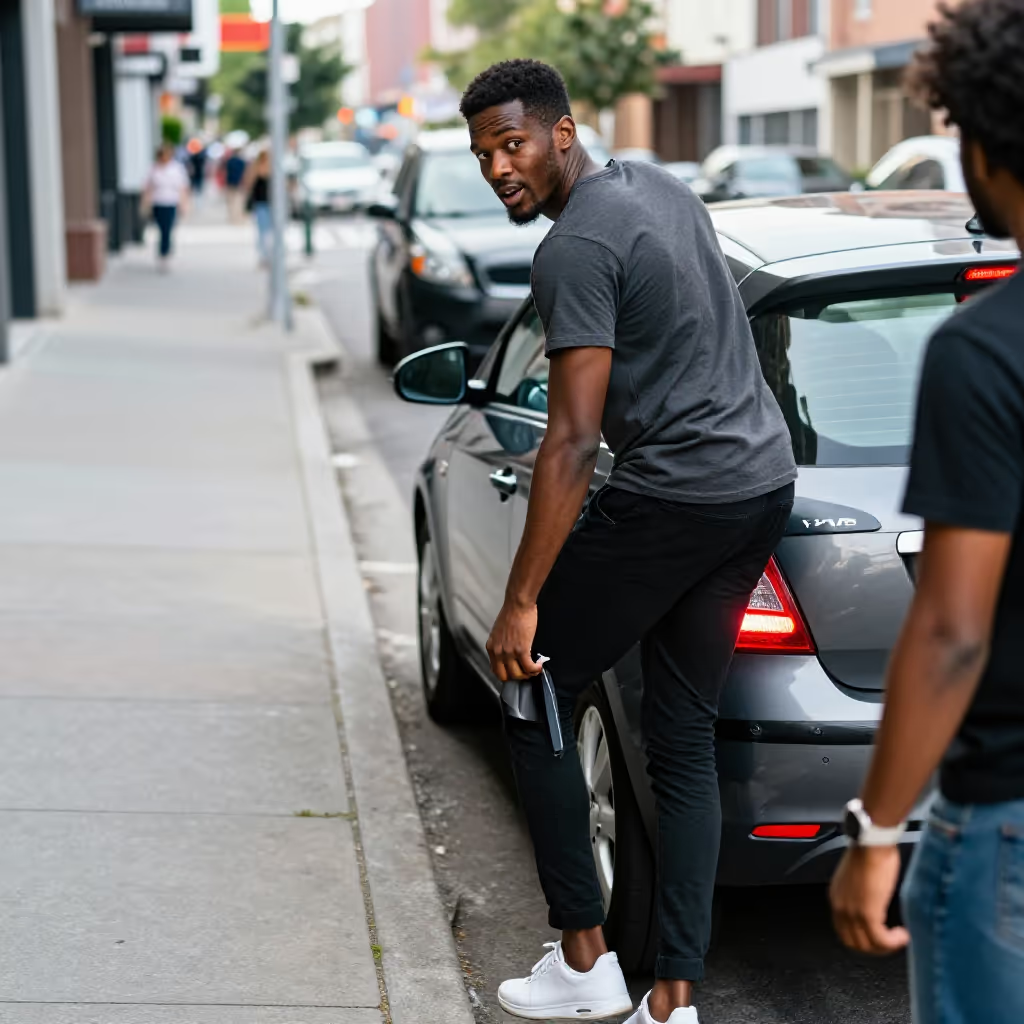
rückwärts
backward
In the direction that lies behind you; opposite to the normal direction of movement or view.
Er schaute nicht hin und fuhr mit dem Auto rückwärts gegen einen Poller.
He wasn't looking and drove the car backward into a bollard.

backward
Loading your saved state.
backward
In the direction that lies behind you; opposite to the normal direction of movement or view.
Er schaute nicht hin und fuhr mit dem Auto rückwärts gegen einen Poller.
He wasn't looking and drove the car backward into a bollard.

The word ends in '-wärts', a suffix that indicates direction. It is combined with 'rück-' (back) and works like other directional adverbs, e.g. 'vorwärts' (forward), 'seitwärts' (sideways), or 'aufwärts' (upward).
Der LKW kann hier nicht wenden, er muss rückwärts aus der engen Straße fahren.
The truck can't turn around here; it has to drive backward out of the narrow street.
As an adverb of movement, 'rückwärts' describes the direction of a verb. It often stands directly with the verb and is typical with verbs such as 'gehen' (to go/walk), 'fahren' (to drive), 'laufen' (to run/walk), or 'einparken' (to park).
Pass auf, wenn du rückwärts gehst!
Watch out when you walk backward!
In the figurative, often negative meaning, 'rückwärts' is frequently used as part of the adjective 'rückwärts gewandt' (backward-looking). This describes a person or idea as old-fashioned and fixated on the past.
Seine Einstellung zur modernen Technik ist sehr rückwärts gewandt.
His attitude toward modern technology is very backward-looking.
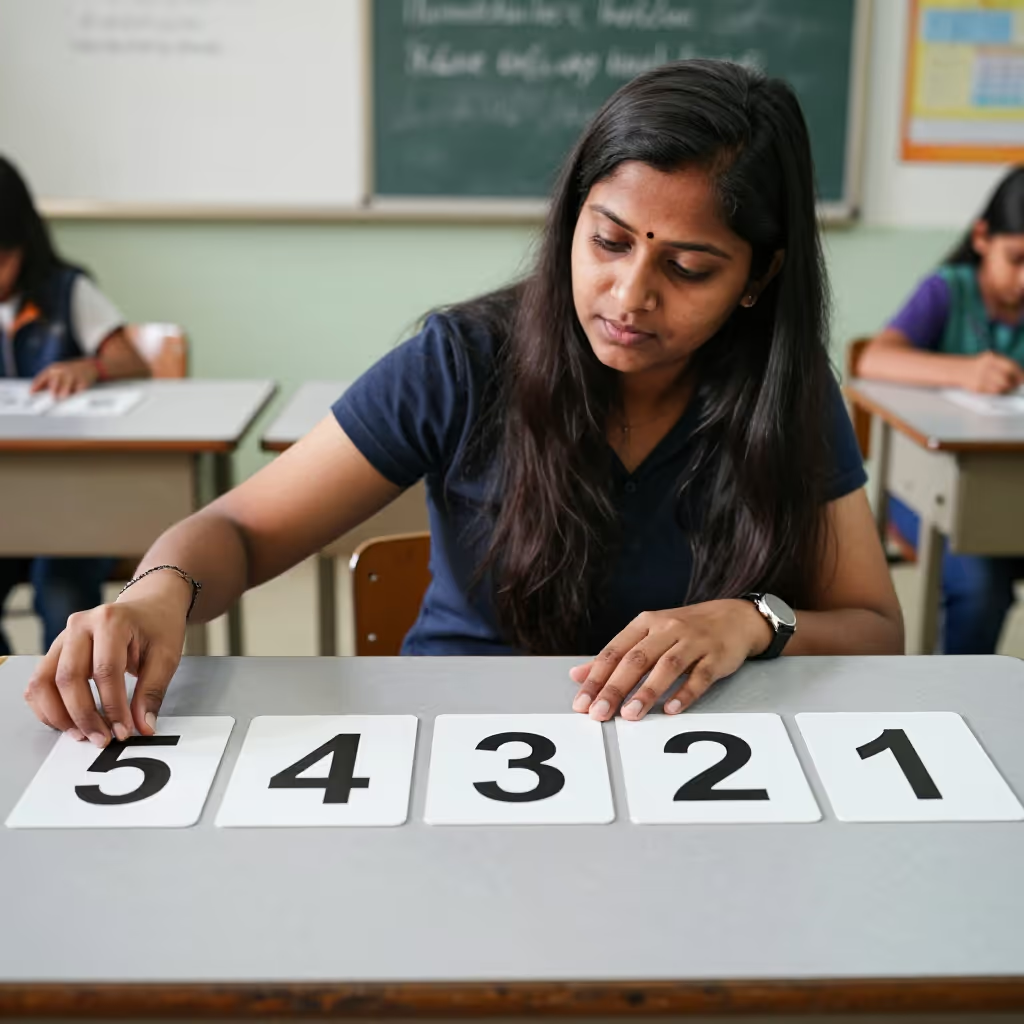
When it is about a sequence, 'rückwärts' means from the end to the beginning. Typical verbs for this are 'zählen' (to count), 'lesen' (to read), or 'aufsagen' (to recite).
Manche Leute können Wörter sehr schnell rückwärts buchstabieren.
Some people can spell words backward very quickly.
back
'zurück' and 'rückwärts' can both describe movement backward. 'zurück' often means: back to the starting point or to a previous place. It also fits with replies or returning something. 'rückwärts' describes the backward direction more precisely, meaning against the normal direction of view or movement, or an order from the end to the beginning. They can be confused because both have to do with 'nach hinten' (backward / toward the back). When it is about the old place, 'zurück' is more natural. When the way something moves is important, 'rückwärts' fits better.

Der Fahrer fährt langsam rückwärts aus der Garage.
The driver slowly backs out of the garage.
Nach dem Einkauf fährt Fiona zurück nach Hause.
After shopping, Fiona drives back home.