


A team sport in which two teams try to carry or kick an oval ball into the opposing team's in-goal area to score points.
example
Mein Bruder spielt seit fünf Jahren Rugby im Verein.
My brother has been playing rugby for a club for five years.
Usage tips
Typical verb
By far the most common verb used with 'Rugby' (rugby) is 'spielen' (to play). As with most sports, you say 'Rugby spielen' (to play rugby).
EXAMPLE
In seiner Freizeit spielt er am liebsten Rugby.
In his free time, he likes playing rugby most of all.
Use without an article
When talking about playing the sport, 'Rugby' (rugby) is normally used without an article. This is the case for most sports in German.
EXAMPLE
Samstags schaue ich im Fernsehen oft Rugby.
On Saturdays, I often watch rugby on TV.
Use in compounds
'Rugby' (rugby) serves as the base word for many compounds. This creates typical German compounds such as 'der Rugbyspieler' (the rugby player), 'die Rugbymannschaft' (the rugby team), or 'der Rugbyball' (the rugby ball).
EXAMPLE
Die deutsche Rugbynationalmannschaft hat ein wichtiges Spiel.
The German national rugby team has an important match.
Compare with
near_synonym · confusable
Rugby vs Football
football
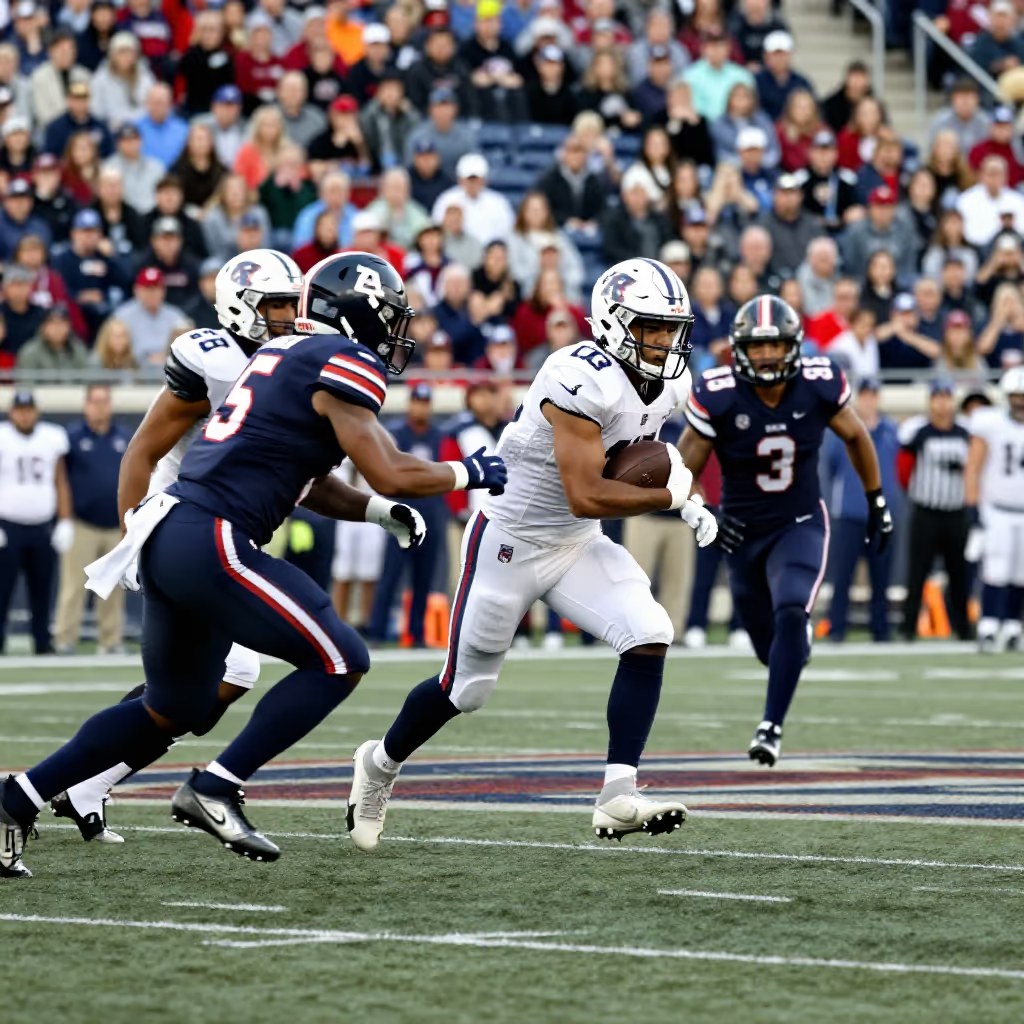
'der Football' and 'das Rugby' are both team sports with an oval or egg-shaped ball. For that reason, they can easily be confused. In German, 'Football' usually means American football from the USA, with protective gear, many breaks in play, and its own rules. 'Rugby' is a different sport in which the ball is carried or kicked and the players normally do not wear large protective gear. When talking about the American sport, 'Football' fits. When talking about rugby rules and rugby teams, 'Rugby' is correct.
Rugby
Beim Rugby trägt ein Spieler den Ball bis ins gegnerische Malfeld.
In rugby, a player carries the ball into the opposing team's in-goal area.
Football
Am Sonntag schaut Max im Fernsehen ein wichtiges Football-Spiel aus den USA.
On Sunday, Max watches an important football game from the USA on TV.