

rudern
to row
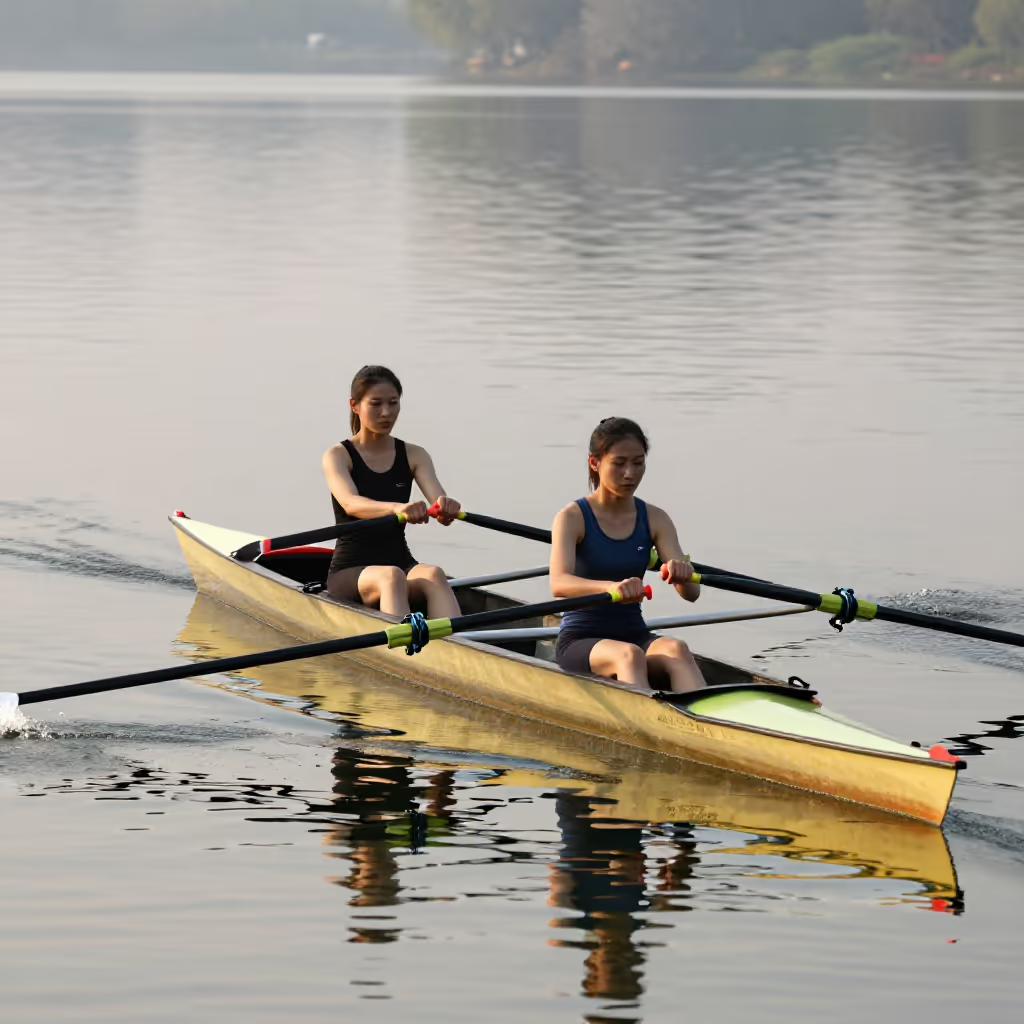
To move a boat through the water using oars.
EXAMPLE
Wir sind am Wochenende auf dem See gerudert.
We rowed on the lake at the weekend.
to row
Loading your saved state.
to row
To move a boat through the water using oars.
Wir sind am Wochenende auf dem See gerudert.
We rowed on the lake at the weekend.

to flail
Colloquial for making rowing-like movements with the arms, often to express embarrassment, helplessness, or rejection.
Als er auf seine widersprüchlichen Aussagen angesprochen wurde, ruderte er nur hilflos mit den Armen.
When he was confronted about his contradictory statements, he just flailed his arms helplessly.
The perfect tense of 'rudern' (to row) can be formed with 'haben' (to have) or 'sein' (to be). Use 'haben' when the activity itself is the focus, without a destination. Use 'sein' when movement toward a specific destination is being described.
Wir haben gestern zwei Stunden lang gerudert.
We rowed for two hours yesterday.
In the literal meaning, 'rudern' (to row) is often used with prepositions that indicate location or direction. Typical phrases are 'auf dem See rudern' (to row on the lake), 'über den Fluss rudern' (to row across the river), or 'ans Ufer rudern' (to row to the shore).
Die Kinder lieben es, auf dem Teich zu rudern.
The children love rowing on the pond.
You can recognize the figurative meaning by the fact that it is not about water or boats. Often the movement is described more precisely, for example with the phrase 'mit den Armen rudern' (to flail one's arms).
Als der Chef ihn nach dem Fehler fragte, begann er nervös mit den Armen zu rudern.
When the boss asked him about the mistake, he nervously began flailing his arms.
The meaning 'to make frantic or embarrassed movements' is colloquial. It is often used to describe how someone reacts to an unpleasant question or situation.
Er versuchte, seine Aussage zu erklären, aber er ruderte nur noch mehr.
He tried to explain his statement, but he only flailed even more.