

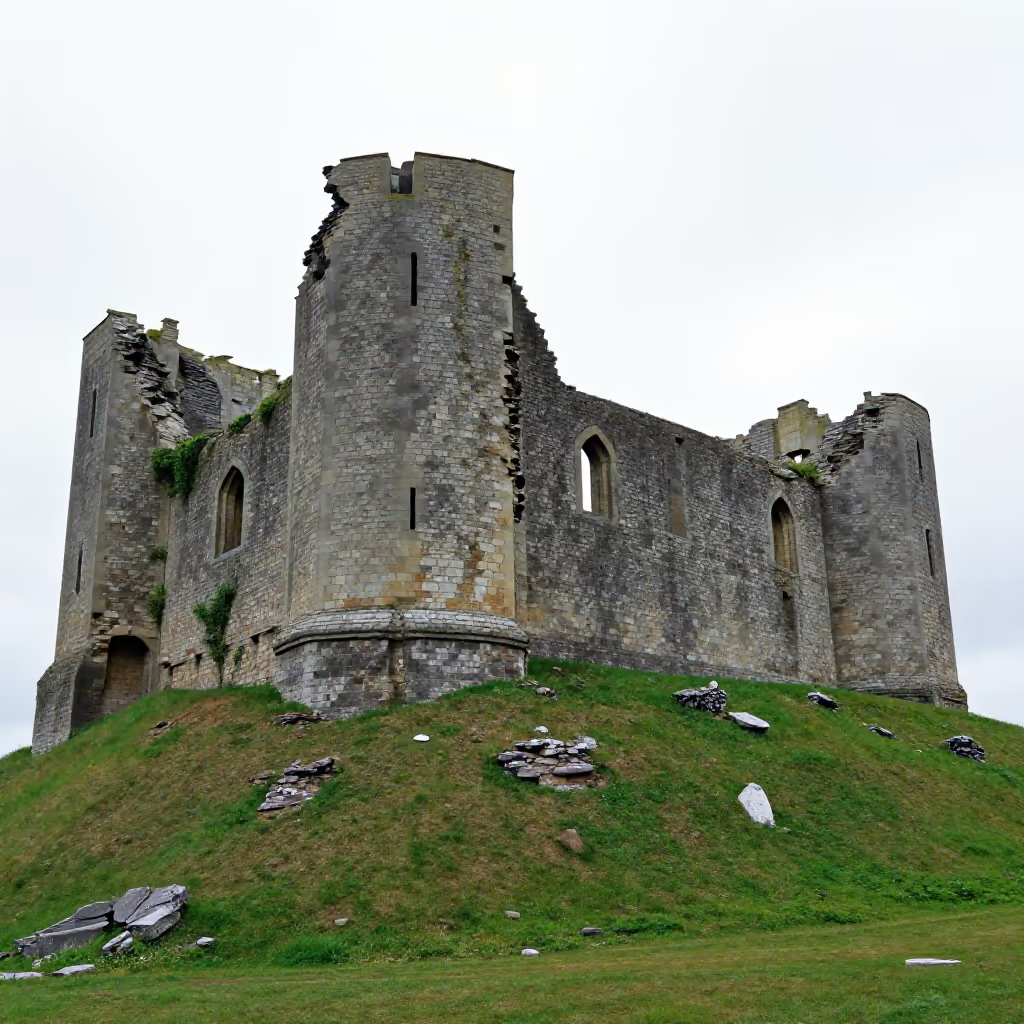
die Ruine
ruin
The remains of a destroyed, collapsed, or dilapidated structure, such as a castle, palace, or house.
EXAMPLE
Wir besichtigten die alte Burgruine auf dem Hügel.
We visited the old castle ruin on the hill.
ruin
Loading your saved state.
ruin
The remains of a destroyed, collapsed, or dilapidated structure, such as a castle, palace, or house.
Wir besichtigten die alte Burgruine auf dem Hügel.
We visited the old castle ruin on the hill.

wreck
A person whose health or financial situation is completely destroyed. It describes a physically or emotionally broken person.
Nach dem Bankrott war er nur noch eine menschliche Ruine.
After the bankruptcy, he was nothing but a human wreck.

ruin
Describes a state of complete destruction or failure, for example of a company or project.
Die Firma war nach der Krise eine finanzielle Ruine.
After the crisis, the company was a financial ruin.
'Die Ruine' (the ruin) belongs to the word family of the verb 'ruinieren' (to ruin). When something is 'ruiniert' (ruined), it is destroyed or turned into a 'Ruine' (ruin).
Der Skandal hat seinen Ruf vollständig ruiniert.
The scandal completely ruined his reputation.
You can recognize the meaning of 'Ruine' (ruin) from the context. Compound words like 'Burgruine' (castle ruin) or 'Klosterruine' (monastery ruin) refer to buildings. Adjectives like 'menschlich' (human) or 'finanziell' (financial) point to the figurative meaning for a person or a company.
Die Schlossruine ist ein beliebtes Ausflugsziel.
The palace ruin is a popular destination for day trips.
In connection with buildings, 'Ruine' (ruin) is often used with verbs like 'besichtigen' (to visit/tour) or 'besuchen' (to visit). A common phrase is also 'in Ruinen liegen' (to lie in ruins), which means that something is completely destroyed.
Im Urlaub haben wir eine alte römische Ruine besichtigt.
On vacation, we visited an old Roman ruin.
Describing a person as a 'Ruine' (wreck) is a strong metaphor. It is used to express that someone has been completely worn down physically or emotionally by illness, misfortune, or emotional stress.
Die lange Krankheit hatte ihn in eine menschliche Ruine verwandelt.
The long illness had turned him into a human wreck.
wreck
Both words can figuratively describe a person who is physically or emotionally completely exhausted. Die Ruine emphasizes the image of a destroyed or broken person more strongly, while das Wrack is the more common direct term for such a person. In everyday speech, das Wrack is therefore usually more suitable.

Nach den vielen Krankheiten fühlte er sich wie eine menschliche Ruine.
After all the illnesses, he felt like a human wreck.
Nach den vielen Krankheiten war er körperlich ein Wrack.
After all the illnesses, he was physically a wreck.