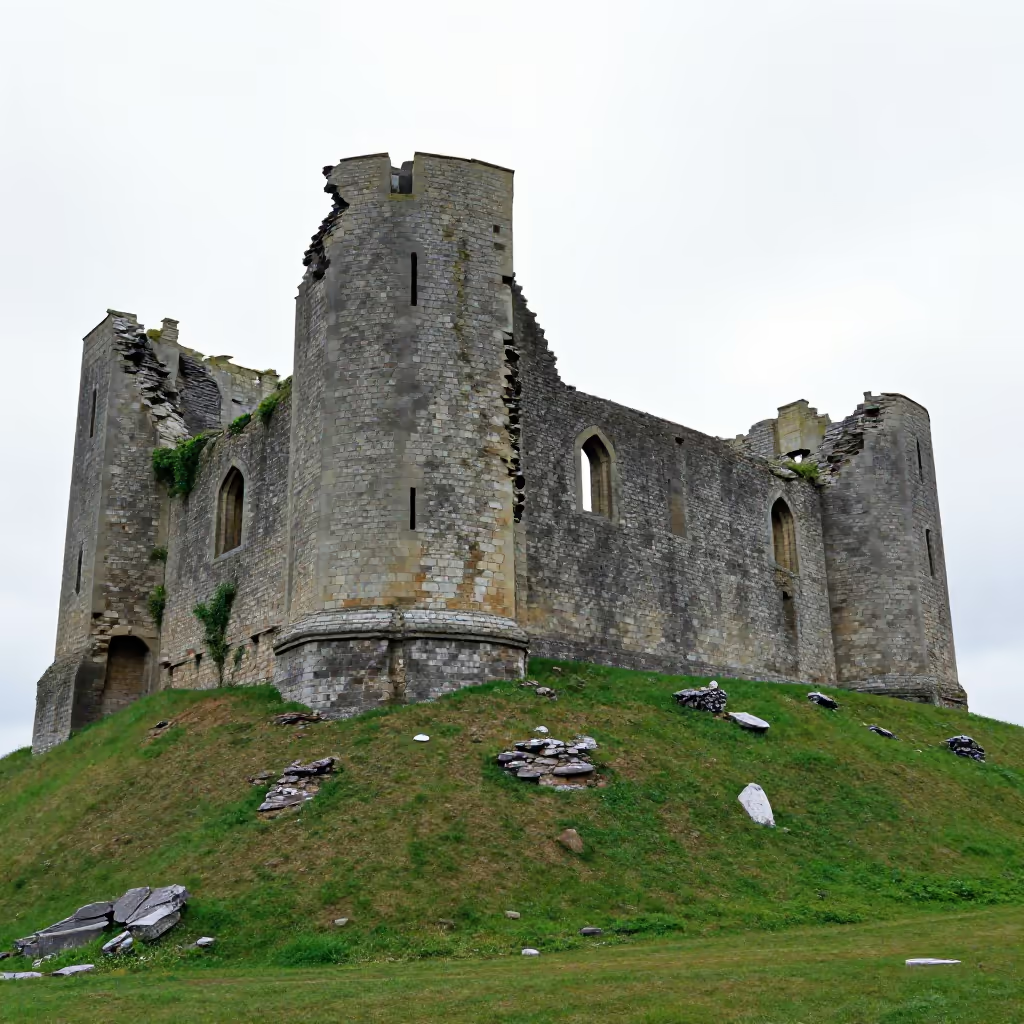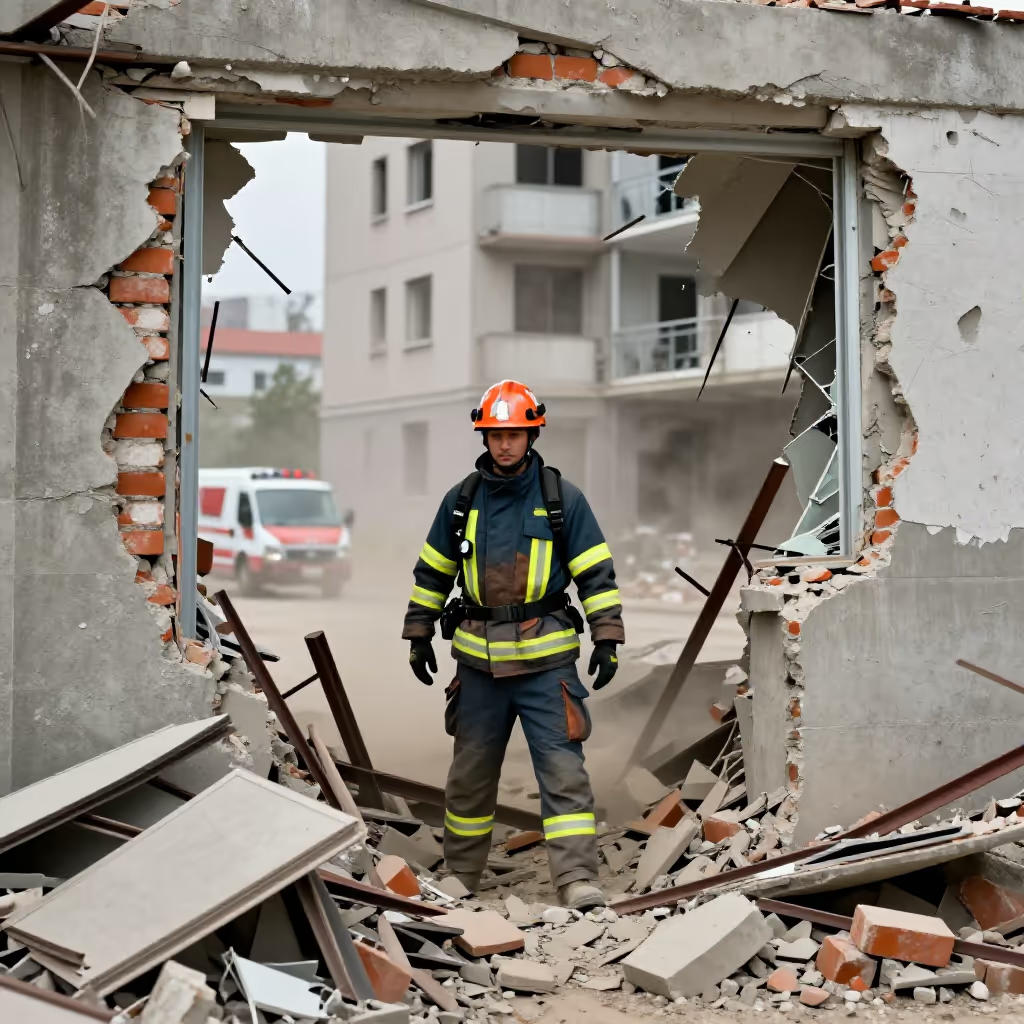
The remains and fragments of something that has been destroyed, especially buildings, cities, or vehicles after a war, an explosion, or a natural disaster.
example
Nach dem Erdbeben lag die ganze Stadt in Trümmern.
After the earthquake, the whole city lay in ruins.

Usage tips
Used only in the plural
The word 'Trümmer' (rubble/ruins) is used almost exclusively in the plural because it describes a quantity of fragments. Therefore, people always say 'den Trümmern' (the rubble/ruins), not 'dem Trümmer'.
EXAMPLE
Die Feuerwehr suchte in den Trümmern des Hauses nach Überlebenden.
The fire department searched for survivors in the rubble of the house.
Fixed expression
The expression 'in Trümmern liegen' (to lie in ruins) is very common. It describes a state of complete destruction, both for concrete things such as buildings and figuratively for abstract things.
EXAMPLE
Nach dem Sturm lag das ganze Dorf in Trümmern.
After the storm, the whole village lay in ruins.
Typical verbs
In connection with real rubble, verbs such as 'beseitigen' (to remove), 'aufräumen' (to clean up), or 'bergen' (to rescue/recover), e.g. 'eine Person aus den Trümmern bergen' (to rescue a person from the rubble), are often used.
EXAMPLE
Freiwillige halfen dabei, die Trümmer von der Straße zu räumen.
Volunteers helped clear the rubble from the street.
Figurative meaning
When 'Trümmer' (rubble/ruins) is used figuratively, it refers to the failure of something abstract. Typical combinations are 'ein Leben in Trümmern' (a life in ruins), 'eine Ehe in Trümmern' (a marriage in ruins), or 'Träume in Trümmern' (dreams in ruins).
EXAMPLE
Nach dem Bankrott stand er vor den Trümmern seiner Existenz.
After the bankruptcy, he was left facing the ruins of his existence.
Compare with
near_synonym
Trümmer vs Zusammenbruch
collapse / breakdown
'der Zusammenbruch' and 'die Trümmer' often belong to the same situation, but they do not mean the same thing. 'der Zusammenbruch' describes the event: a building, a system, or a plan suddenly collapses or breaks down. 'die Trümmer' are what remains afterward, meaning fragments or a state of complete destruction. With buildings, the difference is especially clear: first comes the collapse, then rubble lies on the ground. With abstract things too, you can say that hopes or plans 'in Trümmern liegen' (lie in ruins).
Trümmer
Nach der Explosion suchten die Helfer in den Trümmern nach Verletzten.
After the explosion, the rescue workers searched the rubble for injured people.
Zusammenbruch
Nach dem Zusammenbruch der alten Brücke wurde die Straße gesperrt.
After the collapse of the old bridge, the road was closed.