


rumstehen
to stand around
Colloquial for standing idly, and often in the way, in one place without having a specific task.
EXAMPLE
Steh nicht nur rum, sondern hilf mir mal!
Don't just stand around—come help me!
to stand around
Loading your saved state.
to stand around
Colloquial for standing idly, and often in the way, in one place without having a specific task.
Steh nicht nur rum, sondern hilf mir mal!
Don't just stand around—come help me!
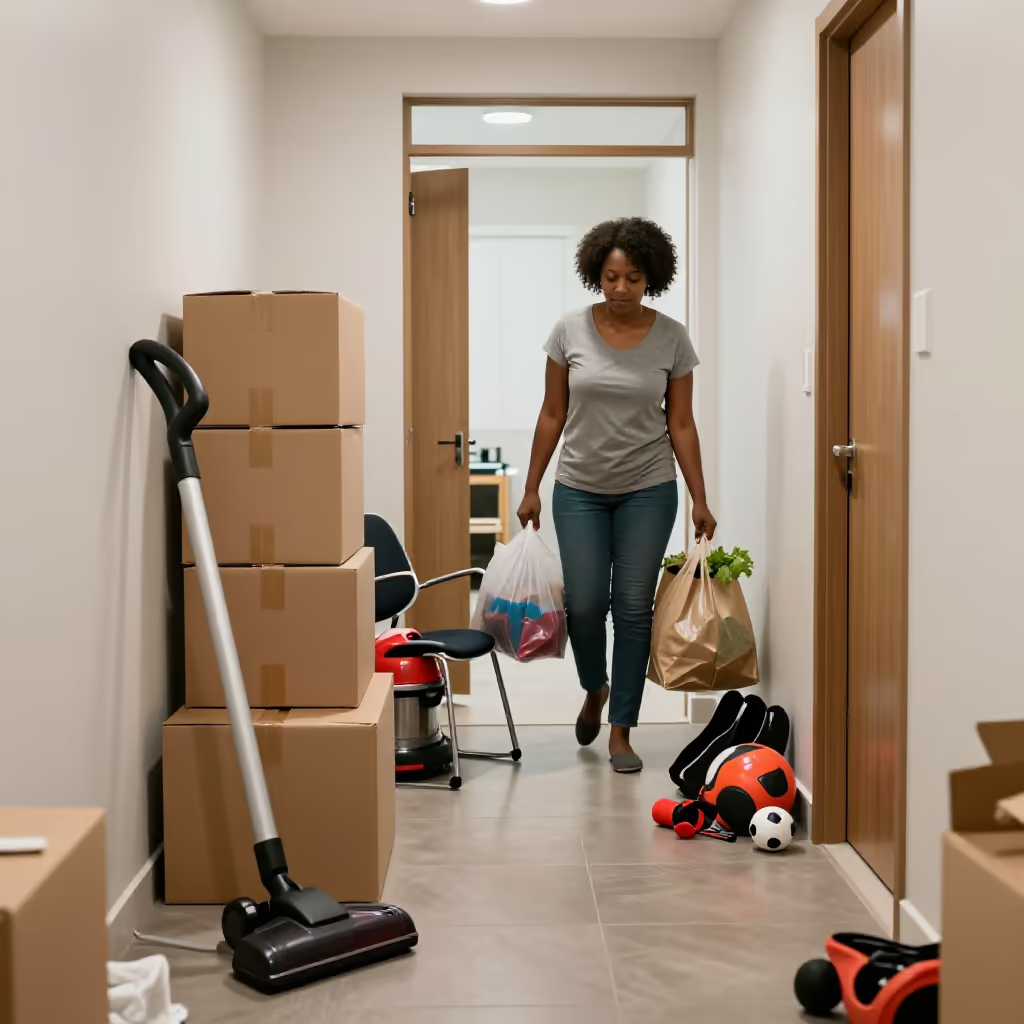
to sit around
Colloquial for objects that have been left somewhere unused or in the way.
Die leeren Flaschen stehen schon seit Tagen in der Küche rum.
The empty bottles have been sitting around in the kitchen for days.
'Rumstehen' (to stand around) is a colloquial, separable verb. The prefix 'rum' is a short, informal form of 'herum' (around). It expresses an undirected or aimless action.
Die alten Möbel stehen nur noch im Keller rum.
The old furniture is just sitting around in the basement now.
As a separable verb, the prefix 'rum' moves to the end in a main clause. In a subordinate clause or in the infinitive with 'zu', the verb stays together.
Die Jugendlichen stehen oft am Bahnhof rum.
The teenagers often stand around at the train station.
The word 'rumstehen' (to stand around) almost always has a negative connotation. It implies that a person is lazy or useless, or that an object is in the way and making things messy.
Hör auf, nur dumm rumzustehen und pack mit an!
Stop just standing around stupidly and lend a hand!
to stand there / come across
Dastehen (to stand there) and rumstehen (to stand around) can both mean that someone is standing in a particular place and doing nothing. Rumstehen is colloquial and often presents the inactivity as pointless or disruptive, whereas dastehen can also express mere presence or helplessness. Dastehen is therefore usually the better choice in a neutral sentence.

Vor dem Eingang standen die Besucher herum und versperrten den Weg.
The visitors were standing around in front of the entrance and blocking the way.
Nach dem Stromausfall stand ich ratlos im Flur da.
After the power outage, I stood there helplessly in the hallway.