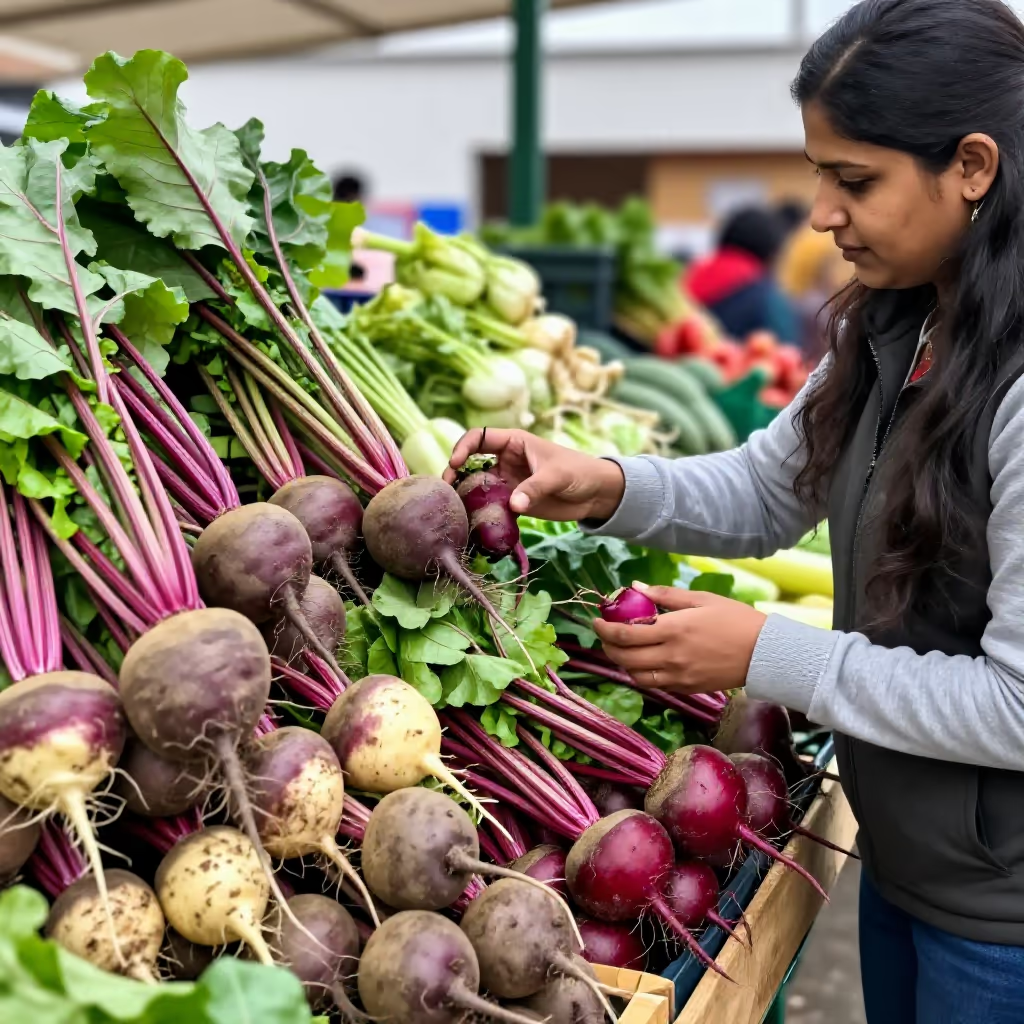
A plant with a thick, edible root that is grown as a vegetable, for producing sugar, or as animal feed. Examples include sugar beets, rutabagas, or red beets (beetroot).
example
Für den Eintopf verwenden wir heute Rüben aus dem eigenen Garten.
For the stew today, we're using turnips from our own garden.

Usage tips
Context clue
You can easily recognize the meaning of 'Rübe' (turnip/beet; head) from context. If people are talking about food, cooking, or agriculture, it means the vegetable. In colloquial situations about people, it often means the head.
EXAMPLE
Für die Suppe brauchen wir noch eine Rübe.
We still need a turnip for the soup.
Typical types
The word 'Rübe' (turnip/beet) is often used as part of compound words to refer to a specific type. Common examples are 'Zuckerrübe' (sugar beet), 'Steckrübe' (rutabaga), or 'Rote Rübe' (red beet/beetroot).
EXAMPLE
Aus Zuckerrüben wird ein Großteil des Zuckers in Deutschland hergestellt.
A large portion of the sugar in Germany is made from sugar beets.
Register and style
Using 'Rübe' to mean 'Kopf' (head) is purely colloquial and often joking or slightly derogatory. You should avoid it in formal or neutral conversations.
EXAMPLE
Pass auf, dass du dir nicht die Rübe stößt!
Be careful you don't bump your head!
Compare with
near_synonym
Rübe vs Kopf
head
'der Kopf' and 'die Rübe' can both mean a person's head. 'Kopf' is the neutral standard word and always fits when you are talking factually about the body part. 'Rübe' is colloquial and usually joking. It sounds coarse or very casual and is more suitable in familiar situations. For example, people jokingly say 'Pass auf deine Rübe auf' (watch your head). In serious conversations, at the doctor's, or in school, 'Kopf' is more natural and more precise.
Rübe
Beim Reparieren habe ich mir die Rübe am Regal gestoßen.
While repairing something, I bumped my head on the shelf.
Kopf
Im Park trägt sie einen Hut, damit ihr Kopf vor der Sonne geschützt ist.
In the park, she wears a hat so her head is protected from the sun.