

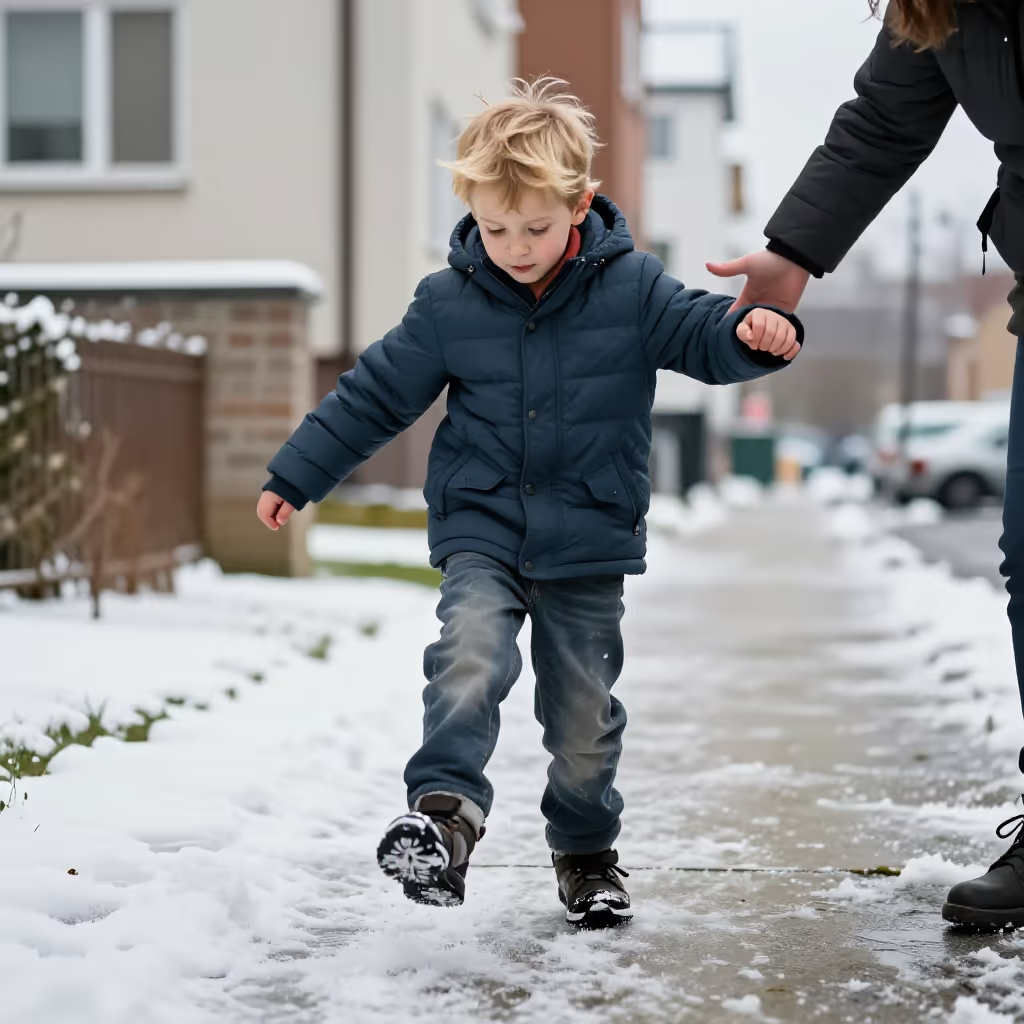
der Rutsch
slide
A short, gliding movement on a smooth or sloping surface.
EXAMPLE
Nach dem Regen war der Rutsch die nasse Wiese hinunter besonders schnell.
After the rain, the slide down the wet meadow was especially fast.
slide / slip
Loading your saved state.
slide
A short, gliding movement on a smooth or sloping surface.
Nach dem Regen war der Rutsch die nasse Wiese hinunter besonders schnell.
After the rain, the slide down the wet meadow was especially fast.

Happy New Year
A fixed expression used to wish someone a good transition into the new year. It is only used on New Year's Eve.
Wir sehen uns nächstes Jahr wieder – einen guten Rutsch!
We'll see each other again next year — Happy New Year!
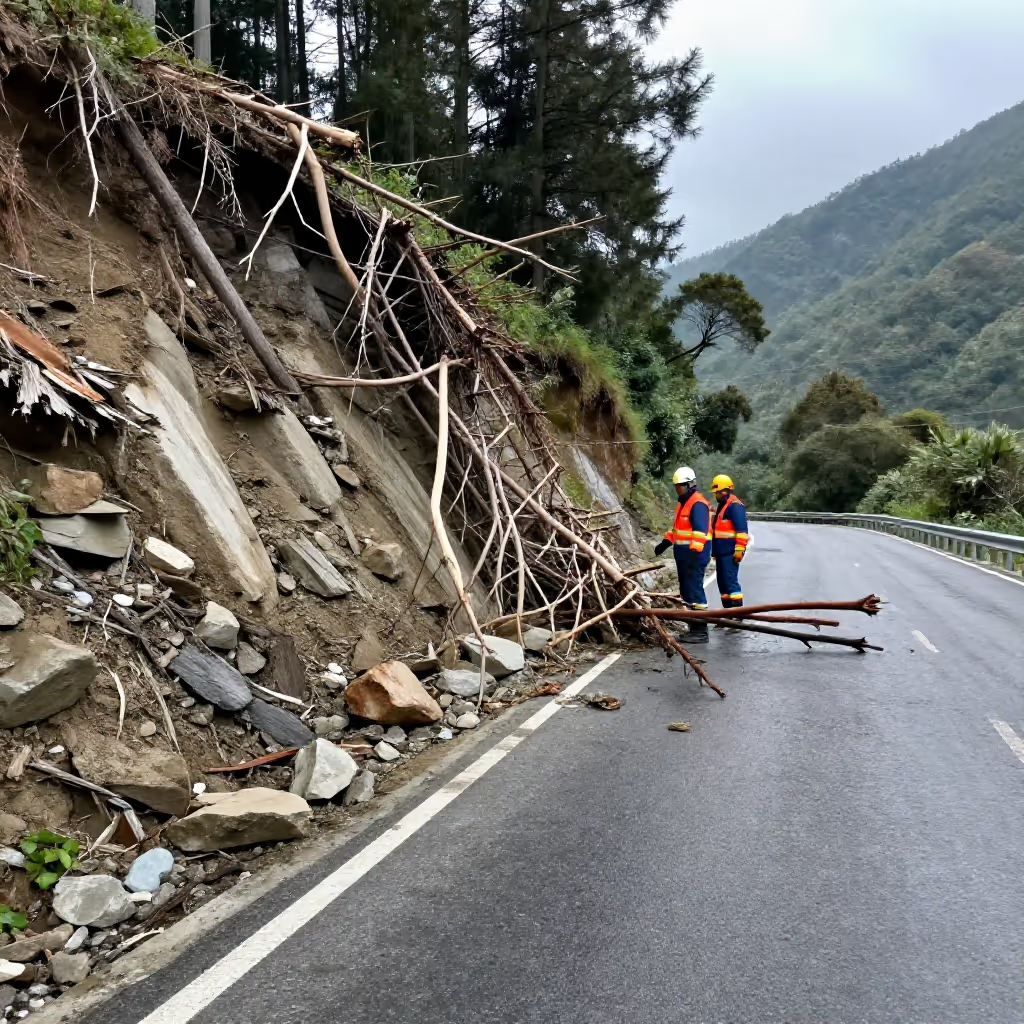
landslide
The sudden sliding down of masses of earth or rock on a slope; a landslide.
Ein gewaltiger Rutsch hat die Bergstraße blockiert.
A massive landslide blocked the mountain road.
The noun 'der Rutsch' (slide/slip) is derived directly from the verb 'rutschen' (to slide). It describes the action or the result of sliding.
Die Kinder hatten Spaß bei jedem Rutsch auf der Eisfläche.
The children had fun with every slide on the ice.
The expression 'einen guten Rutsch' is used exclusively on New Year's Eve to wish someone a good transition into the new year. People often respond with 'Danke, ebenfalls!' (Thanks, same to you!).
Ich wünsche dir und deiner Familie einen guten Rutsch ins neue Jahr!
I wish you and your family a Happy New Year!
In the literal meaning, 'der Rutsch' (slide) is often used with prepositions that indicate a direction or a place. Typical phrases are 'ein Rutsch auf' (a slide on), 'ein Rutsch in' (a slide into), or 'ein Rutsch über' (a slide across/over).
Mit einem lauten Platscher endete sein Rutsch im Wasser.
With a loud splash, his slide ended in the water.
When 'Rutsch' is used in connection with mountains, slopes, or blocked roads, it usually means a landslide. In this context, it is a shorter form of 'Erdrutsch' (landslide) or 'Bergrutsch' (mountain landslide).
Wegen eines Rutschs war die Passstraße für mehrere Stunden gesperrt.
Because of a landslide, the pass road was closed for several hours.
to glide
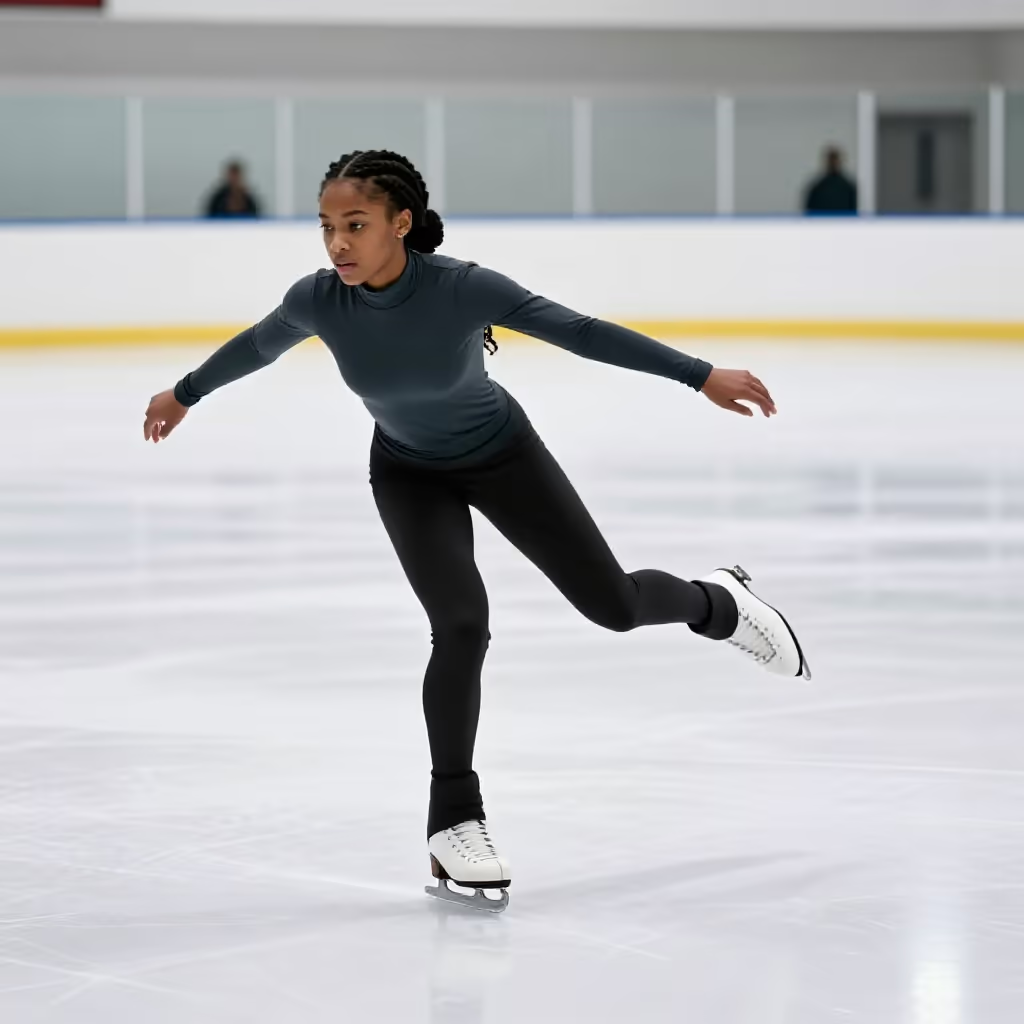
A Rutsch refers to a single, short movement on a smooth or sloping surface. Gleiten, by contrast, describes the smooth, continuous movement itself. Rutsch is therefore suitable for a brief event, while gleiten is used for a movement that is observed over a longer period.
Mit einem kurzen Rutsch kam der Schlitten unten an.
The sled reached the bottom with one short slide.
Der Schlitten glitt gleichmäßig den langen Hang hinunter.
The sled glided steadily down the long slope.