


Schiss haben
to be scared
(Colloquial, crude) To be very afraid of something or someone.
EXAMPLE
Ich geb's zu, ich hab total Schiss vor Spinnen.
I admit it, I'm totally scared of spiders.
fear / diarrhea
Loading your saved state.
to be scared
(Colloquial, crude) To be very afraid of something or someone.
Ich geb's zu, ich hab total Schiss vor Spinnen.
I admit it, I'm totally scared of spiders.
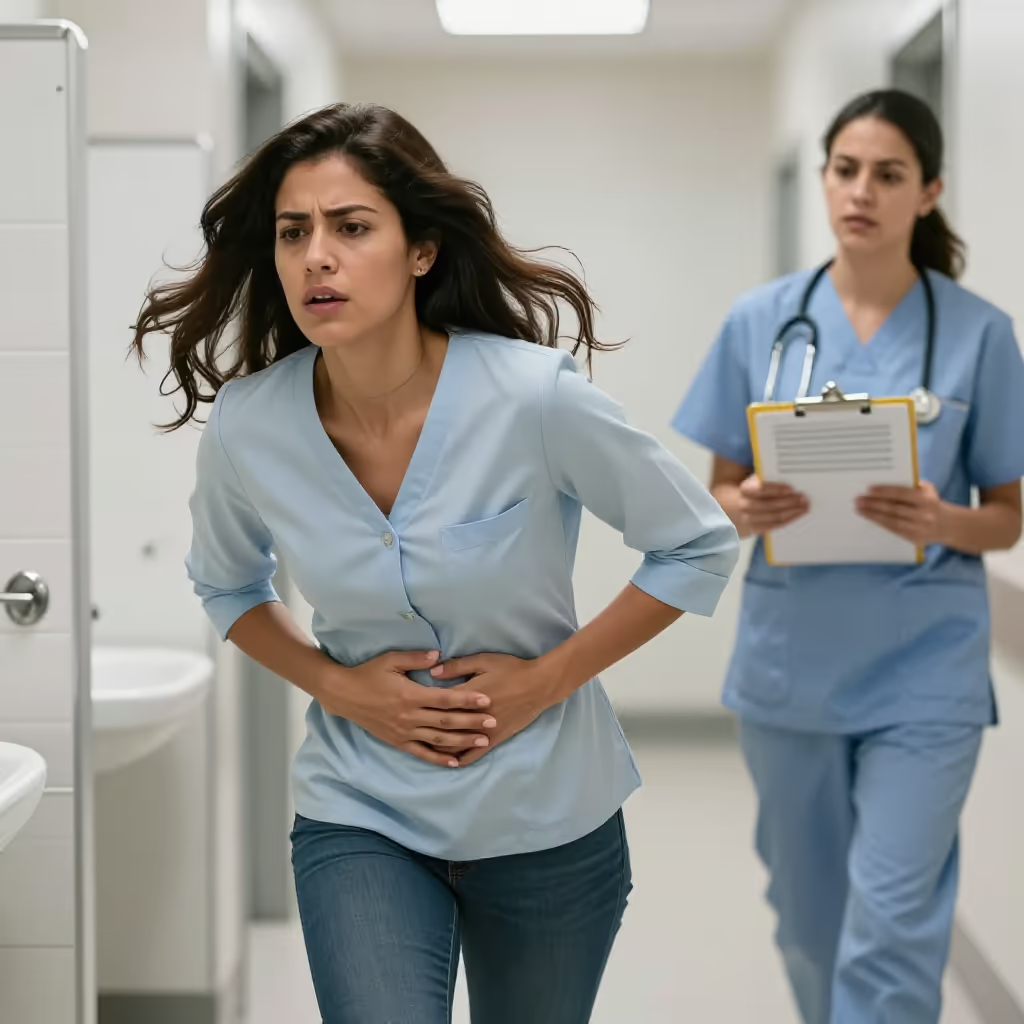
the runs
(Colloquial, vulgar) Diarrhea.
Von dem komischen Essen habe ich gestern richtig Schiss bekommen.
That weird food yesterday gave me a bad case of the runs.
The word 'Schiss' is very colloquial and is considered crude or even vulgar. You should only use it in very informal situations and among friends.
Komm schon, das ist doch kein Grund, Schiss zu haben.
Come on, that's no reason to be scared.
To express fear, you use the fixed expression 'Schiss haben' (to be scared). The noun almost always appears without an article here. The fear relates to something with the preposition 'vor' + dative.
Er hat furchtbar Schiss vor dem Zahnarzt.
He's terribly scared of the dentist.
The meaning 'Durchfall' (diarrhea) is usually clear from the context (food, illness). It is often used with verbs like 'bekommen' (to get) or 'kriegen' (to get) and is also very colloquial.
Ich glaube, von dem Essen kriege ich Schiss.
I think that food is going to give me the runs.
fear
Both words can express that someone is afraid of a person or situation. „Angst haben“ is neutral and suitable for practically any everyday situation, whereas „Schiss haben“ is strongly colloquial and crude. Use „Angst“ in neutral conversations and „Schiss“ only in deliberately casual speech.

Vor dem schwierigen Gespräch hatte er Schiss.
He was scared of the difficult conversation.
Vor dem schwierigen Gespräch hatte er Angst.
He was afraid of the difficult conversation.