

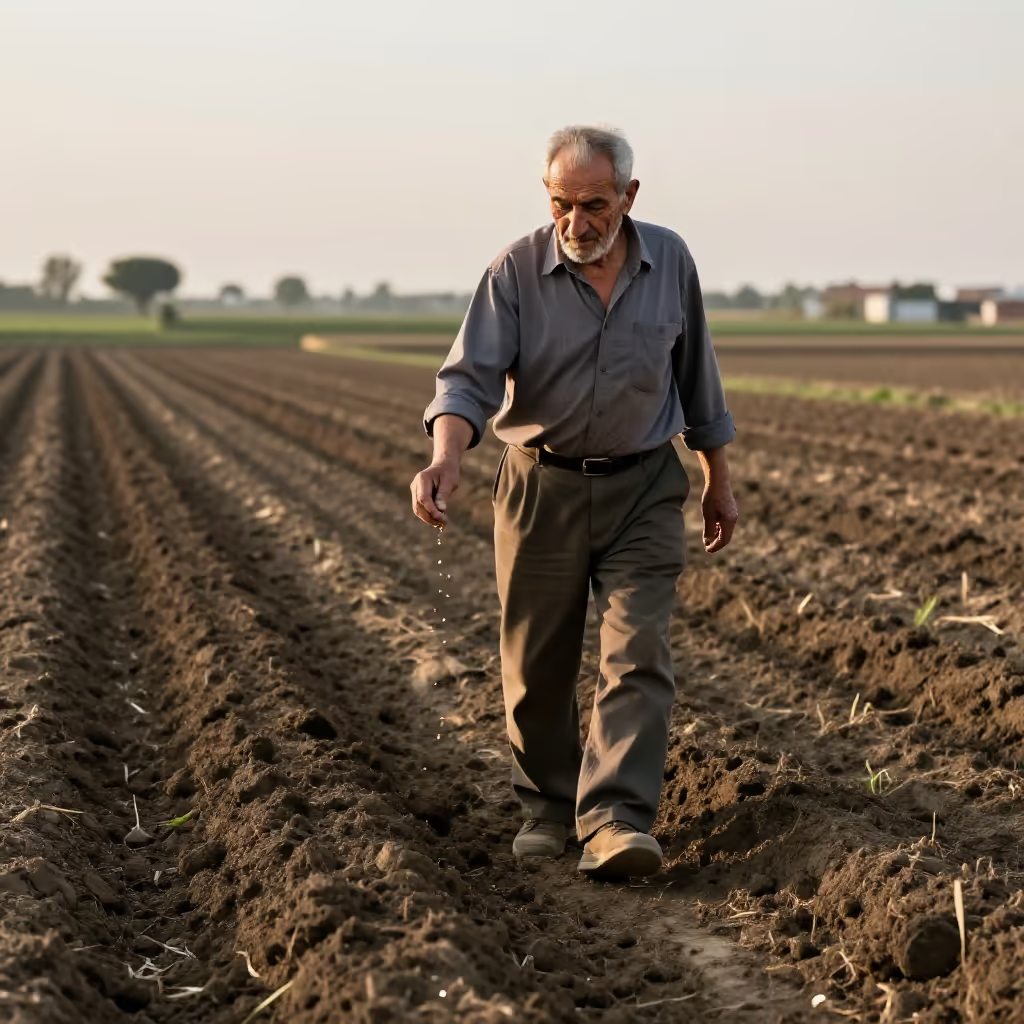
säen
to sow
To put seeds into the soil so that plants can grow from them. This is a basic step in agriculture and gardening.
EXAMPLE
Im Frühling säen die Bauern das Getreide auf den Feldern.
In spring, the farmers sow the grain in the fields.
to sow
Loading your saved state.
to sow
To put seeds into the soil so that plants can grow from them. This is a basic step in agriculture and gardening.
Im Frühling säen die Bauern das Getreide auf den Feldern.
In spring, the farmers sow the grain in the fields.

to sow
To cause or spread something, usually something negative such as doubt, discord, or fear, which then develops and spreads.
Mit seinen falschen Anschuldigungen hat er nur Misstrauen gesät.
With his false accusations, he only sowed mistrust.
You can tell whether the literal or figurative meaning is meant from the object. If it refers to seeds or plants, e.g. 'Körner' (grains) or 'Blumen' (flowers), it is literal. If it refers to abstract, negative feelings, e.g. 'Zweifel' (doubts) or 'Hass' (hatred), it is meant figuratively.
Im Herbst können Sie Blumenzwiebeln für das nächste Jahr säen.
In autumn, you can sow flower bulbs for the next year.
In the figurative meaning, 'säen' (to sow) is almost always used with negative concepts. Typical combinations are 'Zweifel säen' (to sow doubt), 'Misstrauen säen' (to sow mistrust), 'Zwietracht säen' (to sow discord), or 'Angst säen' (to sow fear).
Durch die Gerüchte wurde in der Firma gezielt Zwietracht gesät.
Through the rumors, discord was deliberately sown in the company.
The verb is part of the well-known proverb 'Wer Wind sät, wird Sturm ernten' (whoever sows the wind will reap the storm). It means that small negative actions can have major negative consequences.
Er hat alle belogen und verlor am Ende alle seine Freunde – wer Wind sät, wird Sturm ernten.
He lied to everyone and in the end lost all his friends—whoever sows the wind will reap the storm.
to spread
Both words can describe passing on doubt, fear, or discord. „Verbreiten“ neutrally refers to passing something on, while „säen“ emphasizes figuratively that this causes something to arise and then develop. Choose „säen“ when the possible development of the negative effect is the focus.

Der falsche Bericht sät unter den Nachbarn Zweifel und Misstrauen.
The false report sowed doubt and mistrust among the neighbors.
Die falsche Nachricht verbreitet unter den Nachbarn große Angst.
The false report spread widespread fear among the neighbors.