

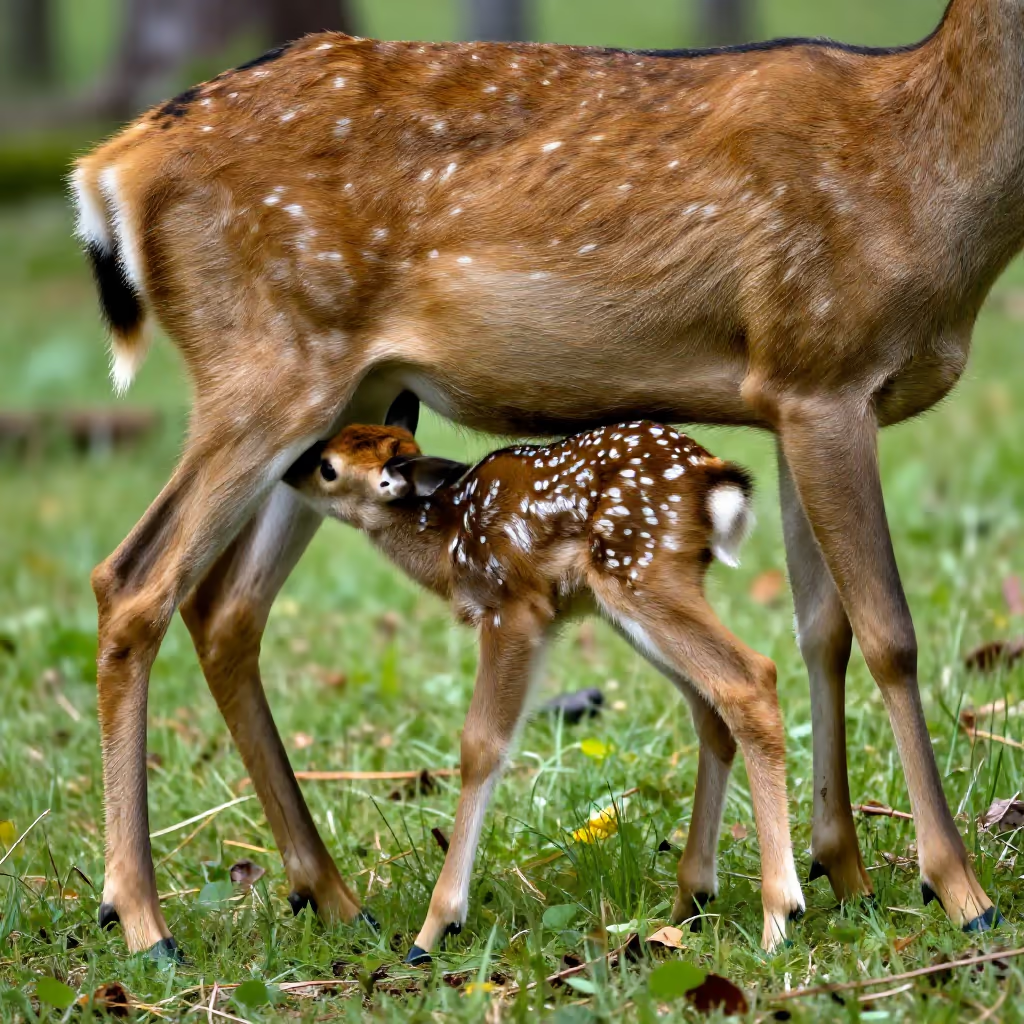
An animal from the class of vertebrates characterized by the fact that the females nurse their young with milk from their mammary glands. Other features are usually a coat of hair and a constant body temperature.
example
Der Blauwal ist das größte Säugetier der Welt.
The blue whale is the largest mammal in the world.
Usage tips
Compound word
The word is made up of the verb 'säugen' (to nurse/feed young with milk) and 'das Tier' (the animal). So it literally means a 'nursing animal', which describes the main characteristic of this class of animals.
EXAMPLE
Ein Delfin ist ein Säugetier, obwohl er im Wasser lebt.
A dolphin is a mammal, even though it lives in water.
Word family
The verb 'säugen' (to nurse) is the core of the word. It describes the action that gives this class of animals its name: feeding offspring with milk from the mother's mammary glands.
EXAMPLE
Die Katze säugt ihre Jungen. Katzen sind Säugetiere.
The cat nurses her young. Cats are mammals.
Classification context
'Säugetier' (mammal) is a biological term for classifying animals. It is often used in educational or scientific contexts to distinguish this group from others such as birds, fish, or reptiles.
EXAMPLE
Im Biologieunterricht lernen wir die Merkmale von einem Säugetier.
In biology class, we learn the characteristics of a mammal.
Compare with
confusable
Säugetier vs Vogel
bird
'der Vogel' and 'das Säugetier' are both words for animal groups, but they refer to different kinds of animals. A bird has feathers, wings, and a beak. A mammal nurses its young with milk and usually has fur or hair. Learners may confuse the words because both are biological groups and some animals are hard to classify at first glance. The important point is: birds are not mammals. Bats can fly, but they are mammals; penguins cannot fly, but they are birds.
Säugetier
Eine Fledermaus ist ein Säugetier, obwohl sie fliegen kann.
A bat is a mammal, even though it can fly.
Vogel
Im Park sitzt ein bunter Vogel auf dem Ast und singt laut.
In the park, a colorful bird is sitting on the branch and singing loudly.