

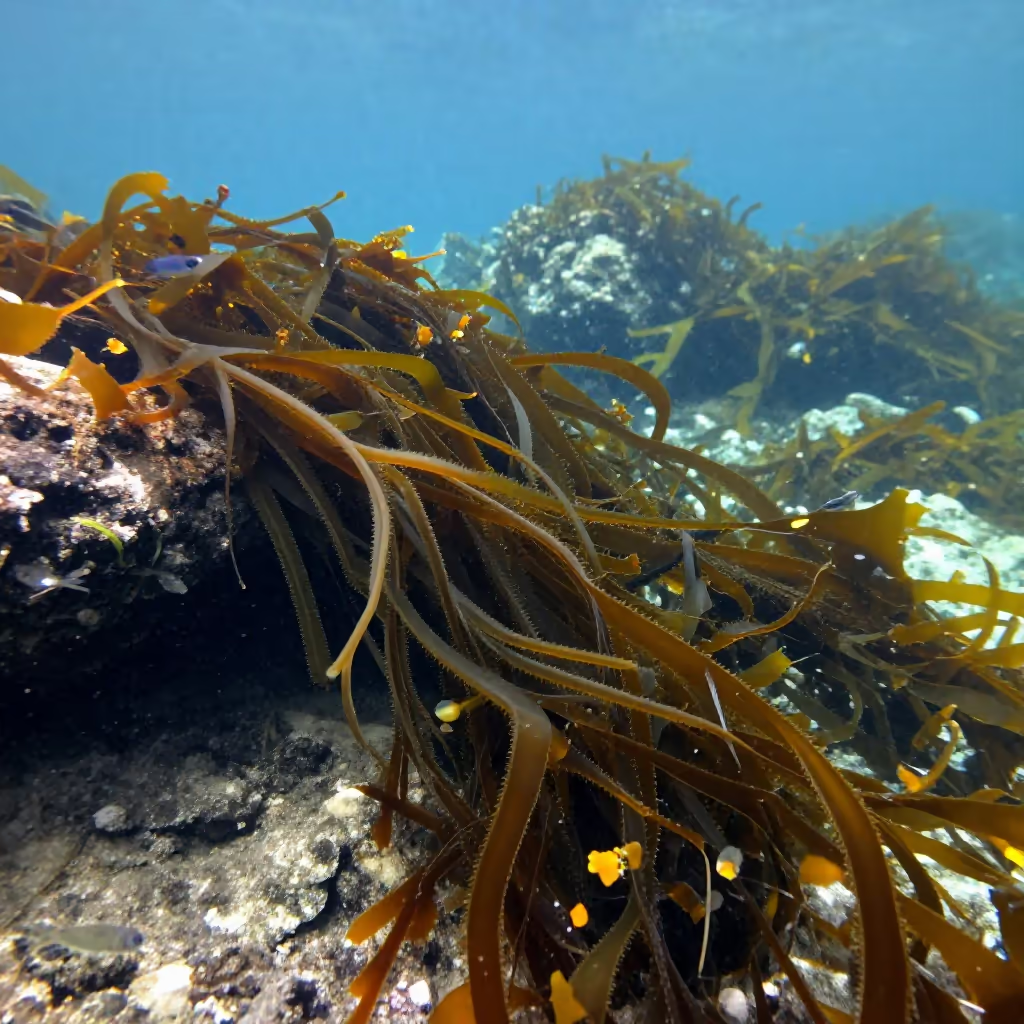
der Tang
seaweed
A general term for various types of large algae that grow in the sea or along coasts.
EXAMPLE
Nach dem Sturm lag am Strand überall grüner und brauner Tang.
After the storm, green and brown seaweed was lying all over the beach.
seaweed / tang
Loading your saved state.
seaweed
A general term for various types of large algae that grow in the sea or along coasts.
Nach dem Sturm lag am Strand überall grüner und brauner Tang.
After the storm, green and brown seaweed was lying all over the beach.
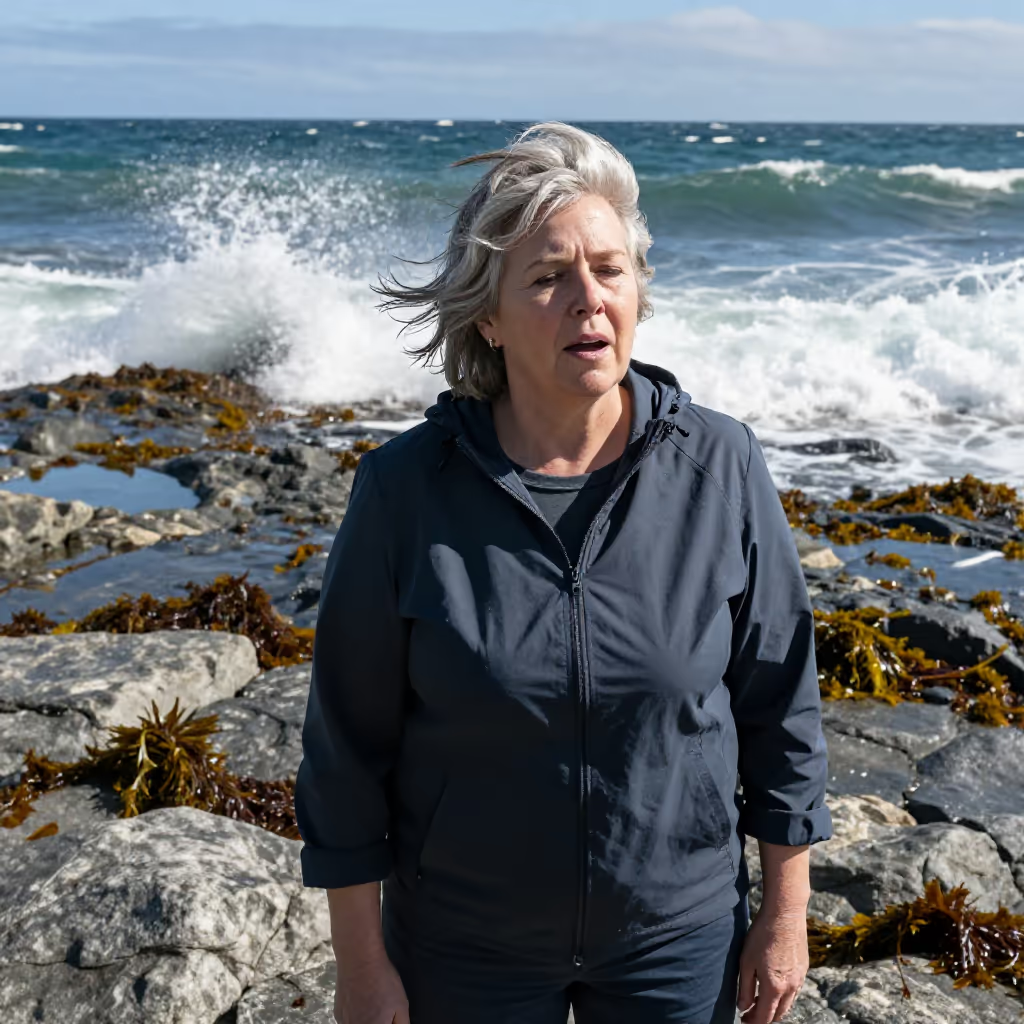
tang
A strong, penetrating smell or taste that is often perceived as salty, spicy, or slightly sharp. It is frequently used to describe the characteristic smell of the sea.
Die Luft war erfüllt vom salzigen Tang des Ozeans.
The air was filled with the salty tang of the ocean.
You can easily recognize the meaning of 'Tang' (seaweed/tang) from the context. If it refers to a plant on the beach or in the water, it means seaweed. If it is about a smell or taste, it refers to a sensory impression.
Die Fischer holten nicht nur Fische, sondern auch eine Menge Tang aus dem Netz.
The fishermen pulled not only fish but also a lot of seaweed out of the net.
When 'Tang' (seaweed) refers to algae, it is usually used like an uncountable noun, similar to 'Sand' (sand) or 'Wasser' (water). People speak of 'Tang' as a mass, not as individual plants.
Der ganze Strand war nach dem Sturm mit Tang bedeckt.
The whole beach was covered with seaweed after the storm.
In the meaning of 'Geruch' (smell) or 'Geschmack' (taste), 'Tang' is often combined with words that describe the senses. Typical phrases are 'der salzige Tang' (the salty tang), 'ein Geruch von Tang' (a smell of tang), or 'der Tang des Meeres' (the tang of the sea).
Die frische Brise trug den salzigen Tang des Meeres bis zu unserem Hotel.
The fresh breeze carried the salty tang of the sea all the way to our hotel.
alga
Alge is the general term and can refer to a single specimen as well as small or large algae in fresh or salt water. Tang is a collective term for large algae in the sea or along the coast. Both words are therefore possible for large marine growth, but Tang is more specific.
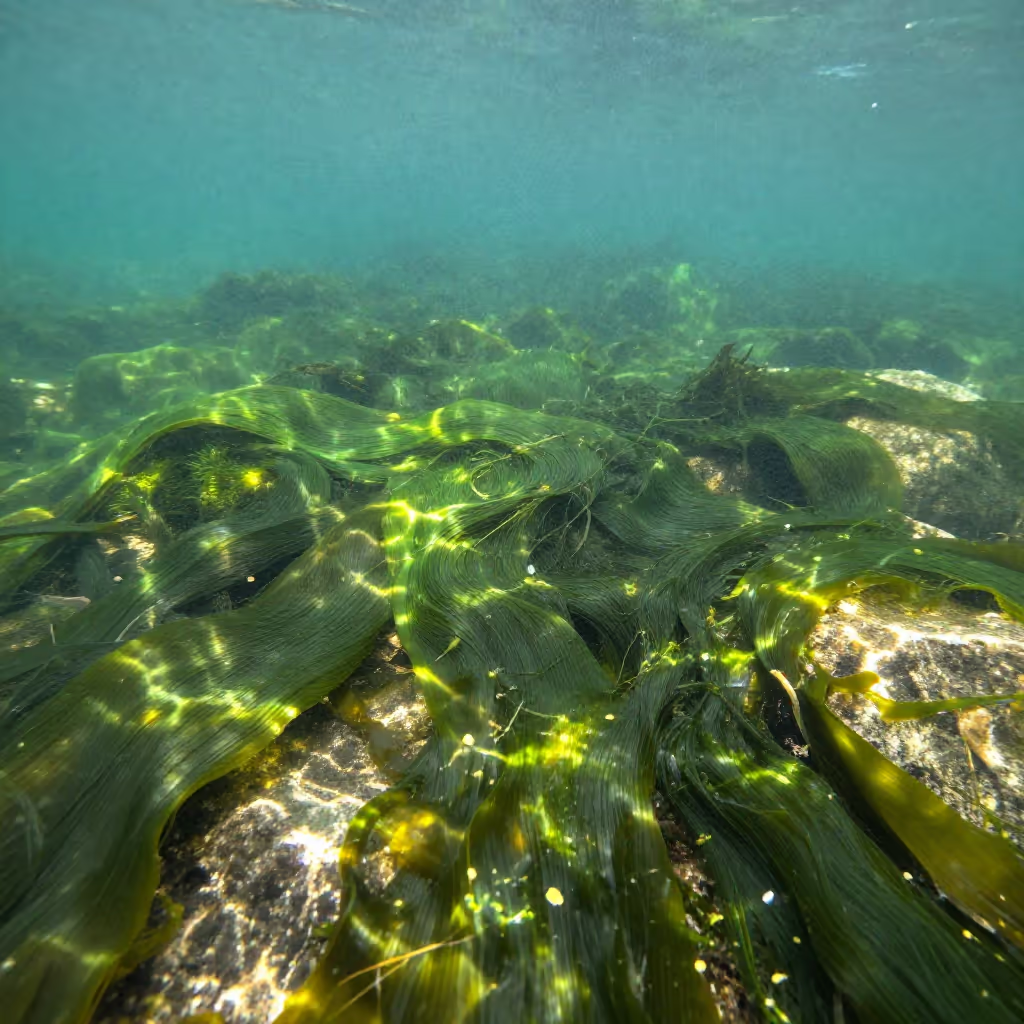
Großer Tang bedeckte weite Teile der felsigen Küste.
Large seaweed covered large parts of the rocky coast.
Eine große Alge schwamm dicht unter der Meeresoberfläche.
A large alga was floating just below the surface of the sea.