

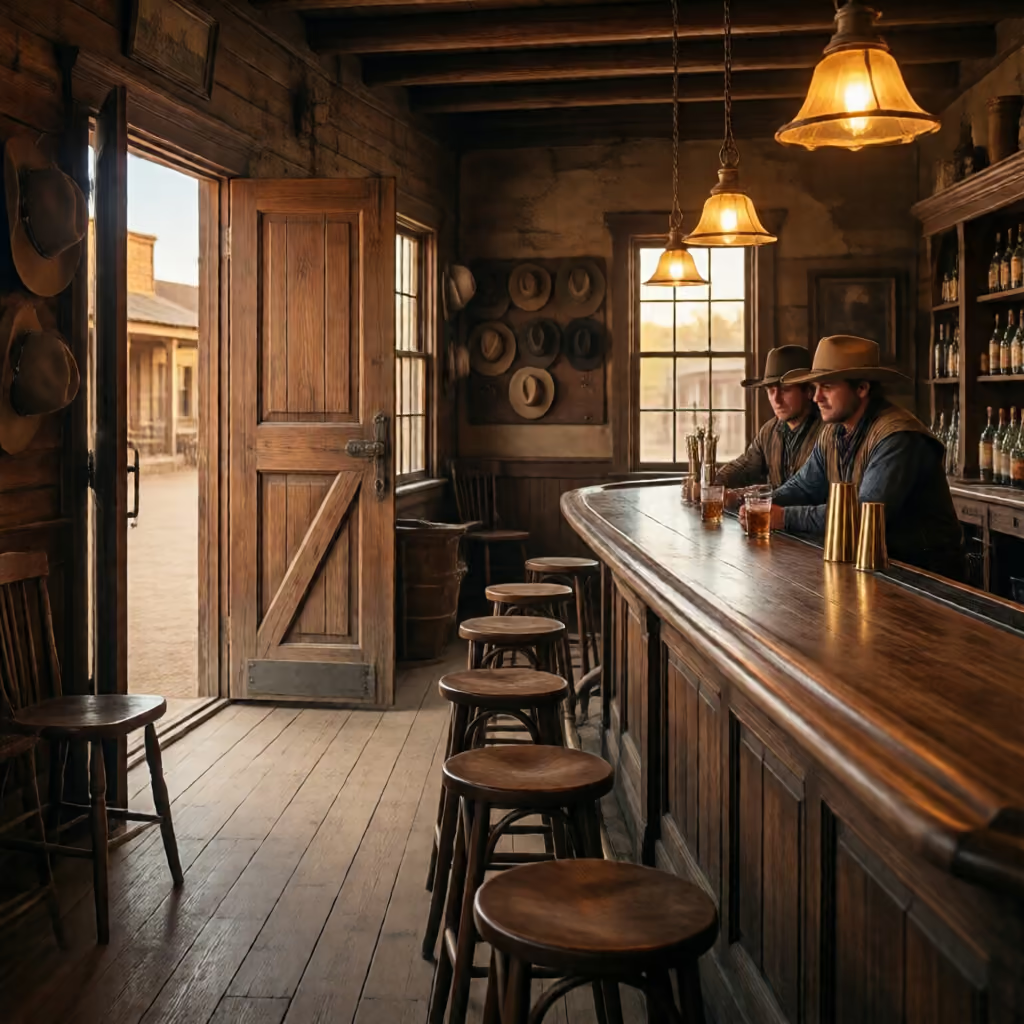
der Saloon
saloon
A bar or tavern in the style of the American Old West.
EXAMPLE
Die Cowboys trafen sich abends im Saloon.
The cowboys met at the saloon in the evening.
saloon
der Saloon, die Saloons
Loading your saved state.
saloon
A bar or tavern in the style of the American Old West.
Die Cowboys trafen sich abends im Saloon.
The cowboys met at the saloon in the evening.
| gender | masculine der |
|---|---|
| plural | die Saloons |
| genitive | des Saloons |
| singular | plural | |
|---|---|---|
| nominative | der Saloon | die Saloons |
| accusative | den Saloon | die Saloons |
| dative | dem Saloon | den Saloons |
| genitive | des Saloons | der Saloons |
The article changes with the case; it is shown in colour.
'Saloon' usually refers to a tavern that evokes the American Old West. The word therefore appears especially in Western films, historical depictions, and stories involving cowboys.
Im Saloon spielte ein Pianist, während die Gäste Karten spielten.
A pianist played in the saloon while the guests played cards.
Common phrases include „im Saloon sitzen“ (to sit in the saloon), „einen Saloon betreten“ (to enter a saloon), and „einen Saloon betreiben“ (to run a saloon). Compounds such as „Western-Saloon“ (Western-style saloon) also indicate the typical Western design.
Der Besitzer betreibt seit zehn Jahren einen kleinen Saloon.
The owner has been running a small saloon for ten years.
For being in the place, „in“ is usually used with the dative: „im Saloon“ (in the saloon). For movement into the tavern, „in“ is used with the accusative: „in den Saloon“ (into the saloon).
Nach dem Duell ging der Cowboy in den Saloon.
After the duel, the cowboy went into the saloon.
Später saßen alle im Saloon und tranken Kaffee.
Later, everyone sat in the saloon and drank coffee.