

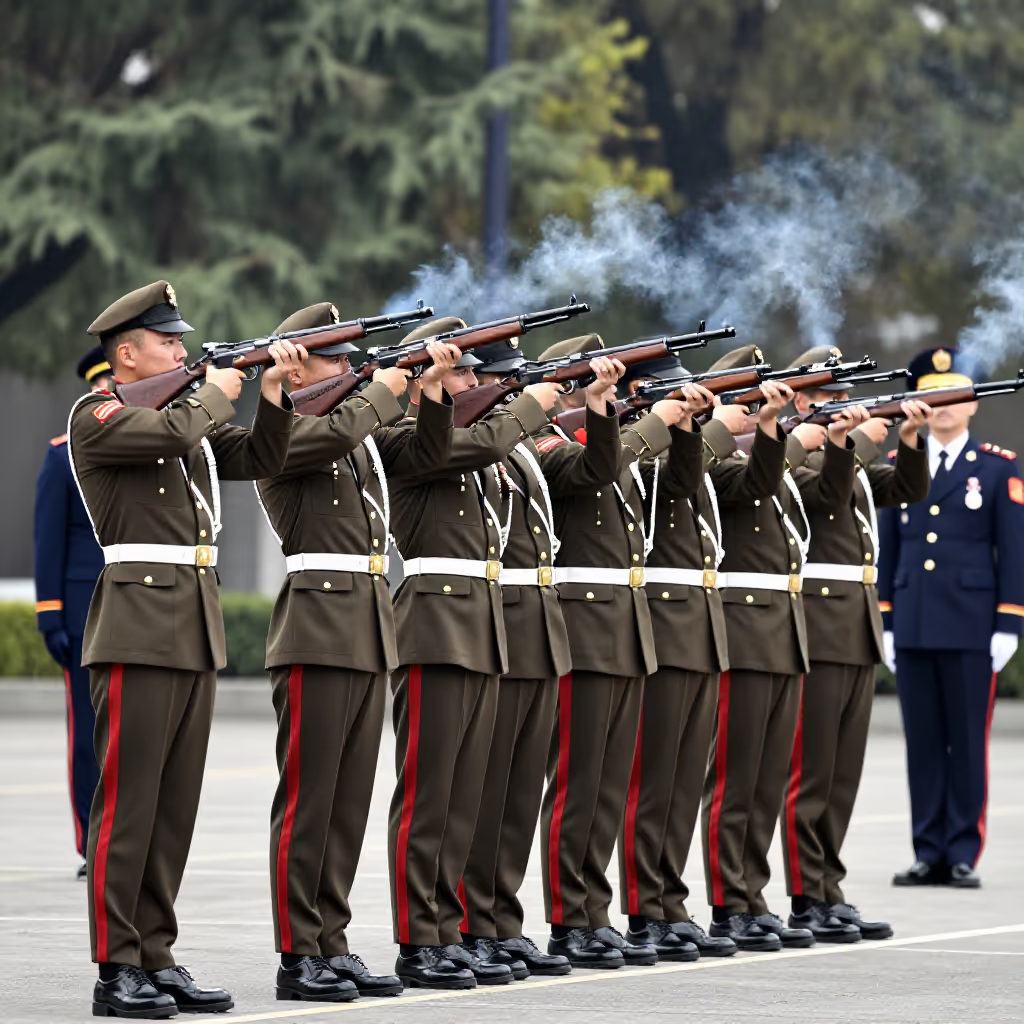
die Salve
volley
The simultaneous or rapid successive firing of several firearms, especially in a military context.
EXAMPLE
Die Soldaten feuerten zur Begrüßung drei Salven in die Luft.
The soldiers fired three volleys into the air as a greeting.
volley / burst
Loading your saved state.
volley
The simultaneous or rapid successive firing of several firearms, especially in a military context.
Die Soldaten feuerten zur Begrüßung drei Salven in die Luft.
The soldiers fired three volleys into the air as a greeting.

burst
A quick, forceful sequence of something, for example questions, applause, laughter, or insults.
Nach seiner umstrittenen Aussage erntete der Politiker eine Salve der Empörung.
After his controversial statement, the politician was met with a burst of outrage.
To recognize the meaning of 'Salve' (volley/burst), pay attention to the context. In a military or historical context, it is about shots. In discussions, performances, or texts, it describes a rapid sequence of words or sounds.
Die Kanonen feuerten eine Salve zur Feier des Tages ab.
The cannons fired a volley to celebrate the day.
The word 'Salve' (volley/burst) is more common in written language or in a more formal style. In everyday speech, it is heard less often and often sounds figurative or dramatic.
Die Presse begrüßte den Vorschlag mit einer Salve der Entrüstung.
The press greeted the proposal with a burst of indignation.
In a military context, 'Salve' (volley) is almost always combined with the verbs 'abfeuern' (to fire) or 'abgeben' (to fire/discharge).
Der Kapitän befahl, eine Salve abzufeuern.
The captain ordered them to fire a volley.
In its figurative meaning, 'Salve' (burst) is often used with the preposition 'von' (of) or as a compound to describe a forceful reaction. Typical examples are 'eine Salve von Fragen' (a burst of questions), 'eine Salve von Beschimpfungen' (a burst of insults), or 'eine Beifallssalve' (a burst of applause).
Nach dem Konzert gab es eine laute Beifallssalve für die Musiker.
After the concert, there was a loud burst of applause for the musicians.