

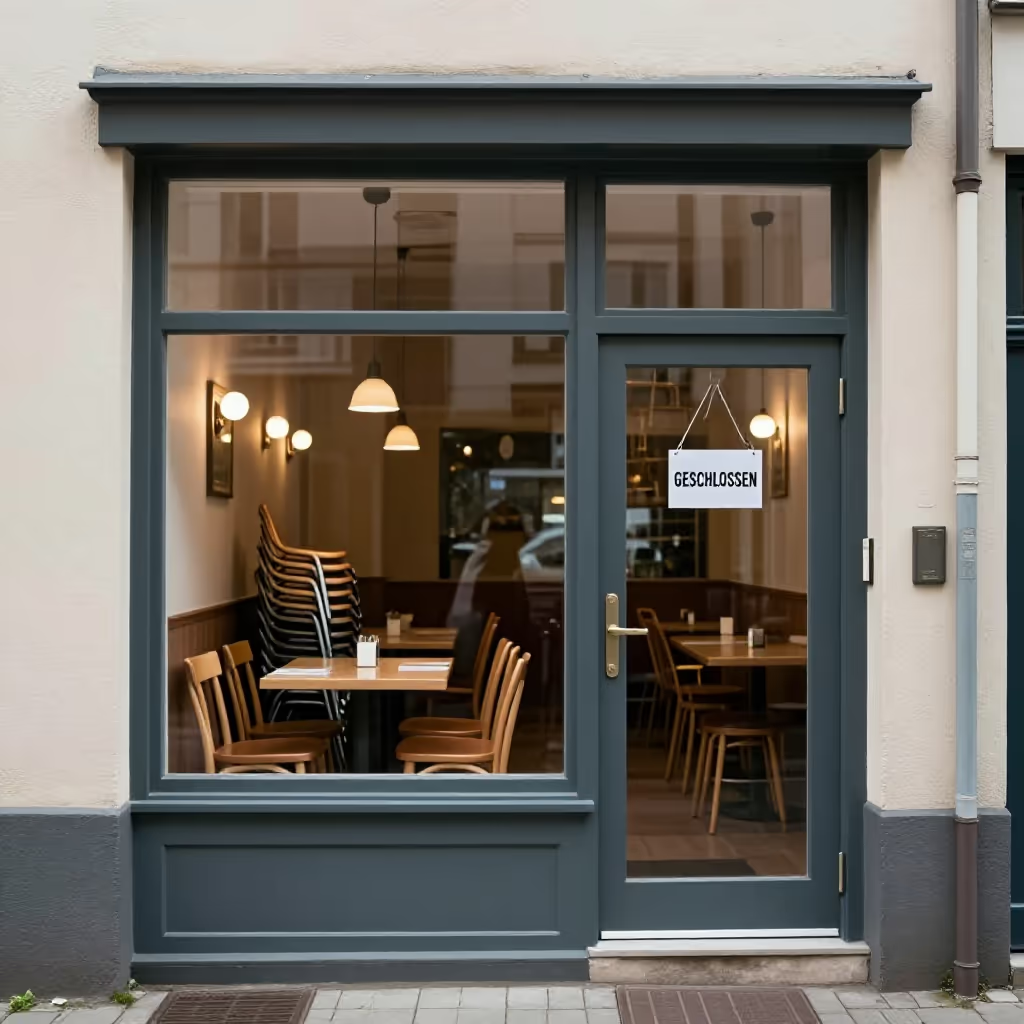
der Ruhetag
closing day
A weekday on which a business, especially a restaurant or small shop, is closed to customers.
EXAMPLE
Das Restaurant hat am Montag Ruhetag.
The restaurant is closed on Mondays.
rest day / closing day
Loading your saved state.
closing day
A weekday on which a business, especially a restaurant or small shop, is closed to customers.
Das Restaurant hat am Montag Ruhetag.
The restaurant is closed on Mondays.

rest day
A day meant for personal rest and relaxation, on which one does not work or do other strenuous activities.
Nach der anstrengenden Woche legte sie am Sonntag einen Ruhetag ein.
After the exhausting week, she took a rest day on Sunday.
'Der Ruhetag' (rest day / closing day) is a compound noun made from 'die Ruhe' (rest/quiet) and 'der Tag' (day). The meaning can be understood literally: it is a day when things are quiet, either in a business or for a person.
Sonntags ist bei uns Familientag, das ist ein Tag der Ruhe.
Sundays are family day for us; that is a day of rest.
When referring to a business, the structure '(weekday) ist Ruhetag' ((weekday) is the closing day) or 'Das Geschäft hat am (Wochentag) Ruhetag' (The shop is closed on (weekday)) is often used. The verb is usually 'sein' (to be) or 'haben' (to have).
Achtung, das Museum hat dienstags Ruhetag.
Note: the museum is closed on Tuesdays.
When a person is resting, the typical expressions are 'einen Ruhetag einlegen' (to take a rest day), 'einen Ruhetag machen' (to have a rest day), or 'sich einen Ruhetag gönnen' (to treat oneself to a rest day). These emphasize the active decision to take a break.
Nach dem Marathonlauf hat die Sportlerin erstmal einen Ruhetag eingelegt.
After the marathon, the athlete first took a rest day.
You can tell whether the business-related or personal meaning is intended from the subject of the sentence. If it is a restaurant, shop, or museum, the closing day is meant. If it is a person, the rest day is meant.
Die kleine Boutique hat montags immer Ruhetag. (Geschäft)
The small boutique is always closed on Mondays. (business)