

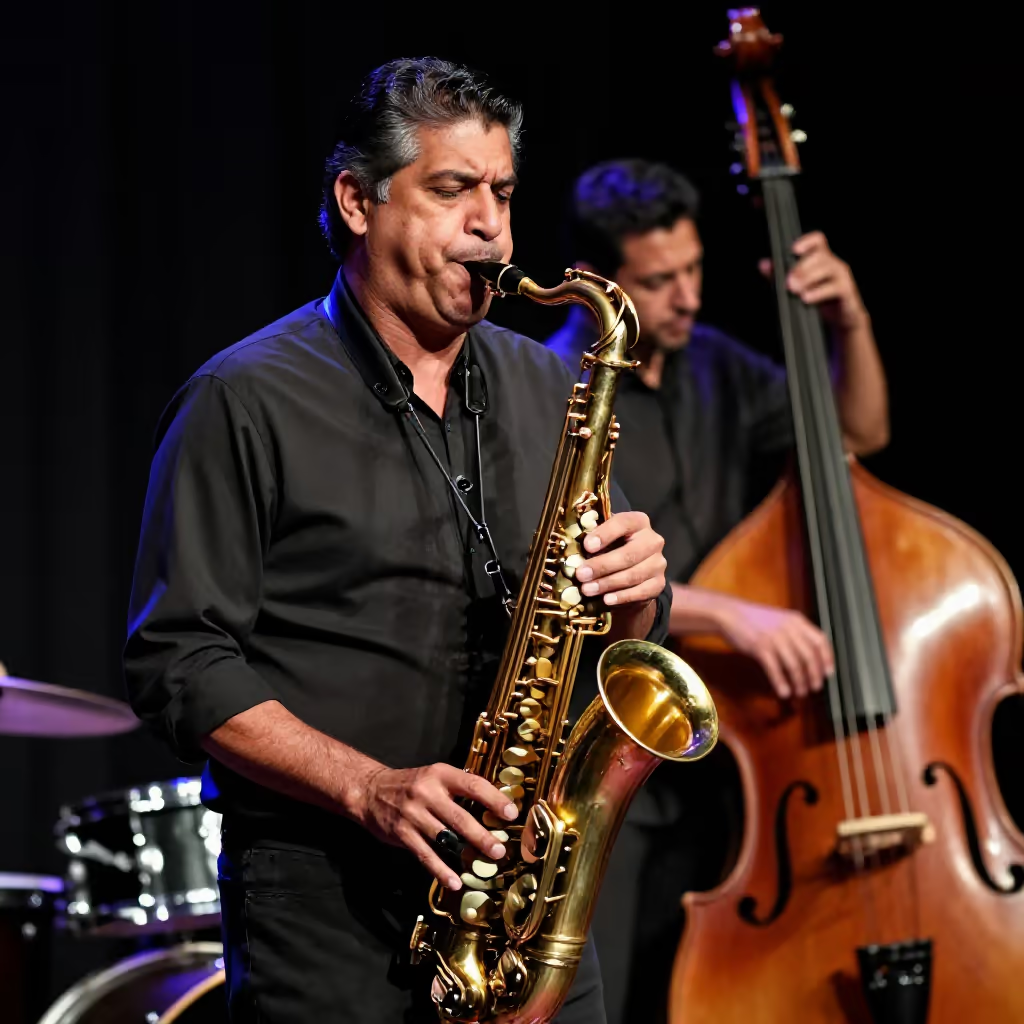
das Saxophon
saxophone
A metal wind instrument with a mouthpiece with a single reed, used especially in jazz, but also in classical and popular music.
EXAMPLE
Er lernte schon als Kind, Saxophon zu spielen.
He learned to play saxophone as a child.
saxophone
das Saxophon, die Saxophone
Loading your saved state.
saxophone
A metal wind instrument with a mouthpiece with a single reed, used especially in jazz, but also in classical and popular music.
Er lernte schon als Kind, Saxophon zu spielen.
He learned to play saxophone as a child.
| gender | neuter das |
|---|---|
| plural | die Saxophone |
| genitive | des Saxophons |
| singular | plural | |
|---|---|---|
| nominative | das Saxophon | die Saxophone |
| accusative | das Saxophon | die Saxophone |
| dative | dem Saxophon | den Saxophonen |
| genitive | des Saxophons | der Saxophone |
The article changes with the case; it is shown in colour.
When talking about playing an instrument, the name of the instrument is usually used without an article. This also applies to 'Saxophon' (saxophone) in connection with verbs like 'spielen' (to play), 'lernen' (to learn), or 'üben' (to practice).
Sie möchte gerne Saxophon lernen.
She would like to learn saxophone.
Er übt jeden Tag eine Stunde Saxophon.
He practices saxophone for an hour every day.
Although the saxophone appears in many styles of music, it is especially known for its central role in jazz music. It is often seen as a symbol of jazz.
Ein gefühlvolles Saxophon-Solo ist typisch für viele Jazz-Balladen.
A soulful saxophone solo is typical of many jazz ballads.
To specify the type of saxophone, prefixes like 'Alt-' (alto), 'Tenor-' (tenor), 'Sopran-' (soprano), or 'Bariton-' (baritone) are often placed before the word.
Im Orchester spielt sie das Alt-Saxophon.
In the orchestra, she plays the alto saxophone.