


schallen
to resound
To produce a loud, far-reaching, and often echoing sound. Often used for voices, laughter, music, or calls.
EXAMPLE
Ihr Lachen schallte durch den ganzen Saal.
Her laughter resounded through the entire hall.
to resound
Loading your saved state.
to resound
To produce a loud, far-reaching, and often echoing sound. Often used for voices, laughter, music, or calls.
Ihr Lachen schallte durch den ganzen Saal.
Her laughter resounded through the entire hall.
The verb 'schallen' (to resound) is closely related to the noun 'der Schall' (sound), which means 'Klang' (sound) or 'Geräusch' (noise). So when something 'schallt' (resounds), it produces sound.
Der Schall der Glocken war im ganzen Dorf zu hören.
The sound of the bells could be heard throughout the whole village.
'Schallen' (to resound) is a rather elevated and poetic word. You find it more often in literature or descriptive texts than in everyday spoken language.
Die Trompeten schallten zur Eröffnung des Festes.
The trumpets resounded at the opening of the festival.
Typically, it is loud, clear sounds that 'schallen' (resound): laughter, calls, music, or a loud voice. A preposition is often used to indicate where the sound travels, e.g. 'durch den Wald' (through the forest) or 'über den Platz' (across the square).
Sein lautes Rufen schallte über den See.
His loud calling resounded across the lake.
to sound / to tint / to boast
Tönen describes a tone or sound being produced or heard. Schallen, on the other hand, emphasizes that a loud, often echoing sound carries a long way through a space. Use tönen for the simple sounding of something, and schallen when the sound’s audible spread is the focus.
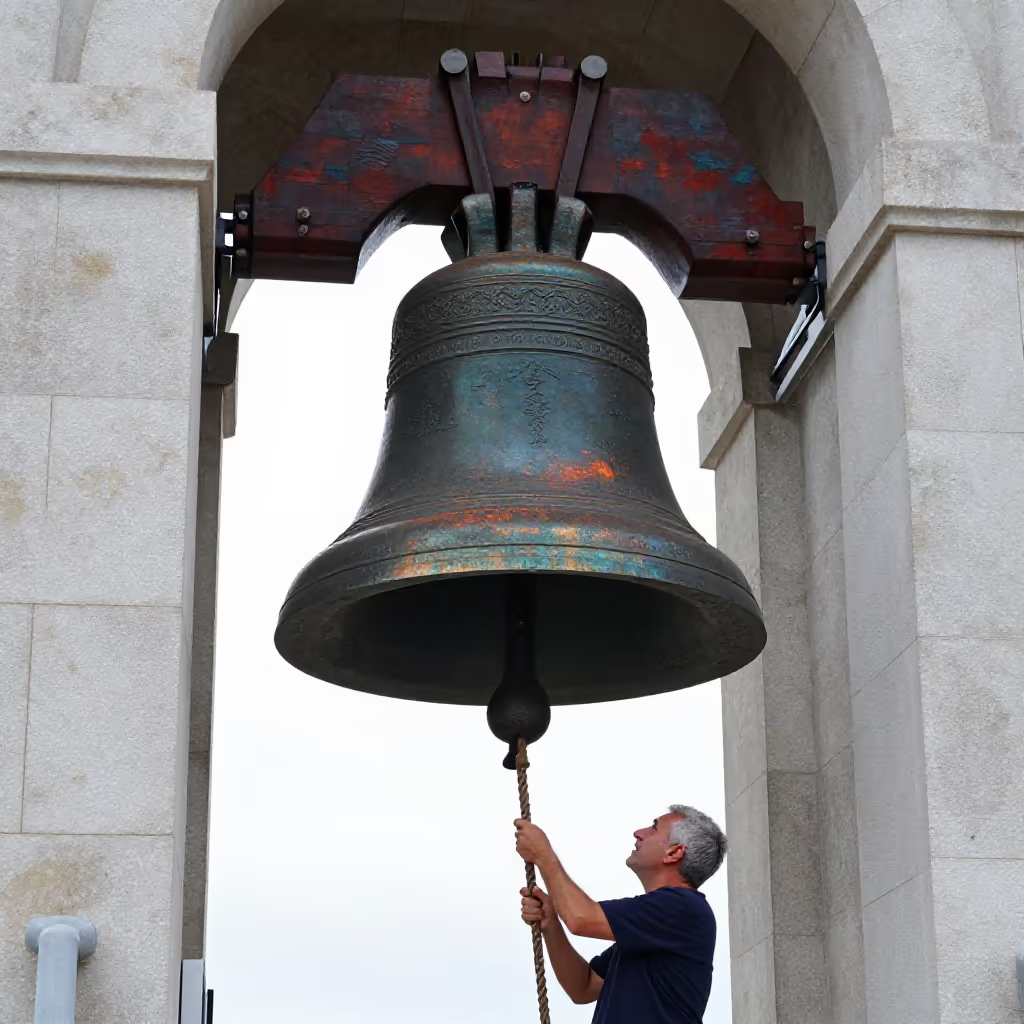
Laute Musik schallte aus dem Festsaal durch das ganze Gebäude.
Loud music resounded from the function hall throughout the entire building.
Laute Musik tönte aus den Lautsprechern im Festsaal.
Loud music sounded from the speakers in the function hall.