

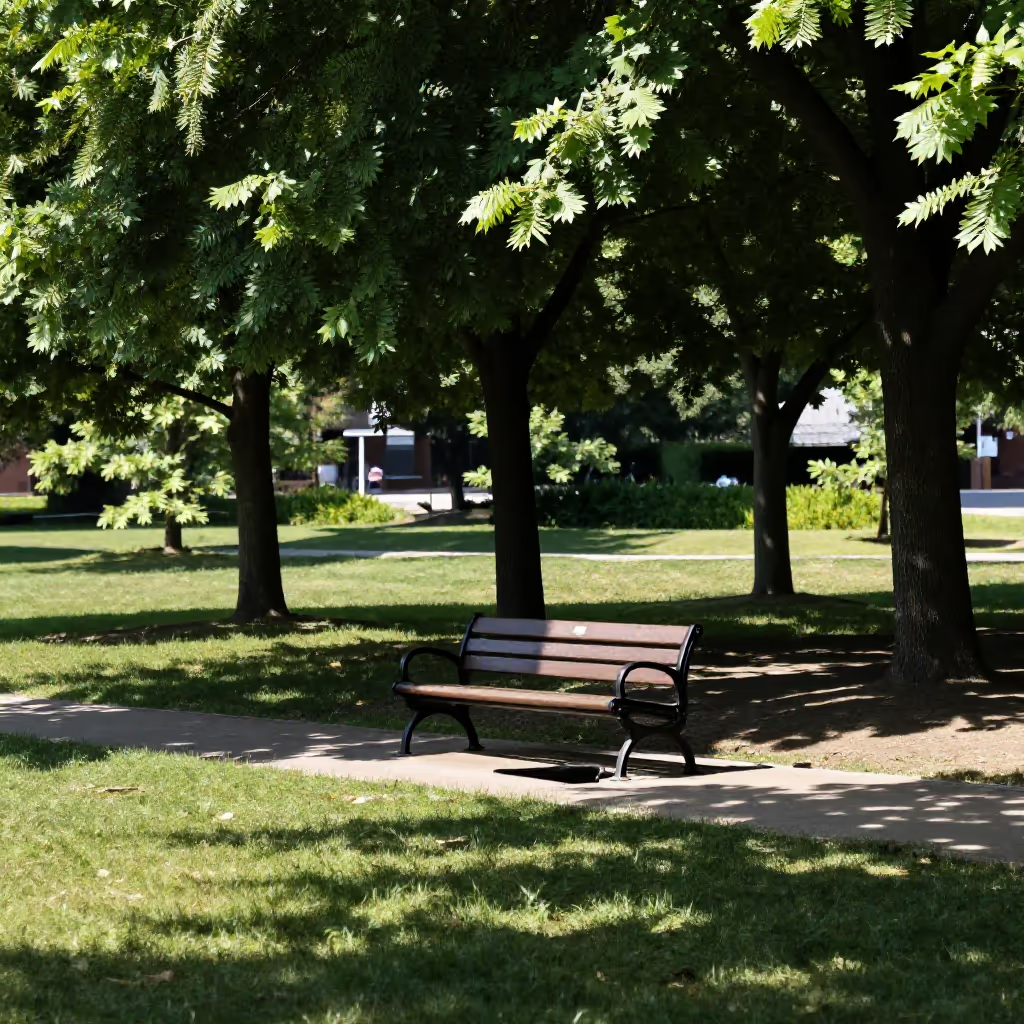
Located in the shade or providing shade. Describes a place that is protected from direct sunlight.
example
An heißen Sommertagen suchen wir uns immer ein schattiges Plätzchen im Park.
On hot summer days, we always look for a shady spot in the park.
Usage tips
Word formation
The adjective 'schattig' (shady) is derived directly from the noun 'der Schatten' (shade). The ending '-ig' here means 'rich in' or 'full of', so a place with lots of shade.
EXAMPLE
Unter dem großen Baum ist es angenehm schattig.
Under the big tree, it is pleasantly shady.
Sentence structure and use
'Schattig' (shady) can stand before a noun or be used as a description of a state with 'sein' (to be) or 'werden' (to become). When it stands before a noun, it is declined.
EXAMPLE
Wir machten eine Pause an einem schattigen Bach.
We took a break by a shady stream.
Typical collocations
A very common and natural combination is 'ein schattiges Plätzchen' (a shady little spot). The word is often used to describe pleasant, cool places in summer, such as 'ein schattiger Weg' (a shady path) or 'ein schattiger Biergarten' (a shady beer garden).
EXAMPLE
Lass uns ein schattiges Plätzchen für unser Picknick suchen.
Let's look for a shady spot for our picnic.
Compare with
antonym
schattig vs sonnig
sunny
'sonnig' and 'schattig' are opposites when it comes to light and sun. 'sonnig' describes a place or a day with lots of direct sun. 'schattig' describes a place where there is little or no direct sun, for example under trees or next to a building. For weather, you are more likely to say 'sonnig'; for a place or seat, often 'schattig'. So the contrast is: lots of sun or protection from the sun.
schattig
Im Park suchen wir uns einen schattigen Platz unter den Bäumen.
In the park, we look for a shady spot under the trees.