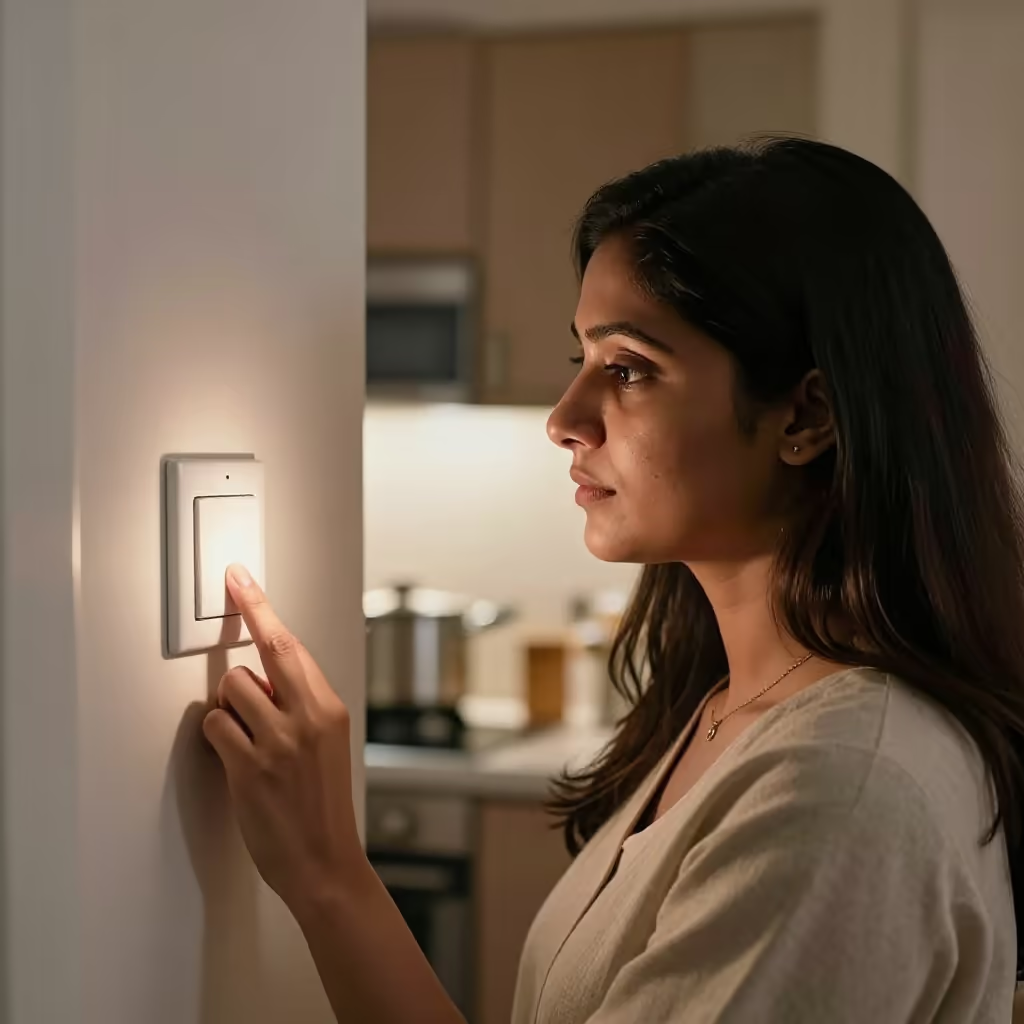
A control element used to close or interrupt an electrical circuit in order to switch a device on or off.
example
Kannst du bitte den Schalter für das Licht im Flur betätigen?
Could you please press the switch for the light in the hallway?
Usage tips
Word structure
The noun 'der Schalter' (the switch/counter) is derived directly from the verb 'schalten' (to switch). The ending '-er' turns the action (schalten) into the tool used to perform the action. So a Schalter is literally 'something that switches.'
EXAMPLE
Wo ist der Schalter, um die Maschine einzuschalten?
Where is the switch to turn on the machine?
Context clue
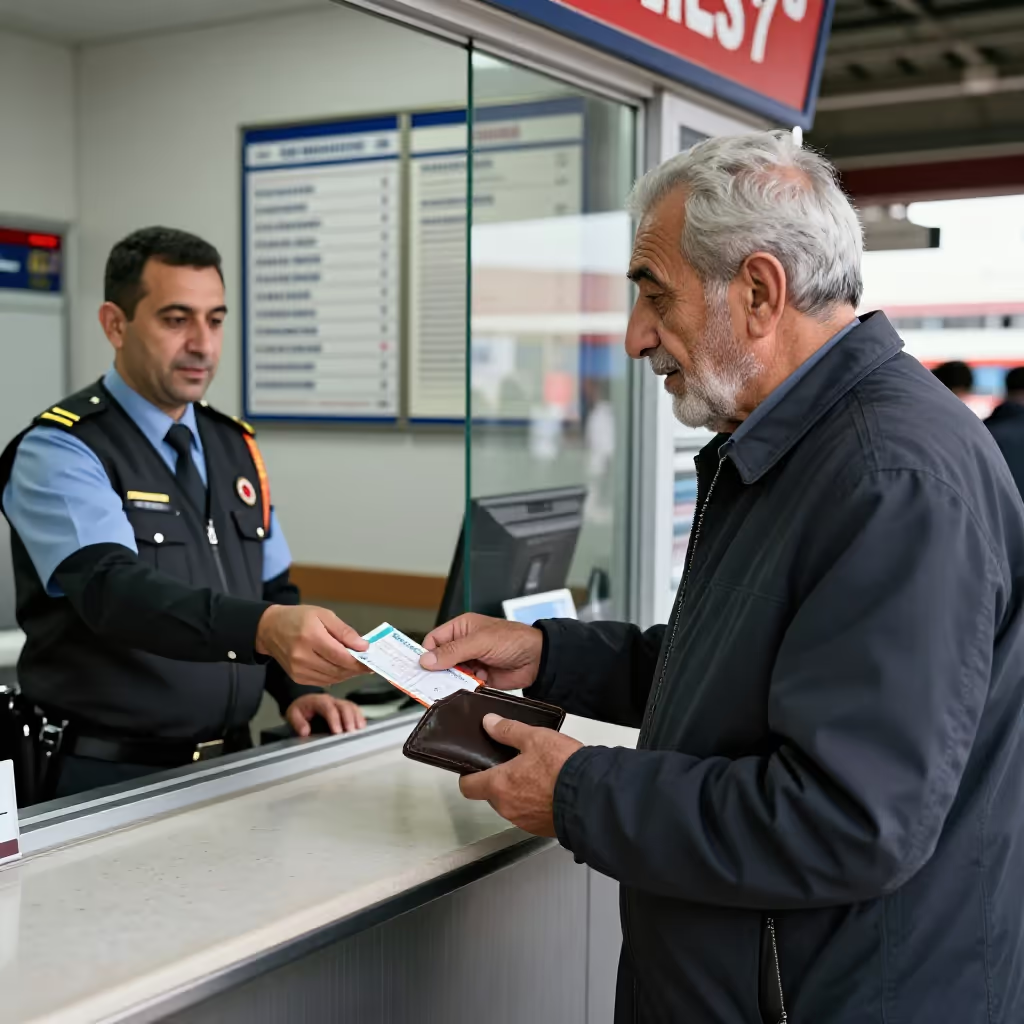
To distinguish the meanings, pay attention to the context. Words like 'Licht' (light), 'Strom' (electricity), or 'Gerät' (device) point to the electrical switch. Words like 'Bank' (bank), 'Post' (post office), 'Bahnhof' (train station), or 'Ticket' (ticket) point to the counter.
EXAMPLE
Der Lichtschalter in der Küche ist kaputt.
The light switch in the kitchen is broken.
Correct preposition
When 'Schalter' means a counter, the prepositions are important. For location (where?), use 'am Schalter' (at the counter). For direction (where to?), say 'an den Schalter' or 'zum Schalter' (to the counter).
EXAMPLE
Die nächste Kundin ist am Schalter drei dran.
The next customer is being served at counter three.
Fixed expression
The idiom 'den Schalter umlegen' (to flip the switch) is a fixed unit. It means to suddenly and completely change one's attitude or approach. It is often used in sports or competitions.
EXAMPLE
In der zweiten Halbzeit hat die Mannschaft den Schalter umgelegt und das Spiel gewonnen.
In the second half, the team flipped the switch and won the game.
Compare with
near_synonym · confusable
Schalter vs Ausgabe
expense / issue / output
'die Ausgabe' and 'der Schalter' can both refer to a place where you get something or take care of something. 'die Ausgabe' is more precise when something is handed out there, for example food, tickets, or materials. 'der Schalter' is more general and means a counter or window where customers are served, for example at a train station, bank, or post office. Learners may confuse the words because an 'Ausgabe' often looks like a 'Schalter'. If the place hands out a specific item, 'Ausgabe' fits; if it is generally about service, 'Schalter' fits.
Schalter
Nach dem Unterricht gehe ich zum Schalter am Bahnhof und kaufe eine Fahrkarte.
After class, I go to the counter at the train station and buy a ticket.
Ausgabe
In der Kantine war die Ausgabe schon geschlossen.
The distribution point in the cafeteria was already closed.