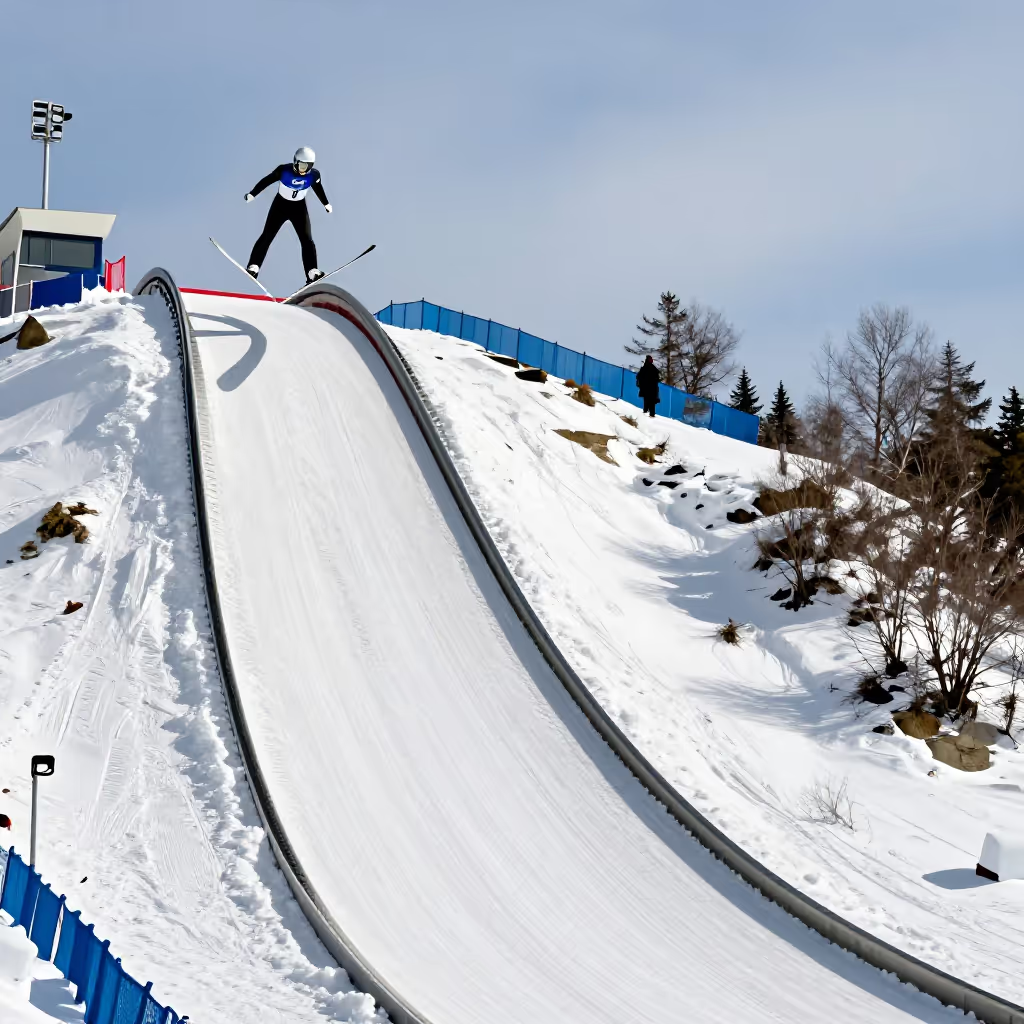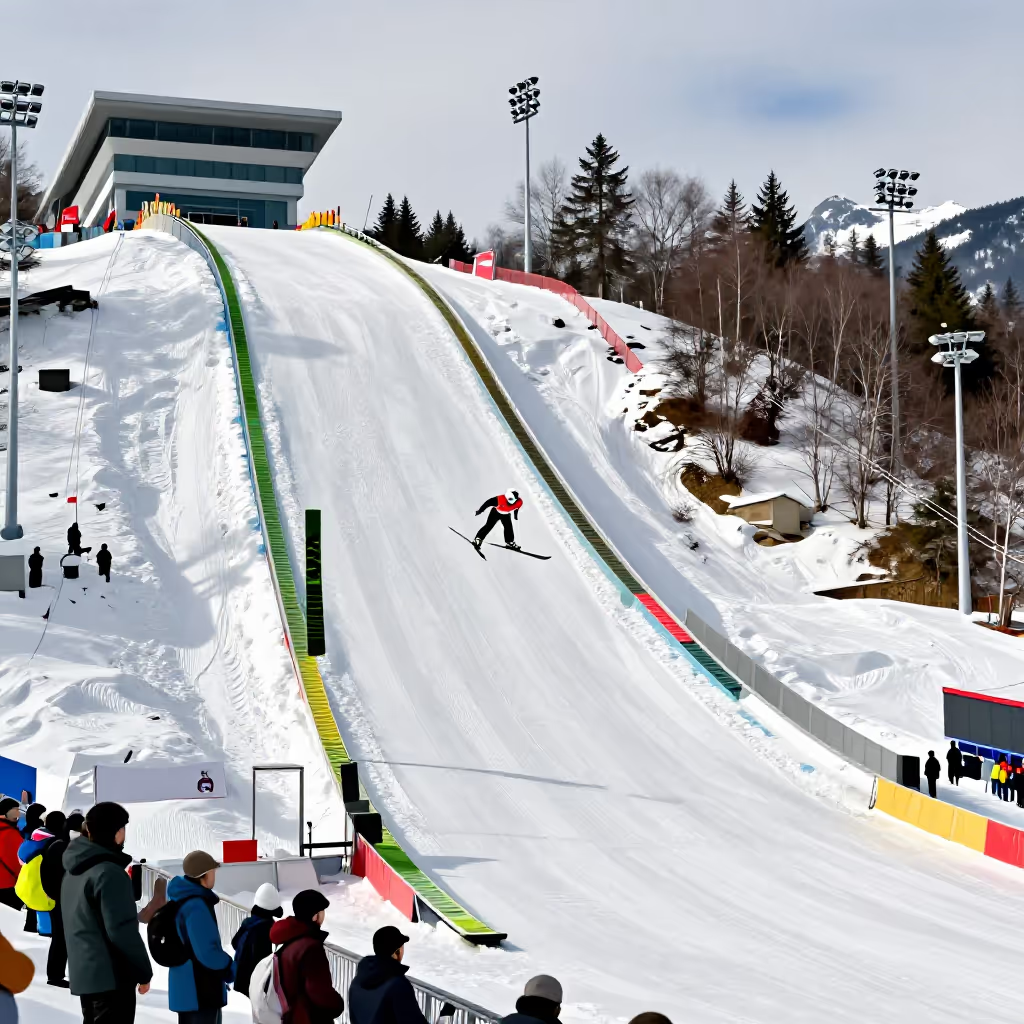
A specially constructed facility for ski jumping, consisting of an inrun, takeoff table, and landing slope.
example
Beim Neujahrsspringen flog er auf der großen Schanze zum Sieg.
At the New Year's ski jumping event, he flew to victory on the large ski jump.
Usage tips
Context clue
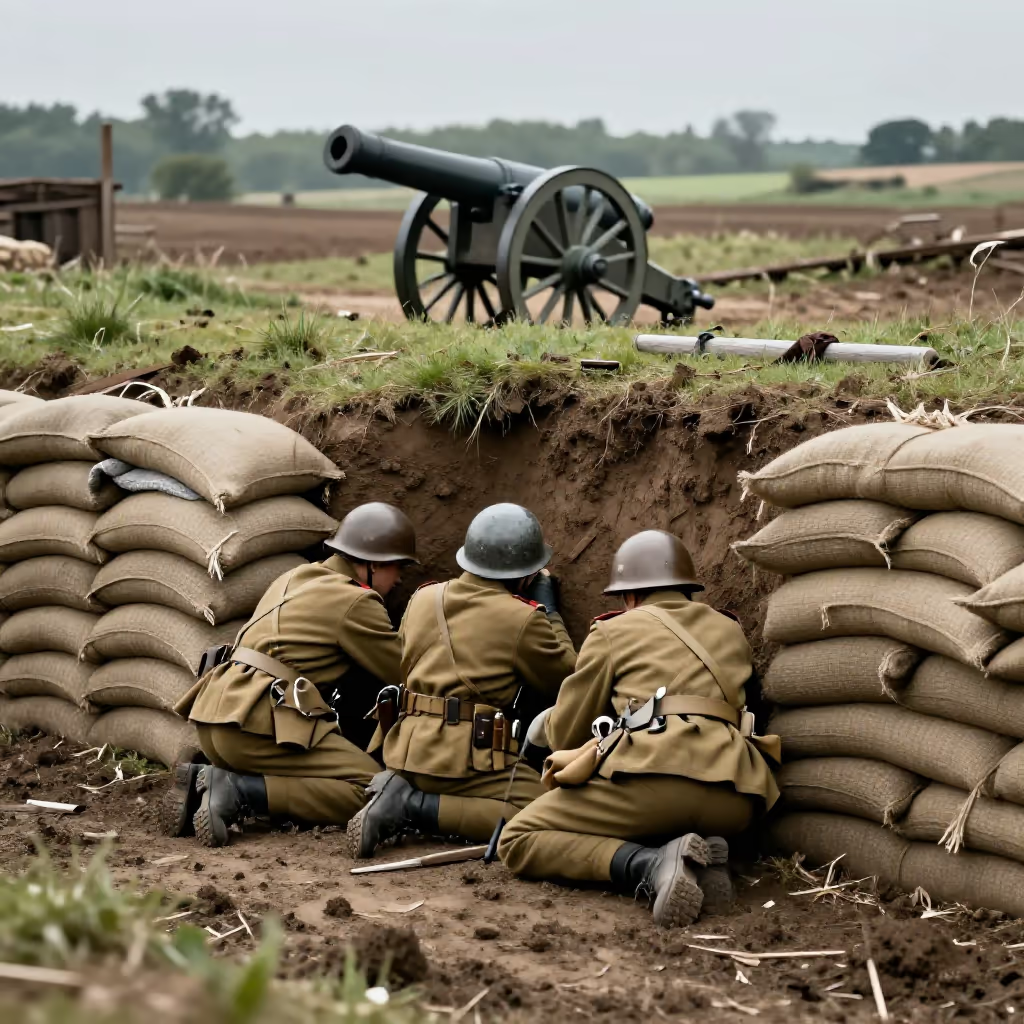
The two main meanings are clearly separated by context. If it is about winter sports, especially ski jumping, it refers to the sports facility. In historical or military texts, it refers to a defensive structure.
EXAMPLE
Der Athlet sprang auf der neuen Schanze einen Rekord.
The athlete set a record on the new ski jump.
Typical collocations
In the context of ski jumping, people often speak of the 'große Schanze' (large ski jump) or 'kleine Schanze' (normal/small ski jump). Typical verbs are 'springen' (to jump), 'fliegen' (to fly), or 'trainieren' (to train).
EXAMPLE
Er ist zum ersten Mal von der großen Schanze gesprungen.
He jumped from the large ski jump for the first time.
Word family
The verb 'sich verschanzen' (to entrench oneself) is directly related to this meaning of 'Schanze' (rampart). It means to hide or protect oneself behind such a defensive structure.
EXAMPLE
Der Feind hatte sich gut hinter seinen Schanzen verschanzt.
The enemy had entrenched itself well behind its ramparts.
Fixed expression
The idiom 'etwas in die Schanze schlagen' (to disregard something) is a fixed unit. The 'etwas' (something) is usually advice, a warning, or an opportunity that someone ignores.
EXAMPLE
Sie hat meine Warnung einfach in die Schanze geschlagen.
She simply disregarded my warning.
Compare with
near_synonym · confusable
Schanze vs Wall
rampart / embankment
'der Wall' and 'die Schanze' can both refer to an artificially built defensive structure. 'Der Wall' is usually a long embankment or rampart made of earth that is meant to protect a city, castle, or area. 'Die Schanze' more often means a military position made of earth and other materials, especially to protect soldiers or artillery. The words can be confused because both occur in contexts involving war or old defensive structures. 'Wall' fits better for a long protective line, while 'Schanze' fits better for a specific fighting position.
Schanze
Auf dem Hügel sieht man noch die Reste einer alten Schanze aus dem Krieg.
On the hill, you can still see the remains of an old wartime rampart.
Wall
Frau Wolf erklärt, dass der Wall früher die ganze Stadt geschützt hat.
Ms. Wolf explains that the rampart used to protect the whole city.