
Developing or spreading slowly, inconspicuously, and gradually. The term is often used for processes or changes that are barely noticed at first.
example
Es war ein schleichender Prozess, bis die Inflation für alle spürbar wurde.
It was a gradual process until inflation became noticeable to everyone.
Usage tips
Word structure
'Schleichend' is the present participle of the verb 'schleichen' (to move quietly and slowly). The meanings of the adjective are derived directly from this verb: either a concrete slow movement or a figurative, slow process.
EXAMPLE
Die Katze nähert sich schleichend der Maus.
The cat approaches the mouse stealthily.
Typical collocations
In the figurative meaning, 'schleichend' is often combined with negative, abstract processes. Typical collocations are 'ein schleichender Prozess' (a gradual process), 'eine schleichende Gefahr' (a creeping danger), or 'schleichendes Gift' (slow-acting poison).
EXAMPLE
Der Vertrauensverlust war ein schleichender Prozess über viele Monate.
The loss of trust was a gradual process over many months.
Context clue
You can recognize the meaning from the noun: If 'schleichend' refers to a concrete movement, e.g. 'Schritte' (steps) or 'Gang' (gait), the literal meaning is intended. If it refers to an abstract term, e.g. 'Prozess' (process) or 'Veränderung' (change), the figurative meaning is intended.
EXAMPLE
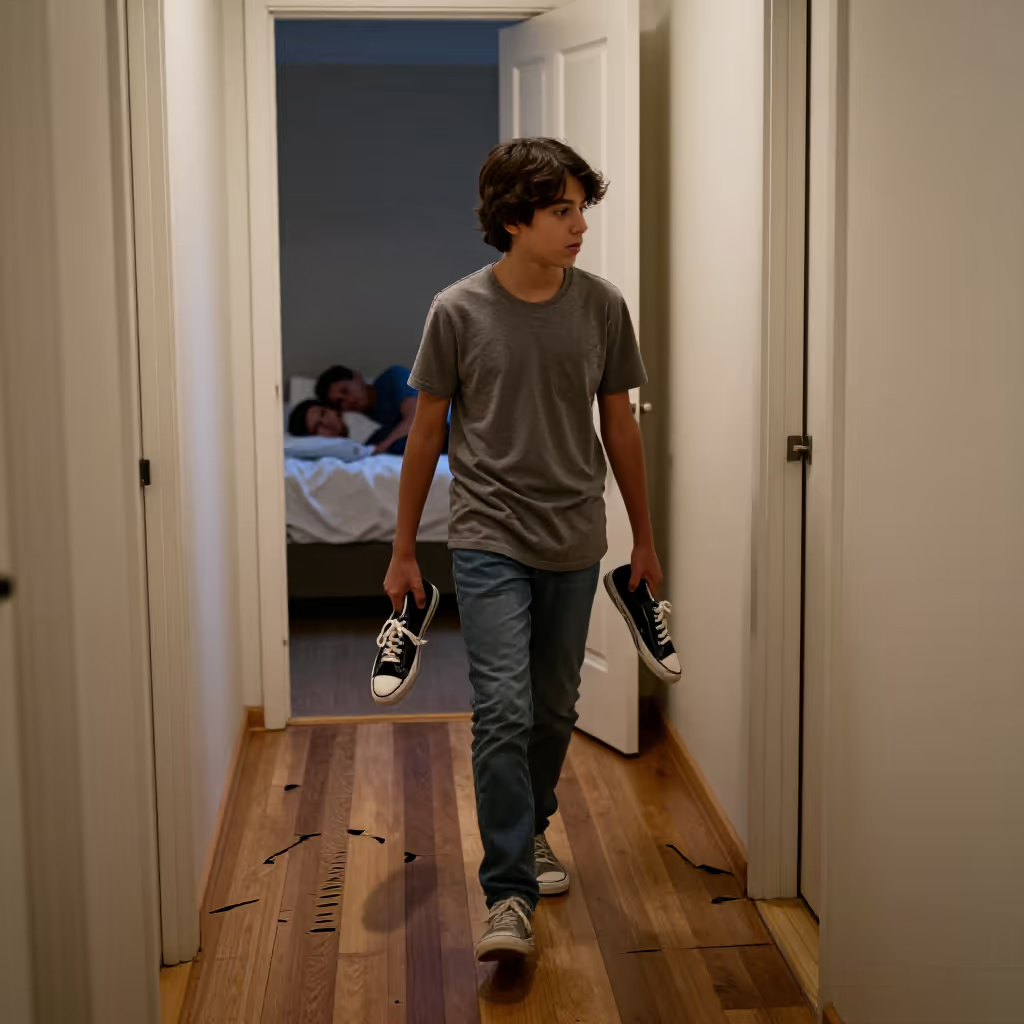
Er verließ den Raum mit schleichenden Schritten.
He left the room with stealthy steps.
Use as an adverb
'Schleichend' can also be used as an adverb to describe a verb. It then remains unchanged in the sentence and describes how an action happens.
EXAMPLE
Die Nacht kam schleichend über das Tal.
Night came gradually over the valley.
Compare with
near_synonym · confusable
schleichend vs langsam
slow
'langsam' and 'schleichend' can both mean that something is not happening quickly. 'langsam' is neutral and describes only the low speed or a gradual development. 'schleichend' emphasizes that a change begins inconspicuously and is only noticed late. For movement, 'schleichend' can also mean that someone walks quietly and carefully. Learners may confuse the words because both fit gradual processes. If only the speed is important, use 'langsam'. If something arises secretly, unnoticed, or barely visibly, 'schleichend' fits better.
schleichend
Die Müdigkeit kam schleichend, bis sie sich kaum noch konzentrieren konnte.
The tiredness came on gradually until she could barely concentrate anymore.
langsam
Im Winter wird es schon am Nachmittag langsam dunkel.
In winter, it gradually gets dark in the afternoon already.