

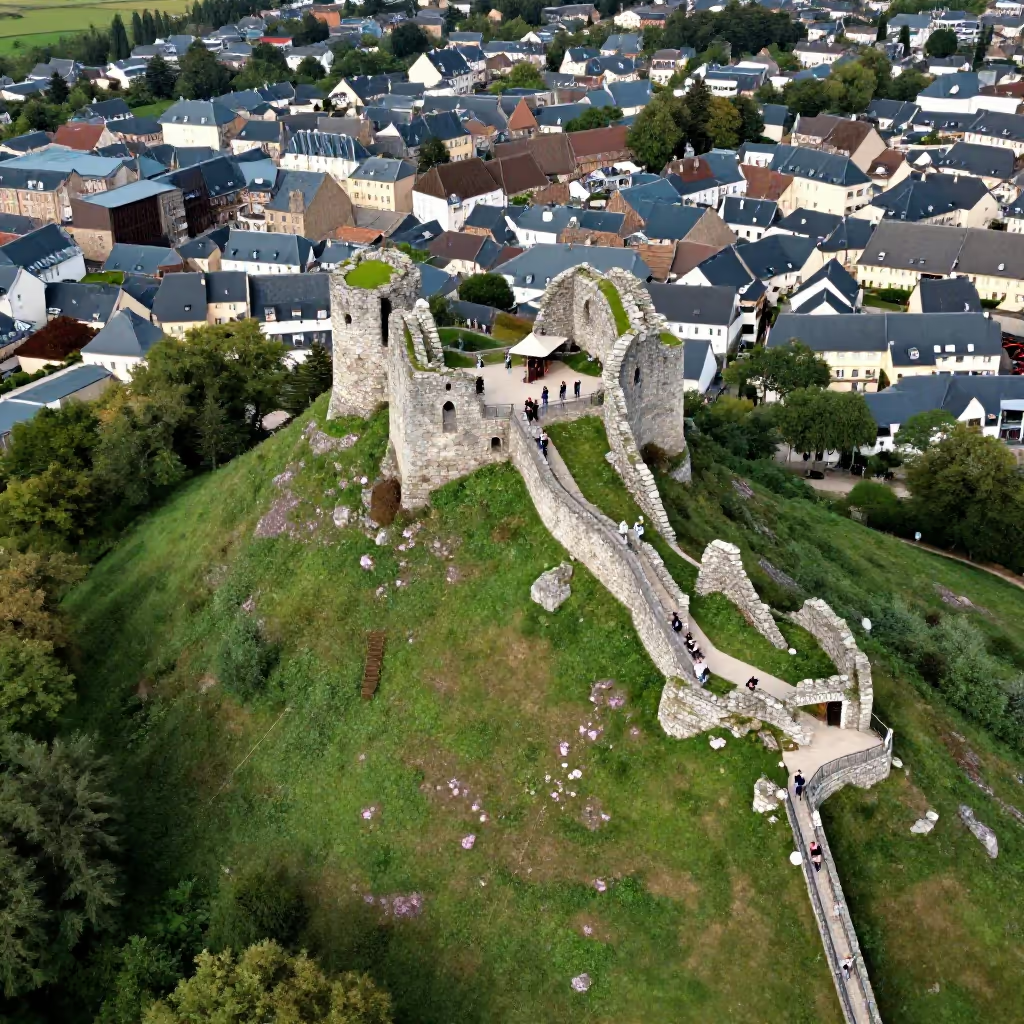
A mountain or hill on which there is, or used to be, a castle or palace. In many cities, 'Schlossberg' is the proper name of such a hill, which often serves as a landmark and viewpoint.
example
Wir sind auf den Schlossberg von Freiburg gestiegen, um die Aussicht zu genießen.
We climbed the Schlossberg in Freiburg to enjoy the view.
Usage tips
Word composition
The word is a simple compound of 'das Schloss' (the castle/palace) and 'der Berg' (the mountain). So it literally describes a mountain on which a castle or palace stands or once stood.
EXAMPLE
Von unserem Hotel aus konnten wir das Schloss auf dem Schlossberg sehen.
From our hotel, we could see the castle on the Schlossberg.
Use as a proper name
In many German-speaking cities, e.g. Graz, Freiburg, and Thun, 'der Schlossberg' is a proper name for a specific hill or mountain that is often a landmark and a popular excursion destination.
EXAMPLE
In Graz fährt eine Bahn auf den Schlossberg.
In Graz, a railway goes up the Schlossberg.
Typical collocations
Common phrases are 'auf den Schlossberg steigen' (to climb up the Schlossberg) or 'gehen' (to go), to describe upward movement, and 'vom Schlossberg die Aussicht genießen' (to enjoy the view from the Schlossberg).
EXAMPLE
Am Wochenende wollen wir auf den Schlossberg wandern.
At the weekend, we want to hike up the Schlossberg.