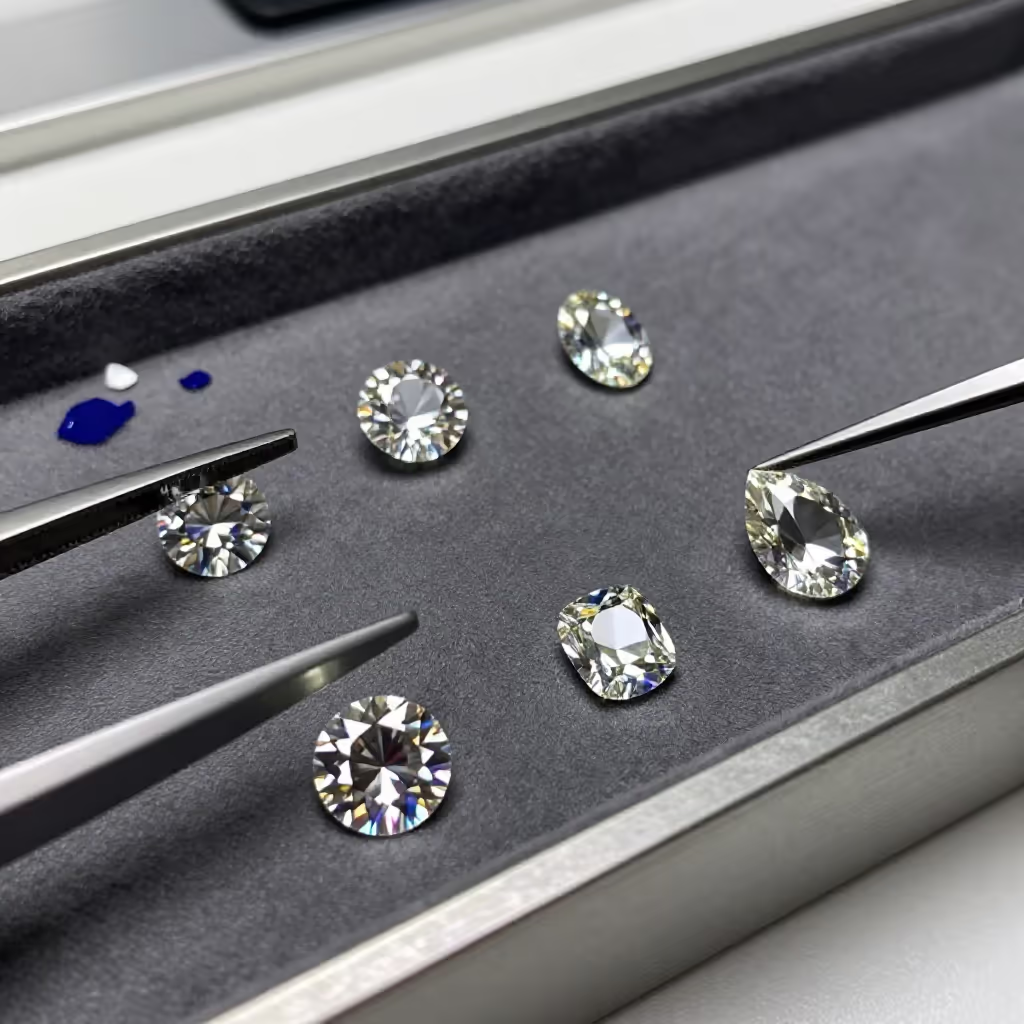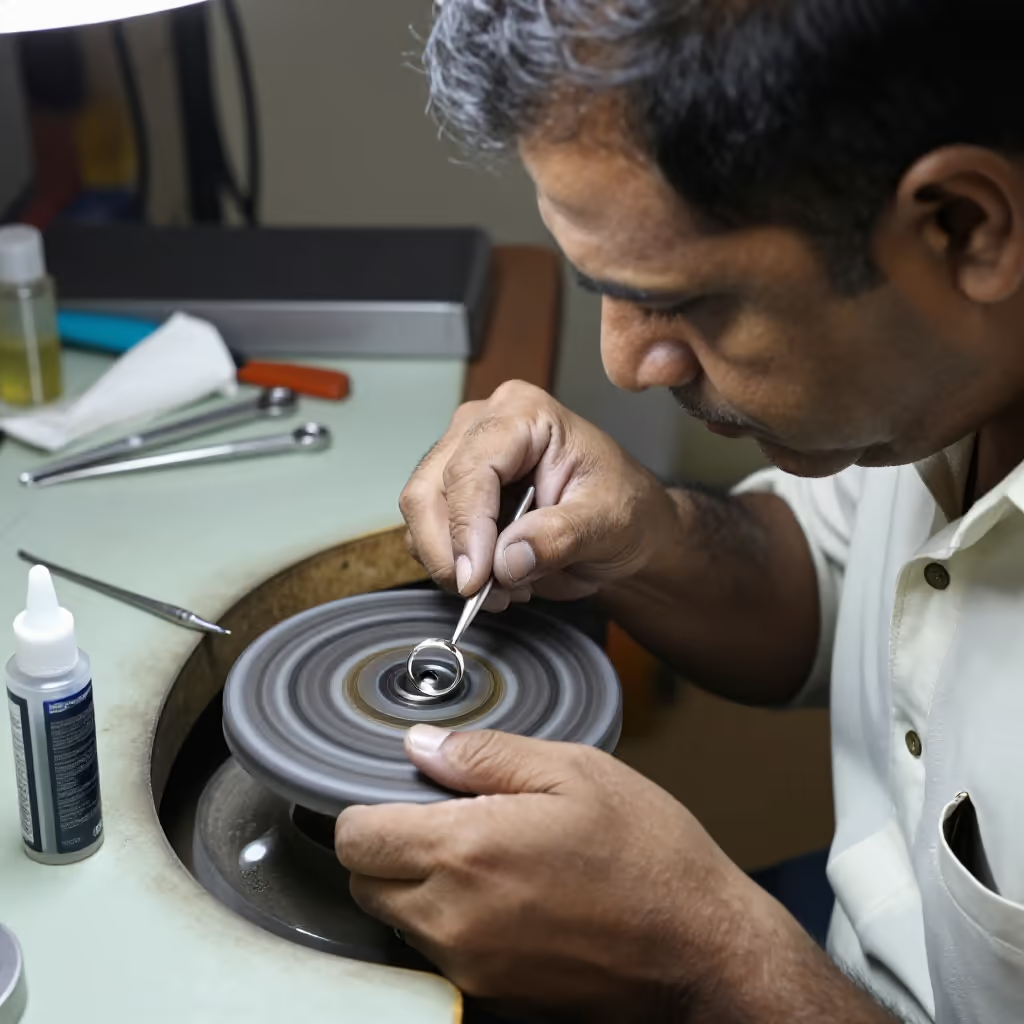
The quality of the treatment of a surface, especially on gemstones, glass, or metal, to make it smooth and shiny. Refers both to the process and to the result.
example
Der perfekte Schliff brachte den Diamanten zum Funkeln.
The perfect polish made the diamond sparkle.

Usage tips
Word family
The noun 'der Schliff' (polish/cut) is derived from the verb 'schleifen' (to grind/polish). This connection helps you understand all the meanings: from literally smoothing a surface to figuratively “polishing” a person's manners.
EXAMPLE
Der Handwerker schliff das Holz, bis es vollkommen glatt war.
The craftsman sanded the wood until it was completely smooth.
Fixed expression
The expression 'der letzte Schliff' (the finishing touch/final polish) is very common. It means giving something its final perfection, whether it is a project, a text, or a person's training.
EXAMPLE
Bevor sie den Bericht abgab, verlieh sie ihm noch den letzten Schliff.
Before she submitted the report, she gave it the finishing touch.
Context clue
You can recognize the figurative meaning 'gute Umgangsformen' (good manners) from the context. It is used when talking about people and their social behavior, often together with words like 'Benehmen' (behavior/manners), 'Umgang' (dealings), or 'fehlen' (to be lacking).
EXAMPLE
Er ist sehr intelligent, aber ihm fehlt der nötige Schliff für diplomatische Gespräche.
He is very intelligent, but he lacks the necessary polish for diplomatic conversations.
Typical collocations
In the literal meaning, 'Schliff' (polish/cut) is often combined with the material being worked on. Typical phrases are 'der Schliff eines Diamanten' (the cut/polish of a diamond), 'eines Glases' (of a glass), or 'eines Spiegels' (of a mirror).
EXAMPLE
Der Wert des Edelsteins wird maßgeblich durch die Qualität seines Schliffs bestimmt.
The value of the gemstone is largely determined by the quality of its cut.
Compare with
near_synonym · confusable
Schliff vs Schnitt
cut
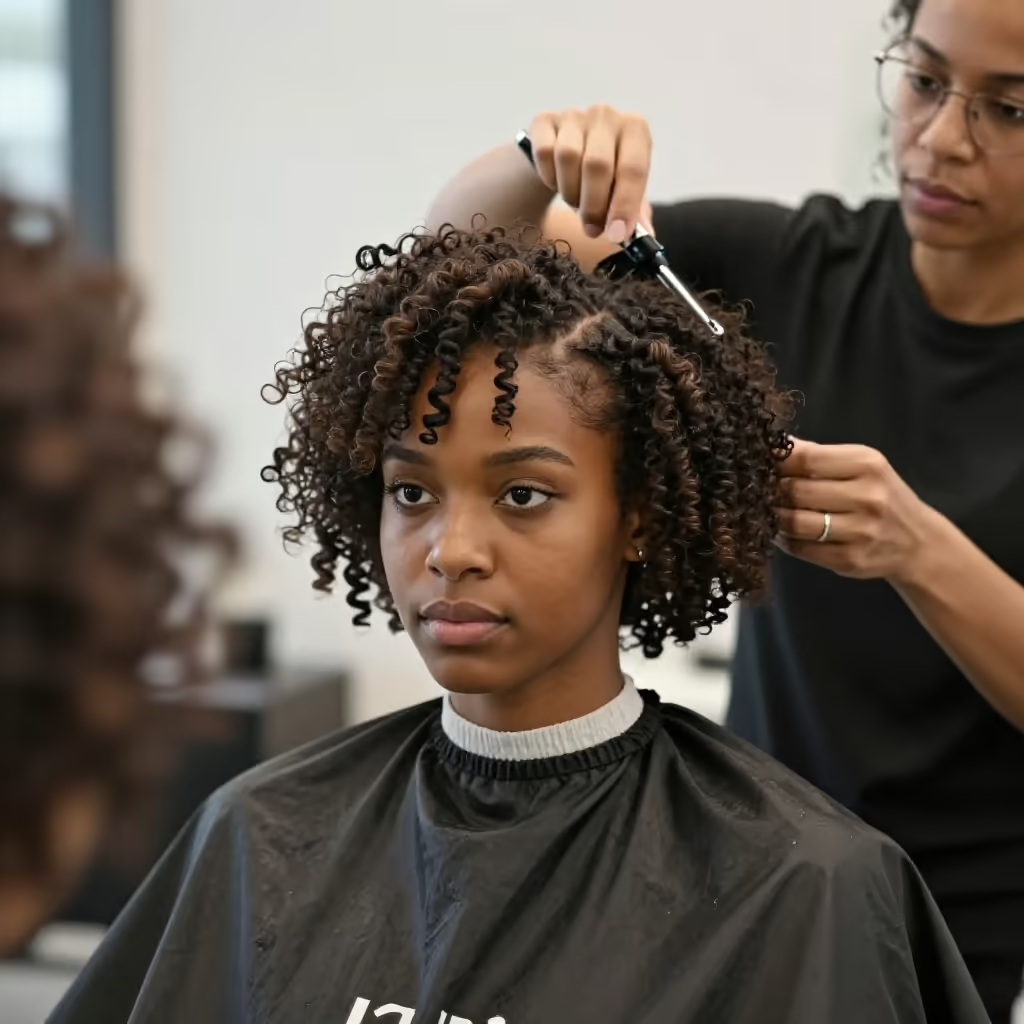
'der Schnitt' and 'der Schliff' both describe how something gets its shape or surface through processing. 'Der Schnitt' fits especially with clothing or hair and means how something is cut. 'Der Schliff' fits more with hard materials such as glass, metal, or gemstones and means how something has been ground, smoothed, or made shiny. The words can be confused because both describe the result of a process. As a simple guide: with scissors, knives, hair, or clothing, people usually say 'Schnitt'; with polishing, shine, and gemstones, they are more likely to say 'Schliff'.
Schliff
Durch den feinen Schliff glänzt der Stein im Licht.
Thanks to the fine polish, the stone shines in the light.
Schnitt
Der neue Schnitt steht dir gut und macht die Jacke moderner.
The new cut suits you well and makes the jacket look more modern.