


die Schelle
slap
Colloquial for a slap in the face; a quick, flat blow to the face with the hand.
EXAMPLE
Er hat für seine freche Bemerkung eine ordentliche Schelle kassiert.
He got a proper slap for his cheeky remark.
slap / clamp / jingle bell
Loading your saved state.
slap
Colloquial for a slap in the face; a quick, flat blow to the face with the hand.
Er hat für seine freche Bemerkung eine ordentliche Schelle kassiert.
He got a proper slap for his cheeky remark.
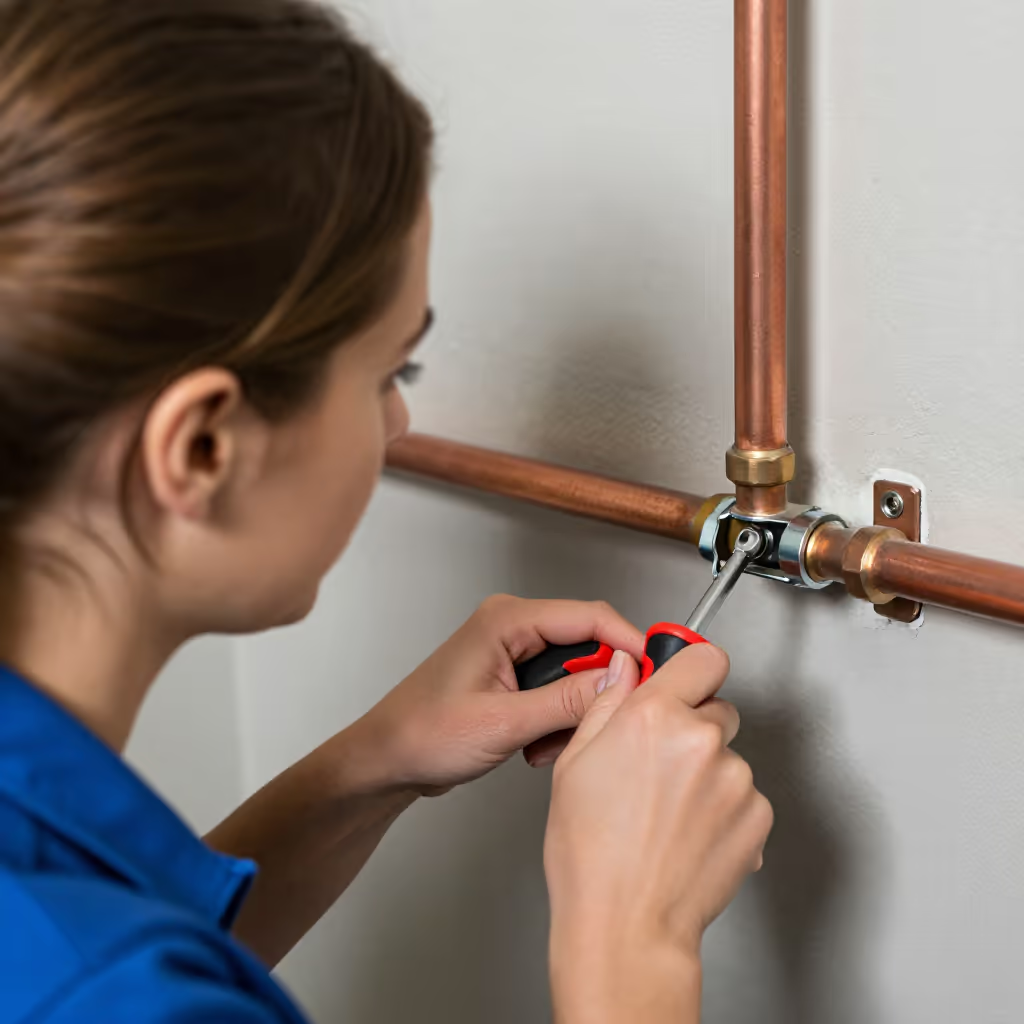
clamp
A bracket or clamping ring, usually made of metal, used to fasten pipes, hoses, or cables to a wall or another surface.
Der Installateur befestigte das Abwasserrohr mit einer Schelle an der Kellerwand.
The plumber fastened the drainpipe to the basement wall with a clamp.
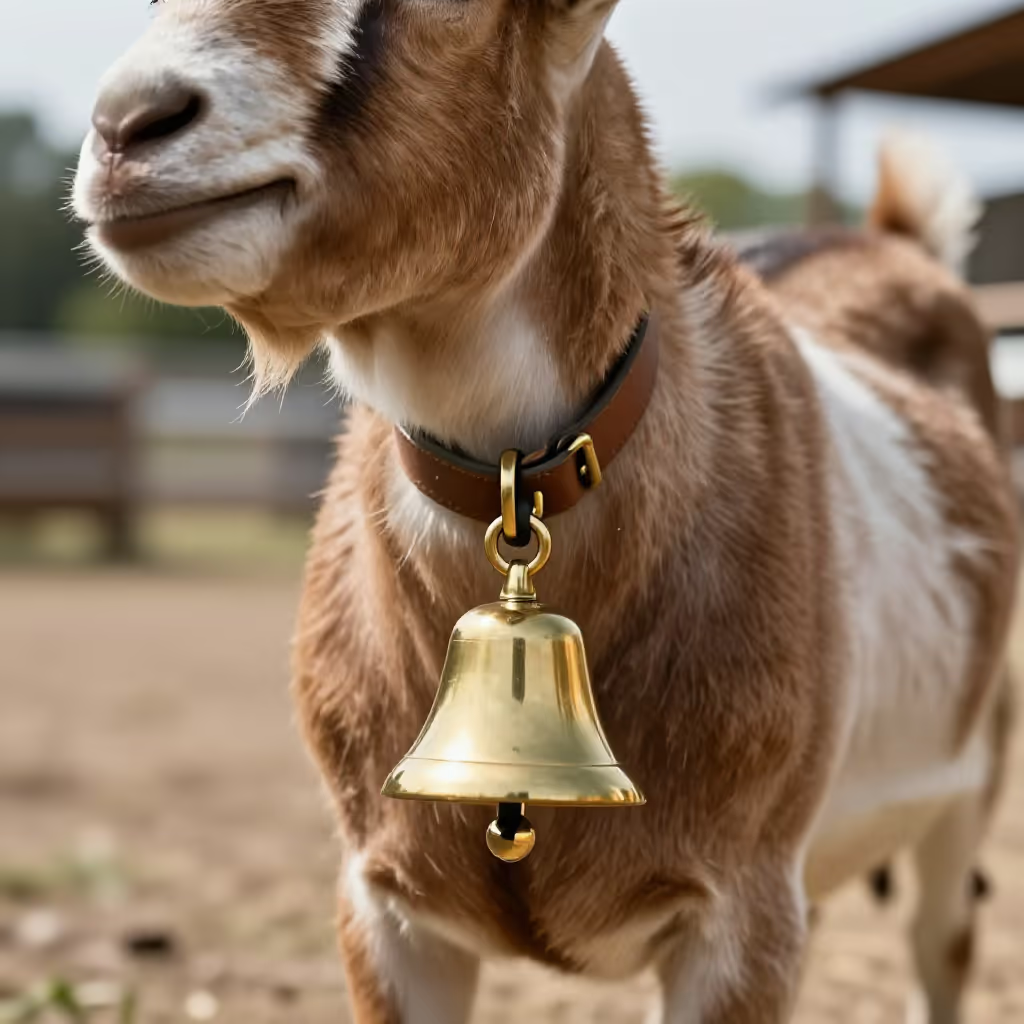
jingle bell
A small, usually spherical bell that produces a bright jingling sound. It is often found on animal collars, sleighs, or fools' caps.
Man hörte schon von weitem die Schellen des Pferdeschlittens.
You could hear the jingle bells of the horse-drawn sleigh from far away.
The context makes the meaning clear. Verbs like 'geben' (to give) or 'kriegen' (to get) point to the slap. Technical words like 'Rohr' (pipe) or 'befestigen' (to fasten) indicate the bracket/clamp. Words like 'klingeln' (to jingle/ring) or 'Schlitten' (sleigh) show that the small bell is meant.
Er hat ihm eine Schelle gegeben.
He gave him a slap.
In the colloquial meaning 'Ohrfeige' (slap in the face), the fixed combinations 'jemandem eine Schelle geben' (to give someone a slap) (active) and 'eine Schelle bekommen' or 'kriegen' (to get a slap) (passive) are the most common.
Pass auf, was du sagst, sonst kriegst du gleich eine Schelle.
Watch what you say, or you'll get a slap in a second.
The meaning 'Halterung' (bracket/clamp) is found almost only in technical contexts, for example in hardware stores, in instructions, or in conversations with tradespeople.
Ich brauche noch eine 20-Millimeter-Schelle für das Wasserrohr.
I still need a 20-millimeter clamp for the water pipe.
When the small bell is meant, this is often made clear by verbs of hearing or sound production. Typical verbs are 'klingeln' (to jingle/ring), 'läuten' (to ring), or 'hören' (to hear).
Im Winter hörte man oft das Klingeln der Schellen von den Pferdeschlitten.
In winter, you could often hear the jingling of the bells from the horse-drawn sleighs.
bell
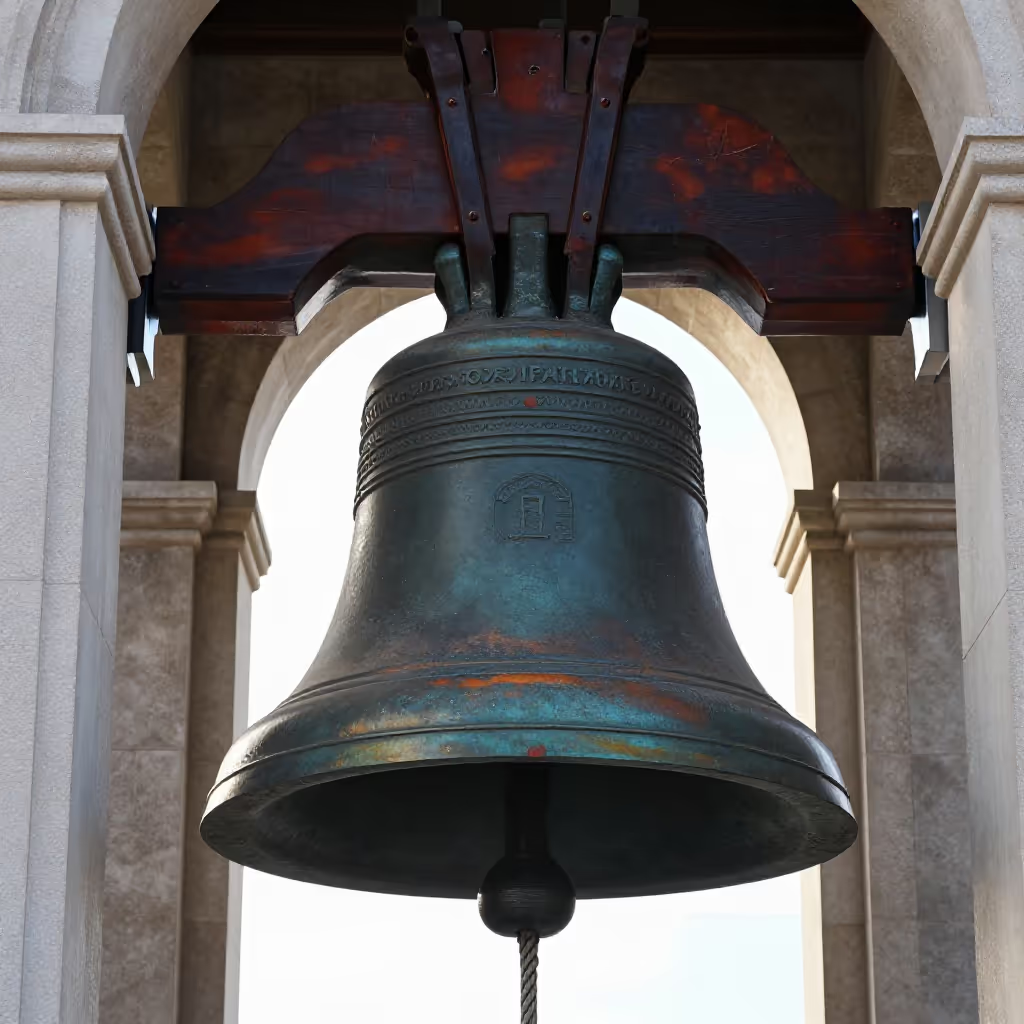
Glocke and Schelle are metal objects that produce a ringing sound. A Glocke is cup-shaped and often larger, for example in a church tower. A Schelle is small, usually spherical, and often attached to a collar, sleigh, or item of clothing.
Die Schelle am Halsband ist auf dem ganzen Hof zu hören.
The jingle bell on the collar can be heard throughout the farm.
Die Glocke im Turm ist im ganzen Dorf zu hören.
The bell in the tower can be heard throughout the village.