

schlimmstenfalls
at worst
Indicates what will happen in the most unfavorable or worst possible case.
EXAMPLE
Schlimmstenfalls verpassen wir den Flug und müssen ein neues Ticket kaufen.
At worst, we'll miss the flight and have to buy a new ticket.
at worst
Loading your saved state.
at worst
Indicates what will happen in the most unfavorable or worst possible case.
Schlimmstenfalls verpassen wir den Flug und müssen ein neues Ticket kaufen.
At worst, we'll miss the flight and have to buy a new ticket.
The word is composed of 'schlimmsten' (superlative of 'schlimm', bad) and the genitive of 'Fall' (case). So it literally means 'of the worst case' or 'in the worst case'.
Wir müssen mit Verspätungen rechnen, schlimmstenfalls fällt der Zug ganz aus.
We have to expect delays; at worst, the train will be canceled completely.
When 'schlimmstenfalls' (at worst) is at the beginning of the sentence (position 1), the conjugated verb follows directly after it in position 2. However, it can also appear after the verb and subject in the sentence.
Schlimmstenfalls müssen wir die Reise absagen.
At worst, we'll have to cancel the trip.
'Schlimmstenfalls' (at worst) is used to describe the most negative of several possible consequences. It often introduces a sentence that describes this scenario.
Nimm einen Regenschirm mit. Schlimmstenfalls regnet es, aber dann bist du vorbereitet.
Take an umbrella with you. At worst, it will rain, but then you'll be prepared.
at most
Höchstens and schlimmstenfalls can both state a maximum duration, quantity, or burden. Höchstens describes only the upper limit, while schlimmstenfalls explicitly emphasizes the worst possible scenario. Use höchstens for a neutral limit and schlimmstenfalls for a negative outcome.

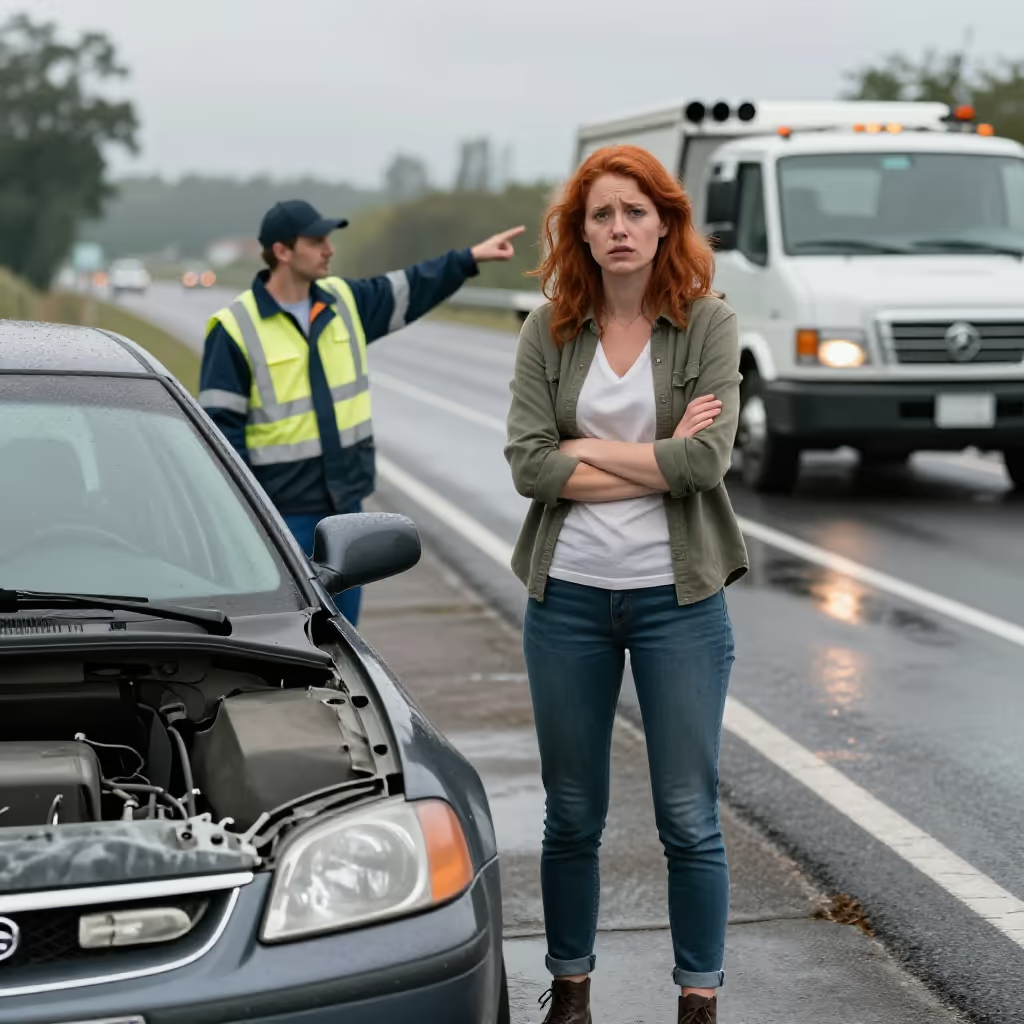
Die Reparatur dauert schlimmstenfalls zwei Tage, wenn noch ein Teil bestellt werden muss.
In the worst case, the repair will take two days if another part has to be ordered.
Die Reparatur dauert höchstens zwei Tage.
The repair will take at most two days.