

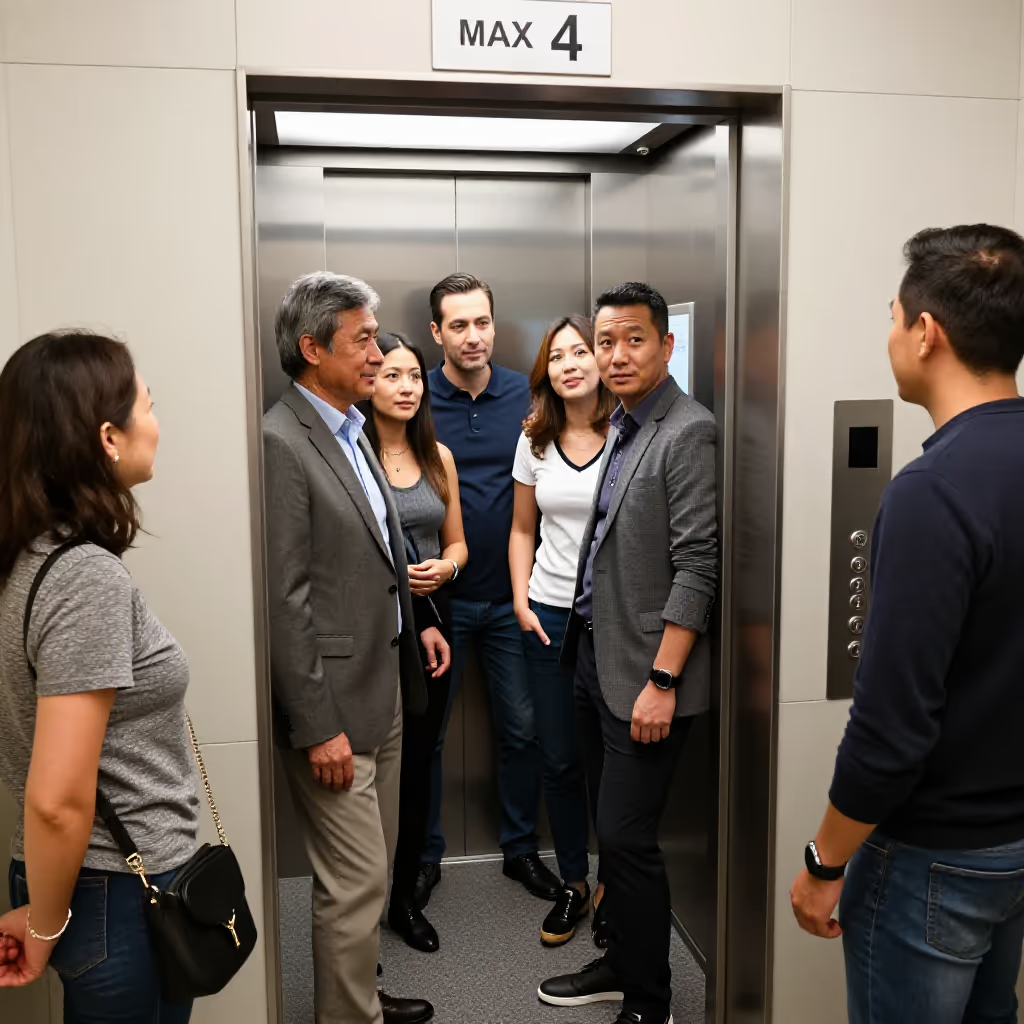
höchstens
at most
Expresses an upper limit; not more than a certain number, amount, or measure.
EXAMPLE
Die Reparatur wird höchstens 100 Euro kosten.
The repair will cost at most 100 euros.
at most
Loading your saved state.
at most
Expresses an upper limit; not more than a certain number, amount, or measure.
Die Reparatur wird höchstens 100 Euro kosten.
The repair will cost at most 100 euros.
at best
Expresses a low probability or a final, often not ideal possibility; at best.
Wenn wir jetzt losfahren, kommen wir höchstens noch zum Ende der Vorstellung an.
If we leave now, we'll at best arrive in time for the end of the performance.
The word is formed from the superlative of 'hoch' (high), 'höchst-', and the ending '-ens'. This ending forms adverbs that describe an outermost limit or quality, as in 'bestens' (very well) or 'frühestens' (at the earliest).
Die Lieferung erfolgt schnellstens, spätestens aber in drei Tagen.
Delivery will take place as quickly as possible, but no later than in three days.
As an adverb, 'höchstens' can stand flexibly in the sentence. It often stands directly before the number or amount it limits. If it stands in position 1, the verb follows directly after it.
Wir haben höchstens noch 20 Euro.
We have at most 20 euros left.
To distinguish the meanings, pay attention to the context. If 'höchstens' appears with a number or amount, it means 'not more than'. If it describes a possible but often unlikely result, it means 'at best'.
Das Paket wiegt höchstens zwei Kilogramm.
The package weighs at most two kilograms.
at most / possibly
Höchstens and allenfalls can both express an upper limit. Höchstens states the maximum neutrally and directly. Allenfalls sounds more formal and can additionally present the stated limit as merely possible or generously conceded; for a simple quantity or time indication, höchstens is usually clearer.
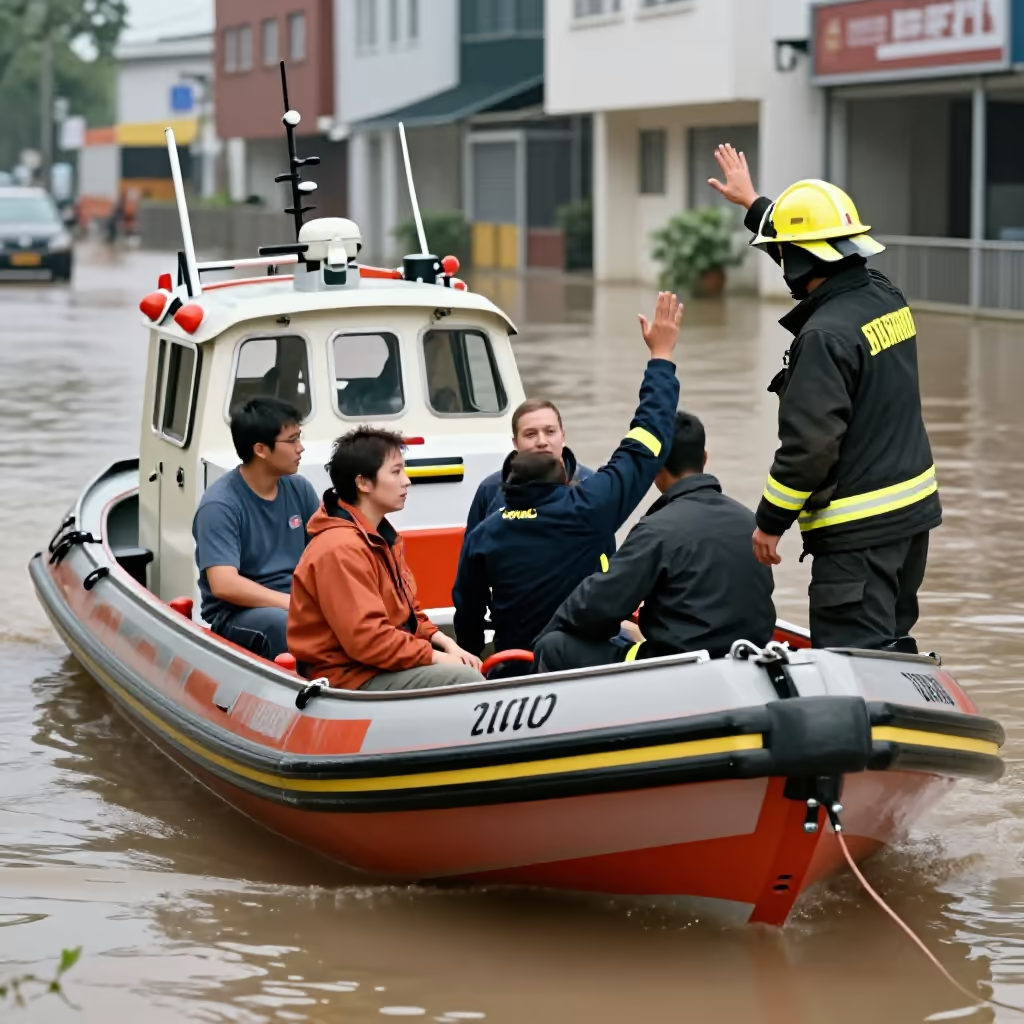
Die Fahrt dauert bei normalem Verkehr höchstens zwei Stunden.
With normal traffic, the journey takes at most two hours.
Selbst bei kleinen Verzögerungen dauert die Fahrt allenfalls zwei Stunden.
Even with minor delays, the journey will take at most two hours.