


der Schlitten
sled
A vehicle with runners that is used to glide over snow or ice, often for fun or for transport.
EXAMPLE
Die Kinder fuhren mit dem Schlitten den Hügel hinunter.
The children rode the sled down the hill.
sled / car / slide
Loading your saved state.
sled
A vehicle with runners that is used to glide over snow or ice, often for fun or for transport.
Die Kinder fuhren mit dem Schlitten den Hügel hinunter.
The children rode the sled down the hill.

car
A colloquial, often admiring term for a large, expensive, or impressive car.
Hast du seinen neuen Schlitten gesehen? Ein riesiger BMW!
Have you seen his new car? A huge BMW!
slide
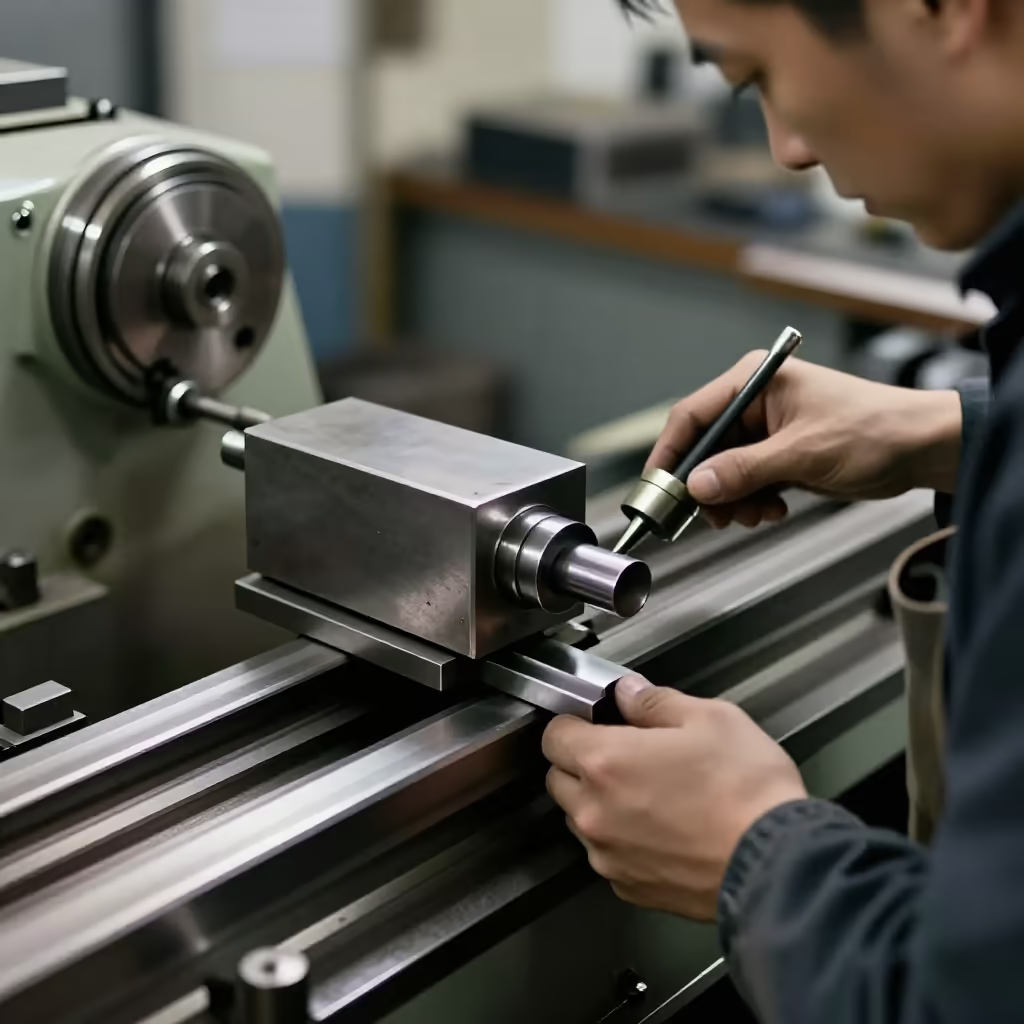
In technology, a movable component of a machine that slides on a guide, for example in a machine tool or a microscope.
Der Schlitten der Drehmaschine bewegt das Werkzeug präzise am Werkstück entlang.
The slide of the lathe moves the tool precisely along the workpiece.
The most common and important phrase with this word is 'Schlitten fahren' (to go sledding). This describes the activity of gliding down a snow-covered hill on a sled.
Am Wochenende wollen wir mit den Kindern Schlitten fahren gehen.
At the weekend we want to go sledding with the children.
In colloquial speech, 'Schlitten' is used as an admiring or approving expression for a large, expensive car. You should use this meaning only in informal conversations.
Wow, schau dir mal den tollen Schlitten an, der da parkt!
Wow, just look at that awesome car parked there!
The context makes clear which meaning is intended. Words like 'Schnee' (snow) or 'Winter' (winter) point to the vehicle. Car brands or words like 'teuer' (expensive) point to the car. Technical terms like 'Maschine' (machine) signal the component.
Der neue Schlitten hat über 100.000 Euro gekostet.
The new car cost over 100,000 euros.
In technical fields such as mechanical engineering or precision mechanics, 'Schlitten' refers to a movable component that slides on a guide. This meaning is limited to technical language.
Der Schlitten des Mikroskops muss für eine scharfe Abbildung justiert werden.
The microscope slide must be adjusted for a sharp image.
car / cart
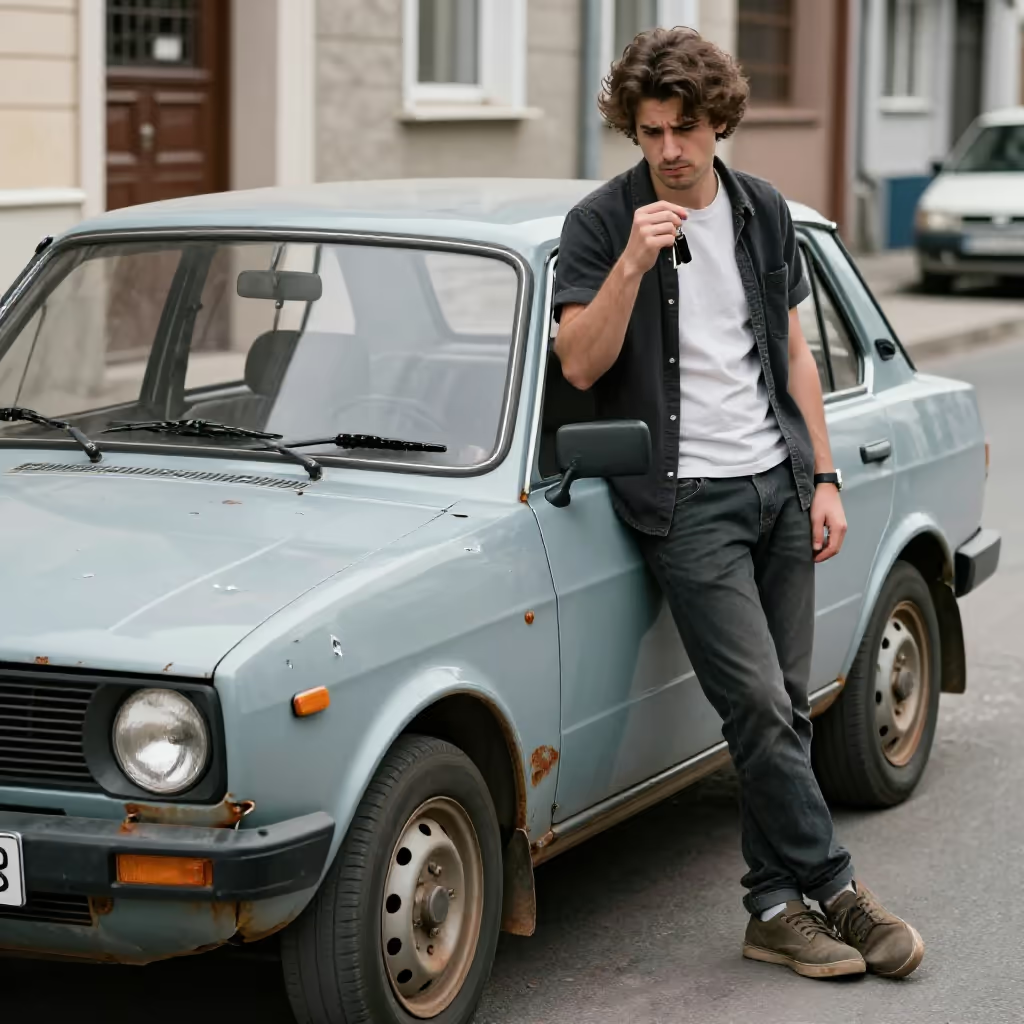
Schlitten and Karre are colloquial terms for a car, but they express different attitudes. Schlitten usually sounds admiring and suits a large or impressive car; Karre often sounds derogatory and is especially used for an old or bad car.
Vor dem Hotel stand ein großer, glänzender Schlitten.
A large, gleaming car was parked in front of the hotel.
Vor dem Hotel stand eine alte, rostige Karre.
An old, rusty car was parked in front of the hotel.