


schmecken
to taste good
To have a pleasant taste. This meaning is often used with a dative object to express to whom something tastes good.
EXAMPLE
Die Suppe schmeckt mir sehr gut.
The soup tastes very good to me.
to taste
Loading your saved state.
to taste good
To have a pleasant taste. This meaning is often used with a dative object to express to whom something tastes good.
Die Suppe schmeckt mir sehr gut.
The soup tastes very good to me.
to taste like
To have the taste of something specific.
Der Kuchen schmeckt stark nach Zitrone.
The cake tastes strongly of lemon.

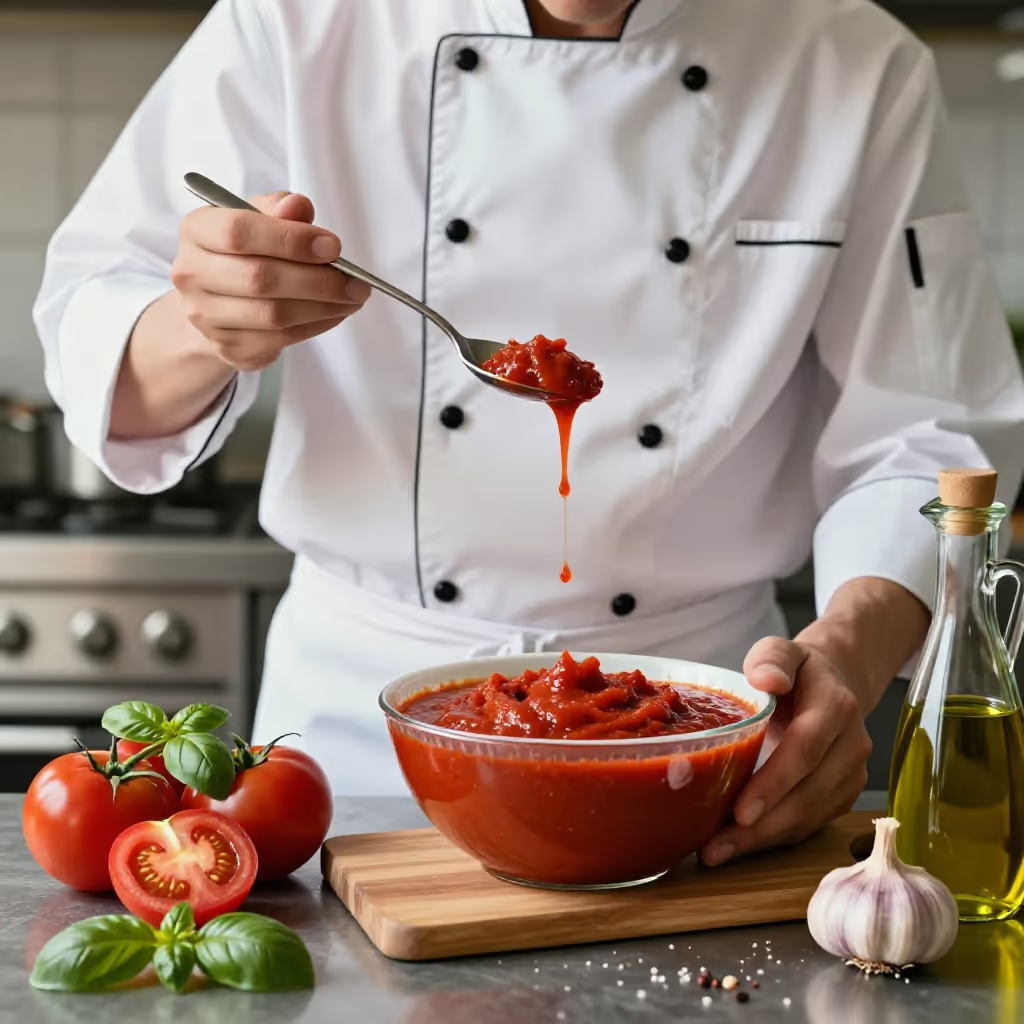
to taste
To perceive or identify a particular flavor with the sense of taste.
Ich kann den Knoblauch in der Soße deutlich schmecken.
I can clearly taste the garlic in the sauce.

to enjoy one's food
To enjoy one's food. Often used as an encouragement or friendly phrase directed at others.
Das Essen ist fertig, lasst es euch schmecken!
The food is ready; enjoy it!
The grammatical structure of 'schmecken' (to taste) changes depending on the meaning. When something tastes good, the food is the subject and the person is in the dative. When you actively perceive a taste, the person is the subject and the flavor is in the accusative.
Der Kaffee schmeckt mir heute besonders gut.
The coffee tastes especially good to me today.
To say that you find something tasty, you use 'schmecken' (to taste good) with a dative object. The subject of the sentence is always the food or drink.
Schmeckt dir die Pizza?
Do you like the pizza?
When you want to describe the specific taste of something, you use the fixed combination 'schmecken nach' (to taste like / of) followed by the dative.
Das Wasser schmeckt komisch, fast nach Metall.
The water tastes strange, almost like metal.
The phrase 'Lass es dir schmecken!' (Enjoy your food!) is a very common and friendly expression said before someone starts eating. It means 'Guten Appetit' (bon appétit) or 'Genieß dein Essen' (enjoy your food).
Hier ist deine Suppe, lass sie dir schmecken!
Here is your soup; enjoy it!
to cost / taste
Both verbs can be used when checking a flavor. „Kosten“ refers to taking a small amount to try, while „schmecken“ describes perceiving or identifying the flavor. Use „kosten“ when someone tries something, and „schmecken“ when someone determines what it tastes like.

Ich schmecke sofort, dass die Suppe zu salzig ist.
I can immediately taste that the soup is too salty.
Kann ich bitte die neue Suppe kosten?
May I taste the new soup?