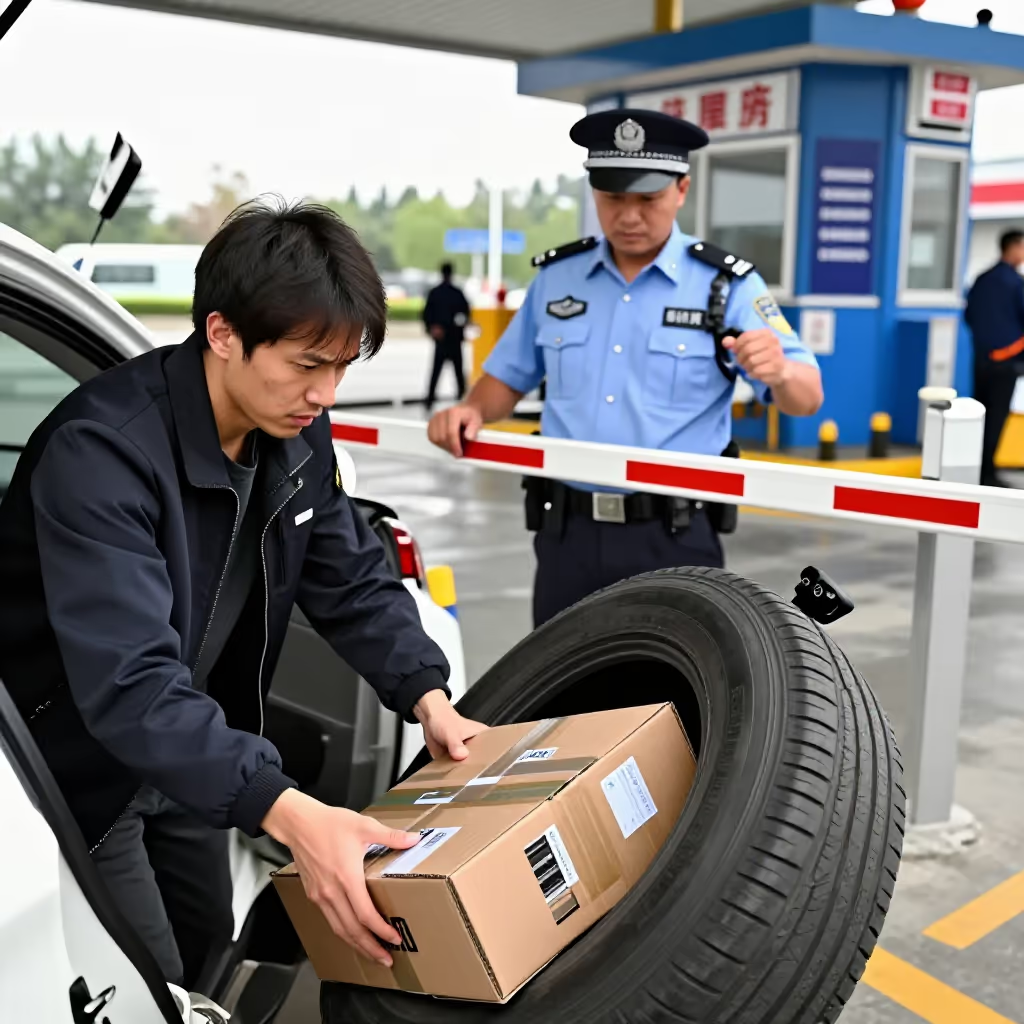
To secretly and illegally bring goods across a national border in order to avoid customs duties, taxes, or import bans.
example
Sie wurden dabei erwischt, wie sie versuchten, teure Uhren über die Grenze zu schmuggeln.
They were caught trying to smuggle expensive watches across the border.

Usage tips
Sentence structure
The basic structure is: someone smuggles something (accusative) to a place. The place is often introduced with a preposition such as 'über' (over/across), 'durch' (through), 'in' (into), or 'nach' (to).
EXAMPLE
Er versuchte, ein seltenes Tier durch den Zoll zu schmuggeln.
He tried to smuggle a rare animal through customs.
Reflexive use
When the verb is used reflexively with 'sich' (oneself), it means that a person secretly moves themselves to a place. The subject and the accusative object are then identical.
EXAMPLE
Die Jugendlichen haben sich ohne Eintrittskarte ins Kino geschmuggelt.
The teenagers sneaked into the cinema without a ticket.
Typical collocations
In its main meaning, 'schmuggeln' (to smuggle) is often combined with illegal goods. Typical objects are 'Zigaretten' (cigarettes), 'Drogen' (drugs), 'Alkohol' (alcohol), or 'Geld' (money). A common context is crossing a border.
EXAMPLE
Die Bande hat jahrelang Zigaretten über die Grenze geschmuggelt.
The gang smuggled cigarettes across the border for years.
Figurative meaning
In the figurative sense, 'schmuggeln' (to smuggle) is used for everyday, harmless situations in which you secretly bring something to a place where it is not allowed.
EXAMPLE
Ich habe mir eine Flasche Wasser in den Konzertsaal geschmuggelt.
I smuggled a bottle of water into the concert hall.
Compare with
confusable
schmuggeln vs einführen
to introduce / import
'einführen' and 'schmuggeln' can both have to do with bringing goods or things into a country or to a place. But the difference is very important: 'einführen' is neutral and can be completely legal, for example with goods for trade. 'Schmuggeln' means to bring something secretly and without permission, often across a border. The words can be confused because both describe movement across a border. If everything is permitted and official, you say 'einführen' (to import). If it is secret or illegal, you say 'schmuggeln' (to smuggle).
schmuggeln
Die Gäste wollten Alkohol in das Konzert schmuggeln, aber die Kontrolle war streng.
The guests wanted to smuggle alcohol into the concert, but the security checks were strict.
einführen
Das Unternehmen führt Kaffee aus Brasilien ein und verkauft ihn in Deutschland.
The company imports coffee from Brazil and sells it in Germany.