


der Schnabel
beak
The hard, protruding mouthpart of a bird.
EXAMPLE
Der Papagei knackte die Nüsse mit seinem kräftigen Schnabel.
The parrot cracked the nuts with its strong beak.
beak
Loading your saved state.
beak
The hard, protruding mouthpart of a bird.
Der Papagei knackte die Nüsse mit seinem kräftigen Schnabel.
The parrot cracked the nuts with its strong beak.

mouth
Colloquial and often derogatory for the human mouth.
Halt den Schnabel, ich will jetzt meine Ruhe haben!
Shut your mouth; I want some peace and quiet now!
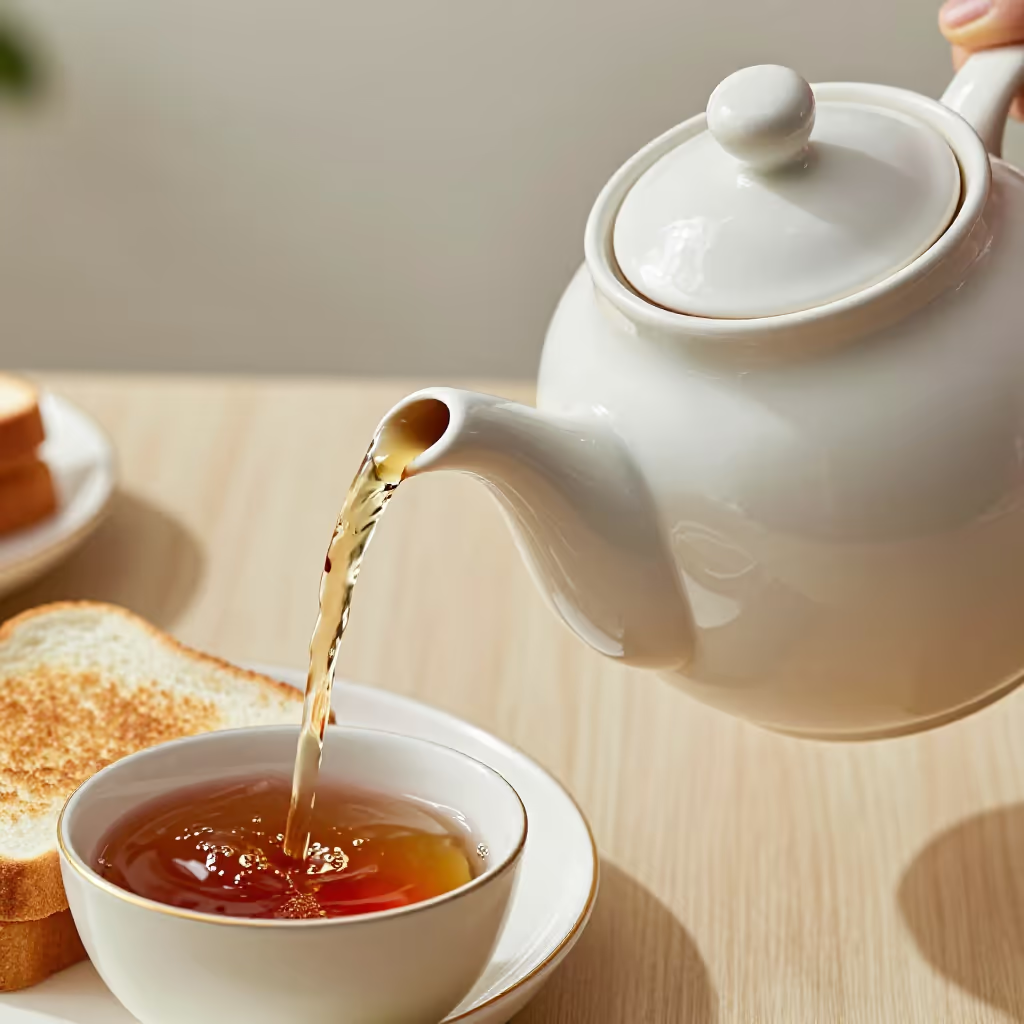
spout
The spout-shaped pouring opening on a vessel, for example on a pot or jug.
Gieß das Wasser vorsichtig aus dem Schnabel der Kanne.
Pour the water carefully from the spout of the pot.
The meaning of 'Schnabel' (beak) is usually clear. In a biological context, it refers to birds; colloquially, to the human mouth; and with objects, to a pouring opening.
Der Pelikan hat einen riesigen Schnabel.
The pelican has a huge beak.
When 'Schnabel' (beak/mouth) is used for the human mouth, it is always colloquial and often rude or disrespectful. You should use it only in very informal situations.
Dem Kind ist ein großer Schnabel gewachsen, es redet den ganzen Tag.
The child has gotten a big mouth; he talks all day.
The command 'Halt den Schnabel!' means 'Be quiet!' It is a very common but rude expression and is often used when someone is annoyed.
Als er nicht aufhörte zu reden, sagte sie wütend: „Jetzt halt endlich den Schnabel!“
When he wouldn't stop talking, she said angrily, 'Now finally shut your mouth!'
mouth
Mund is the neutral term for the corresponding body part of a human being. Schnabel can also refer to the human mouth, but it sounds colloquial and often mocking or derogatory. Mund therefore fits a matter-of-fact statement, while Schnabel can be used in a deliberately disrespectful remark.

Spöttisch sagte er, sein Bruder solle endlich den Schnabel halten.
Mockingly, he said that his brother should finally shut his mouth.
Die Ärztin untersucht den Mund des Patienten.
The doctor examines the patient's mouth.