

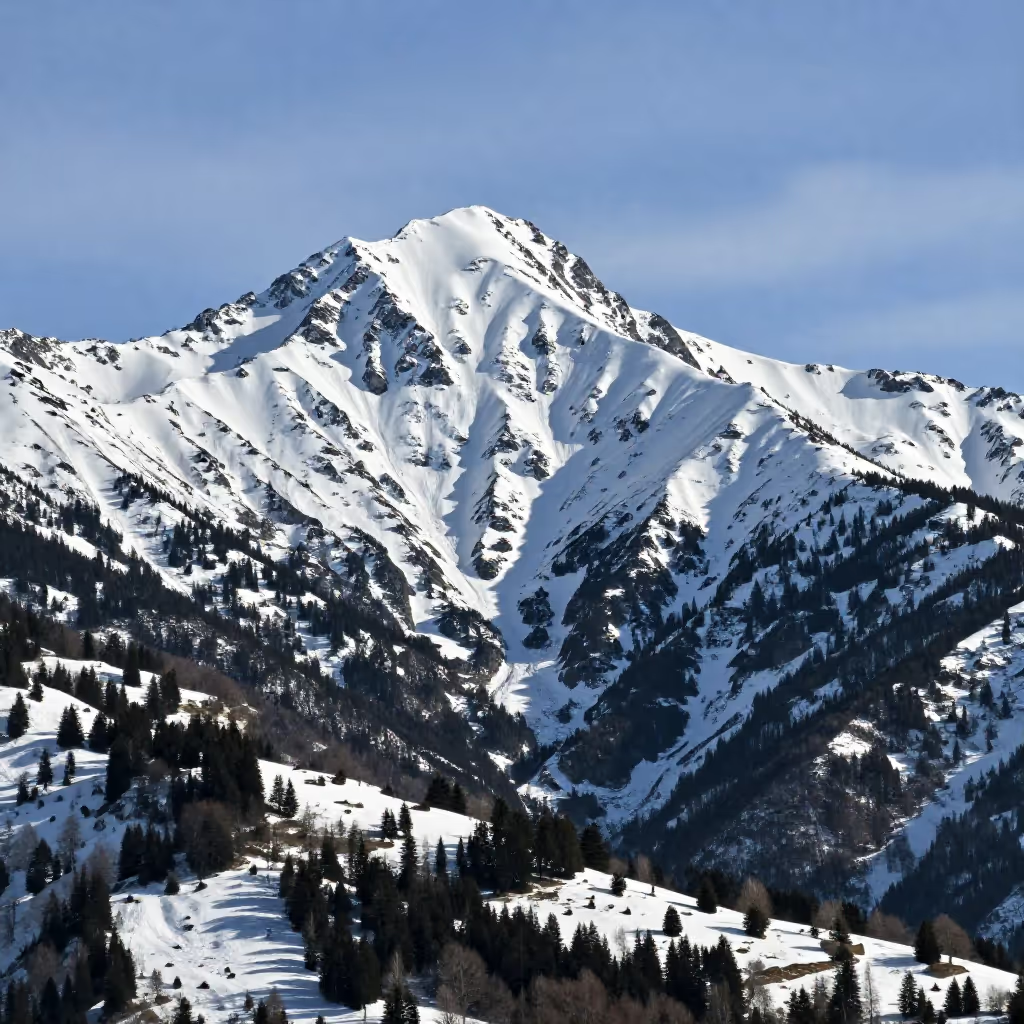
der Schneeberg
snow-covered mountain
A mountain whose peak or slopes are covered with snow.
EXAMPLE
In der Ferne leuchtete ein hoher Schneeberg in der Morgensonne.
In the distance, a high snow-covered mountain shone in the morning sun.
snow-covered mountain / snow pile
Loading your saved state.
snow-covered mountain
A mountain whose peak or slopes are covered with snow.
In der Ferne leuchtete ein hoher Schneeberg in der Morgensonne.
In the distance, a high snow-covered mountain shone in the morning sun.
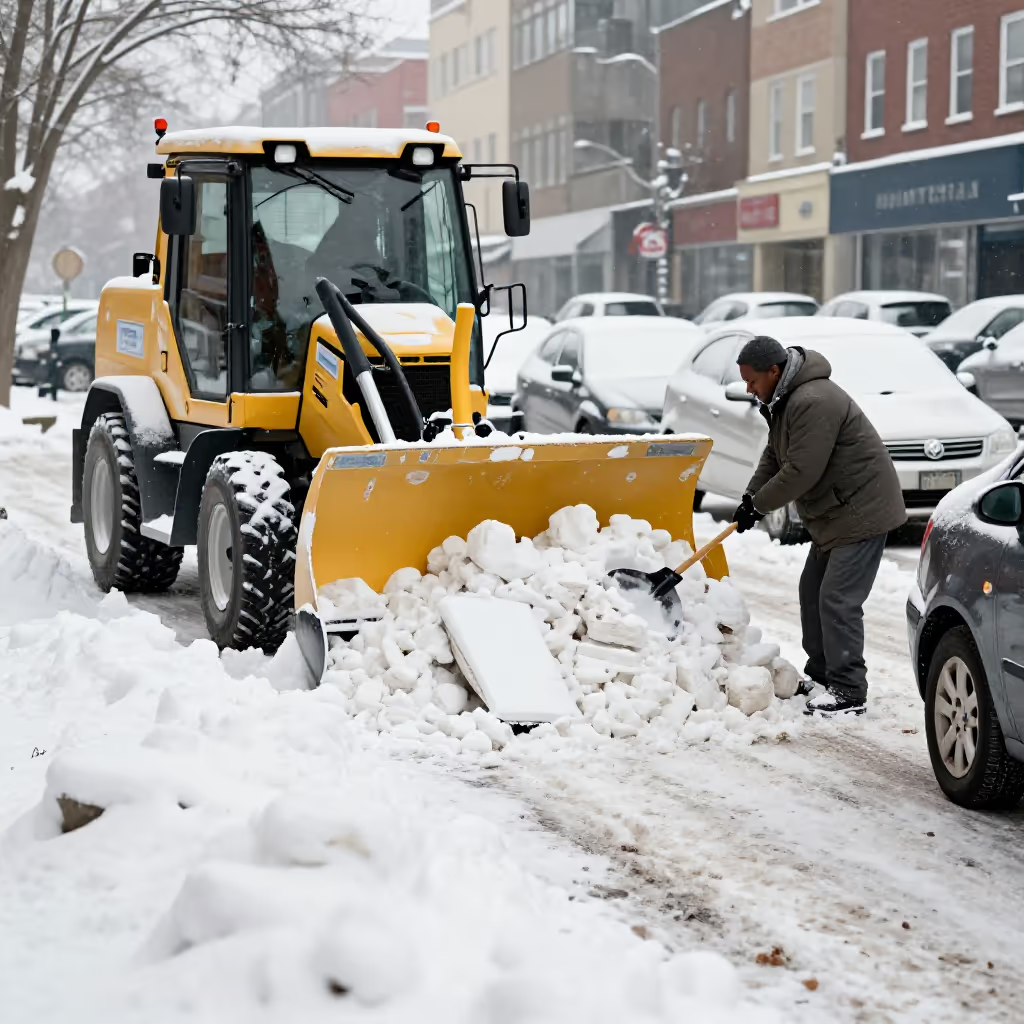
snow pile
A large pile of snow that has been pushed together, as can happen for example because of a snowplow.
Die Kinder kletterten auf den riesigen Schneeberg, den der Winterdienst am Straßenrand aufgetürmt hatte.
The children climbed onto the huge snow pile that the road maintenance crew had piled up at the side of the road.
This word has a very simple structure: it consists of 'der Schnee' (snow) and 'der Berg' (mountain). So the meaning is literally a 'Berg aus Schnee' (mountain of snow) or a 'Berg mit Schnee' (mountain with snow).
Vom Tal aus sahen wir die beeindruckenden Schneeberge der Alpen.
From the valley, we saw the impressive snow-covered mountains of the Alps.
Whether a real mountain or just a pile of snow is meant is revealed by the context. Words like 'Gipfel' (summit), 'Alpen' (Alps), or 'in der Ferne' (in the distance) point to a real mountain. Terms like 'am Straßenrand' (at the side of the road), 'im Garten' (in the garden), or 'Schneepflug' (snowplow) point to a piled-up heap of snow.
Die Wanderer erreichten den Gipfel des Schneebergs am Nachmittag.
The hikers reached the summit of the snow-covered mountain in the afternoon.
When a pile of snow is meant, it is often created by human activity. Typical verbs in this context are 'auftürmen' (to pile up), 'zusammenschieben' (to push together), or 'aufhäufen' (to heap up).
Der Schneepflug hat den Schnee zu einem hohen Berg aufgetürmt.
The snowplow piled the snow up into a high mound.