

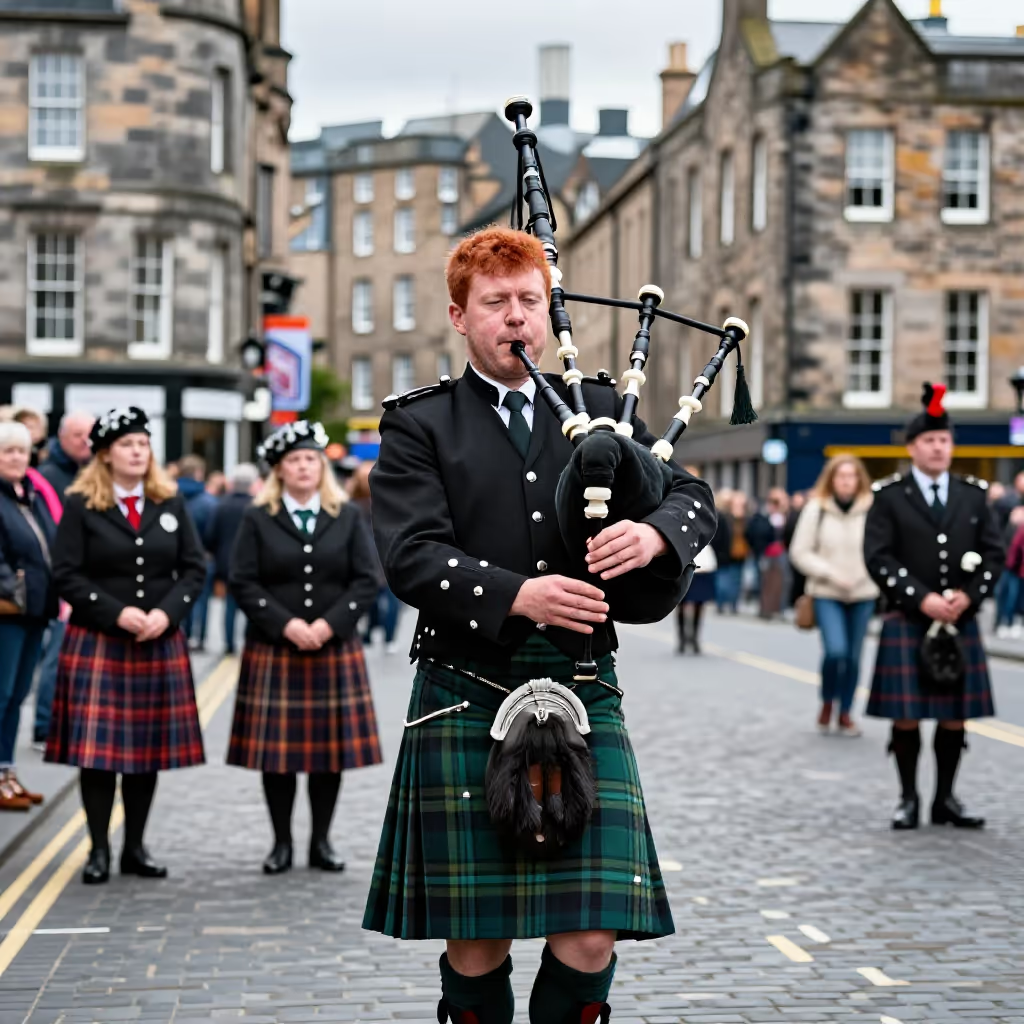
schottisch
Scottish
Refers to Scotland, its inhabitants, its culture, or its language.
EXAMPLE
Er trägt bei feierlichen Anlässen einen traditionellen schottischen Kilt.
He wears a traditional Scottish kilt on formal occasions.
Scottish
Loading your saved state.
Scottish
Refers to Scotland, its inhabitants, its culture, or its language.
Er trägt bei feierlichen Anlässen einen traditionellen schottischen Kilt.
He wears a traditional Scottish kilt on formal occasions.
The adjective 'schottisch' (Scottish) belongs to a word family: 'Schottland' (Scotland) is the country, 'der Schotte' (the Scotsman) or 'die Schottin' (the Scotswoman) are the people, and 'schottisch' describes things that come from Scotland or are typical of it.
Meine Nachbarin ist Schottin und kommt aus Glasgow.
My neighbor is Scottish and comes from Glasgow.
Adjectives derived from geographic names and ending in '-isch' are written in lowercase in German. This is a common mistake among learners.
Ich mag die schottische Landschaft sehr.
I really like the Scottish landscape.
Common and well-known combinations are 'schottischer Whisky' (Scottish whisky), 'das schottische Hochland' (the Scottish Highlands), 'ein schottischer Akzent' (a Scottish accent), or 'die schottische Flagge' (the Scottish flag).
Er hat einen starken schottischen Akzent.
He has a strong Scottish accent.
Rhinelander
Schottisch and der Rheinländer can both occur in the context of a dance, but they have different functions. Schottisch is an adjective for Scotland or its culture, whereas der Rheinländer is a noun referring to a specific partner dance. Use them to describe the origin or type of a dance, or to name the dance itself.
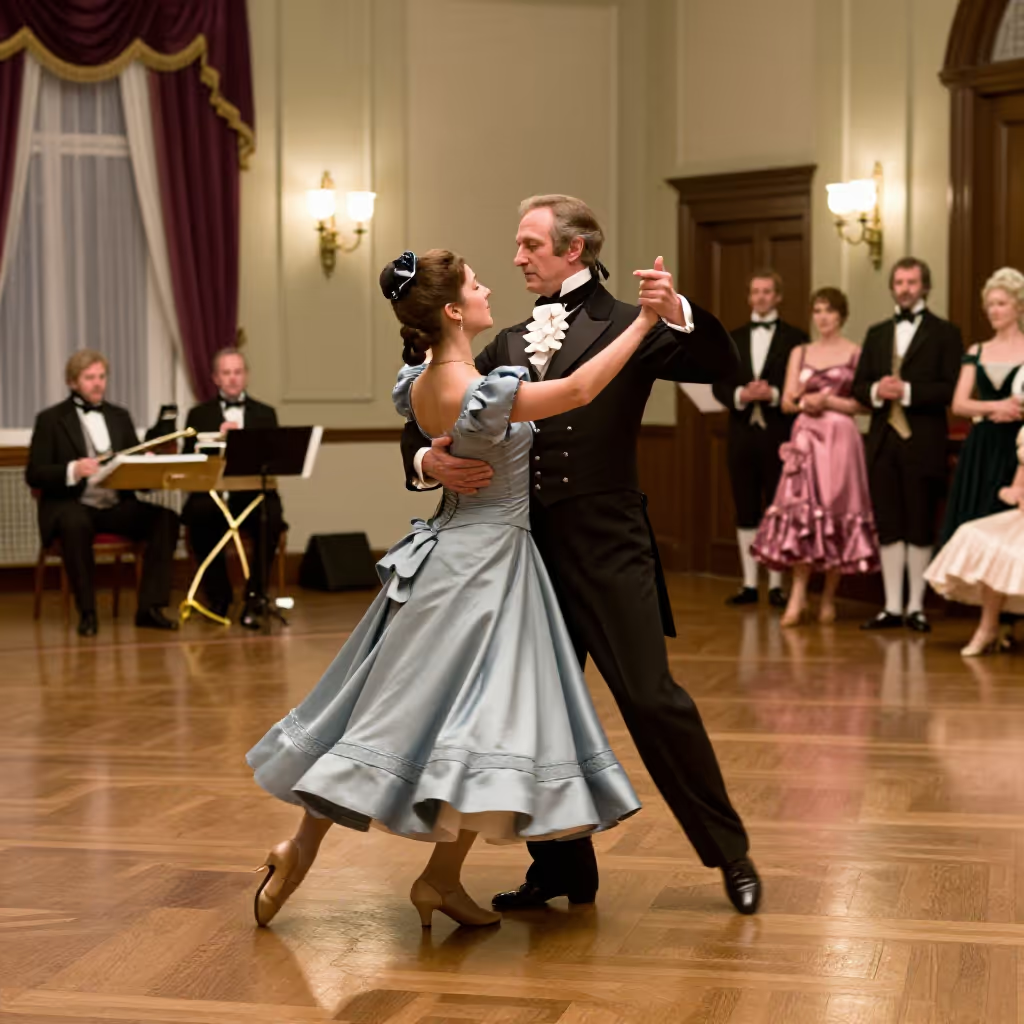
Bei der Feier tanzten wir einen schottischen Paartanz.
At the celebration, we danced a Scottish partner dance.
Bei der Feier spielte die Kapelle einen Rheinländer zum Tanzen.
At the celebration, the band played a Rhinelander for dancing.