

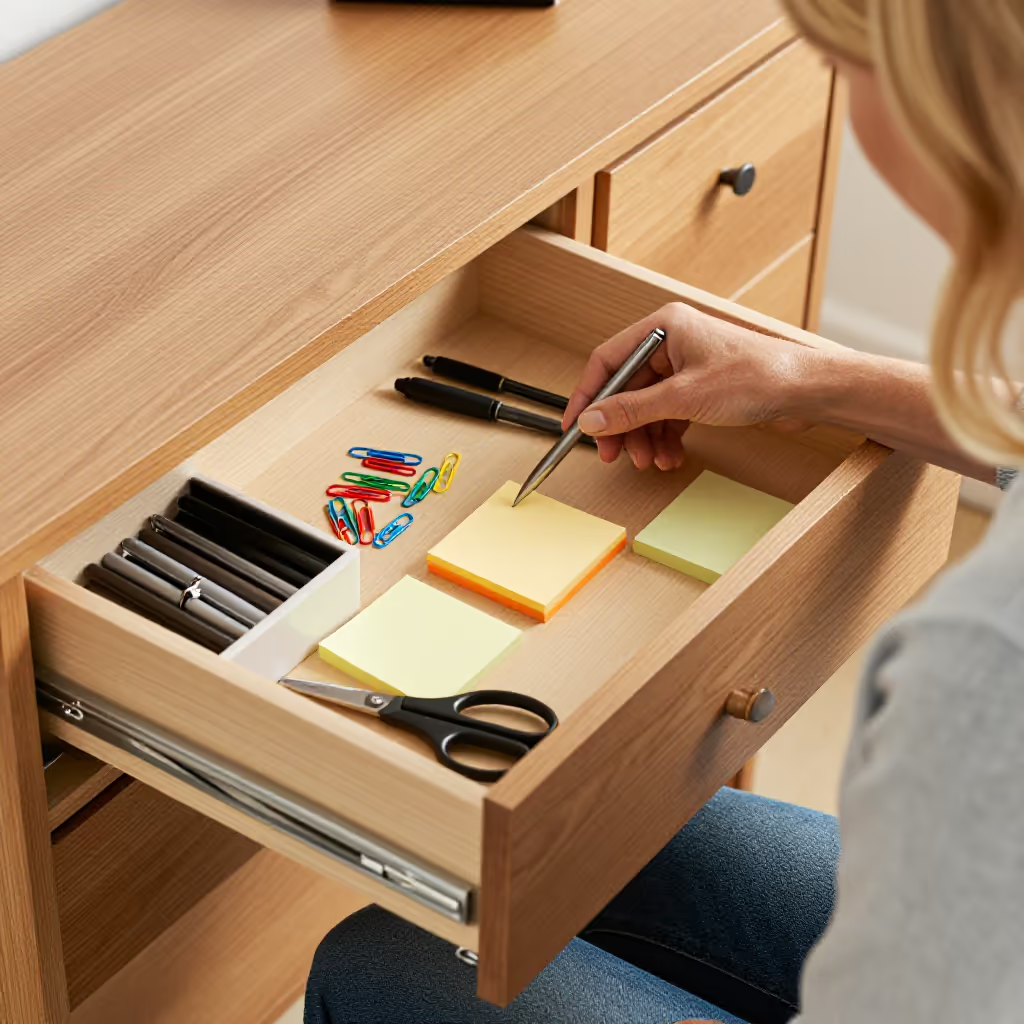
die Schublade
drawer
A container in the shape of a box without a lid that can be pushed into and pulled out of a piece of furniture such as a desk or a chest of drawers.
Die Socken sind in der obersten Schublade.
The socks are in the top drawer.

drawer
Loading your saved state.
drawer
A container in the shape of a box without a lid that can be pushed into and pulled out of a piece of furniture such as a desk or a chest of drawers.
Die Socken sind in der obersten Schublade.
The socks are in the top drawer.
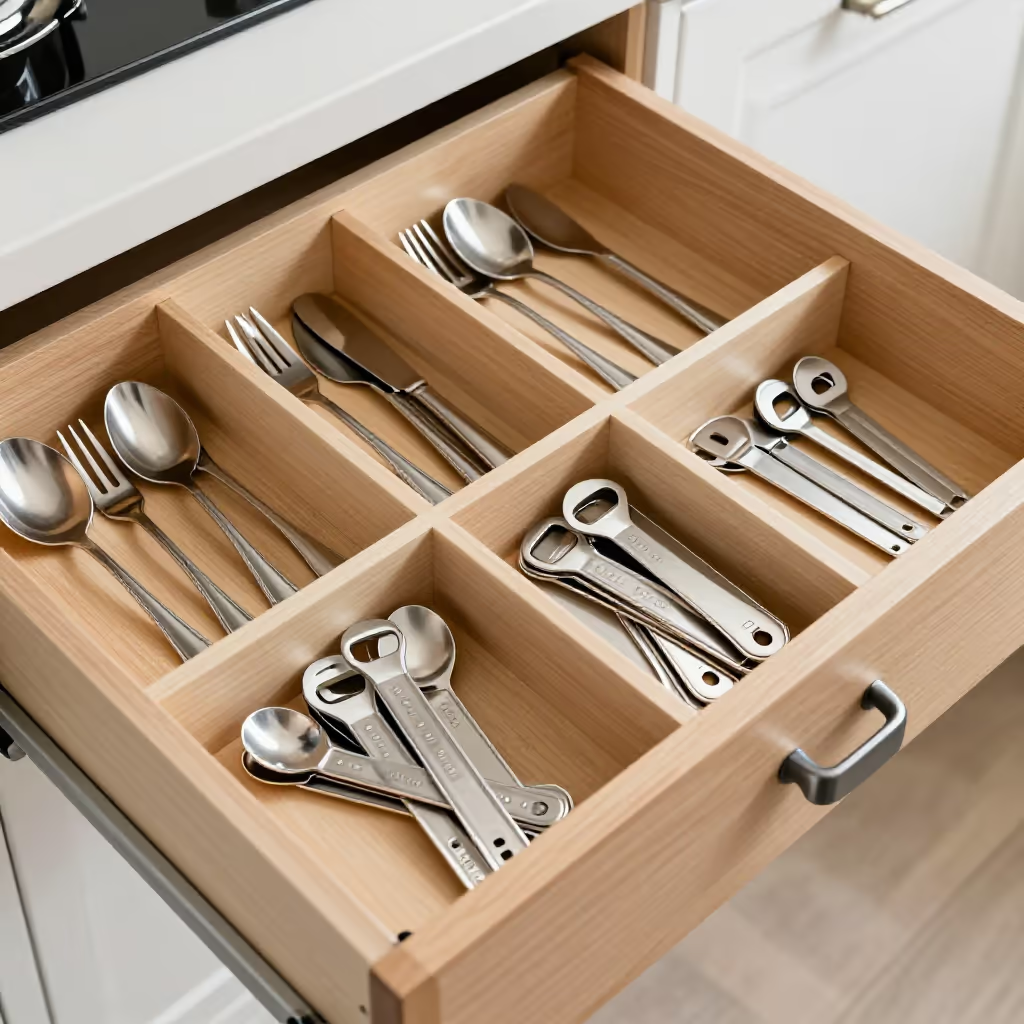
The word 'Schublade' (drawer) is made up of 'Schub' (push, from the verb 'schieben' — to push) and 'Lade' (an old word for box). So it is literally a box that you can push.
Er schob die schwere Kiste mühsam über den Boden.
He laboriously pushed the heavy box across the floor.
In connection with a drawer, the verbs 'öffnen' (to open) and 'schließen' (to close) are often used, or the somewhat more figurative verbs 'aufziehen' (to pull open) and 'zumachen' (to close).
Kannst du bitte die Schublade wieder zumachen?
Can you please close the drawer again?
The idiom 'jemanden in eine Schublade stecken' (to pigeonhole someone) is very common. It means to judge a person superficially and based on prejudice, without really knowing them.
Es ist unfair, Menschen in Schubladen zu stecken, nur weil sie anders aussehen.
It is unfair to pigeonhole people just because they look different.
Closely related to the idiom is the expression 'in Schubladen denken' (to think in rigid categories). It describes the tendency to see the world and people in simple, fixed categories.
Ein offener Mensch versucht, nicht in Schubladen zu denken.
An open-minded person tries not to think in rigid categories.
category
'die Kategorie' and 'die Schublade' can both have to do with classification. 'Kategorie' is neutral: you classify things according to common features. In this relation, 'Schublade' does not mean the piece of furniture, but a figurative classification. In the phrase 'jemanden in eine Schublade stecken' (to pigeonhole someone), it sounds negative because you judge someone too quickly and too simplistically. The words can be confused because both refer to a kind of group. For objective sorting, 'Kategorie' fits. When it is about prejudices or overly quick judgments about people, 'Schublade' fits.

Nur wegen seiner Kleidung sollte man ihn nicht gleich in eine Schublade stecken.
You shouldn't immediately pigeonhole him just because of his clothes.
Welche Kategorie passt für diesen Kurs: Sprache, Beruf oder Freizeit?
Which category fits this course: language, work, or leisure?