

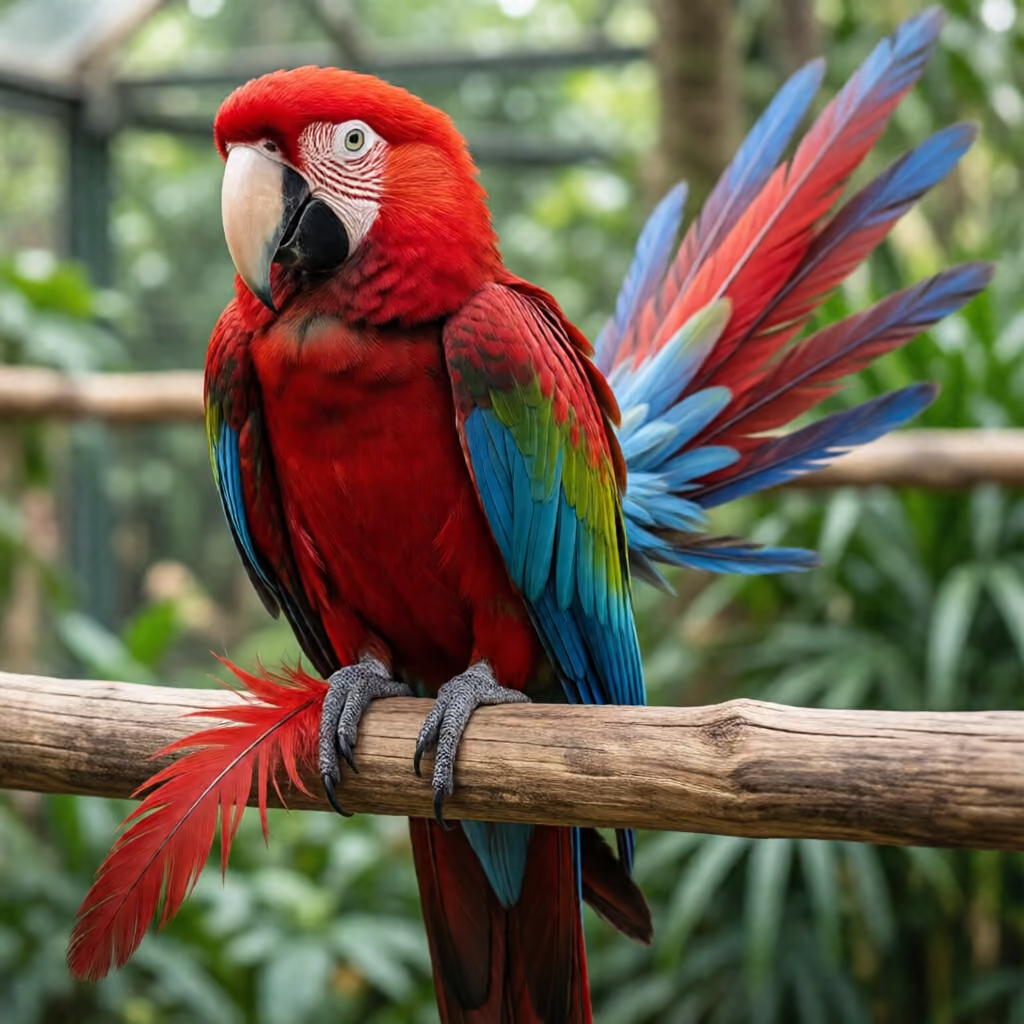
die Schwanzfeder
tail feather
A feather on a bird’s tail that helps with steering and balance during flight.
EXAMPLE
Der Papagei hat eine lange rote Schwanzfeder verloren.
The parrot has lost a long red tail feather.
tail feather
die Schwanzfeder, die Schwanzfedern
Loading your saved state.
tail feather
A feather on a bird’s tail that helps with steering and balance during flight.
Der Papagei hat eine lange rote Schwanzfeder verloren.
The parrot has lost a long red tail feather.
| gender | feminine die |
|---|---|
| plural | die Schwanzfedern |
| genitive | der Schwanzfeder |
| singular | plural | |
|---|---|---|
| nominative | die Schwanzfeder | die Schwanzfedern |
| accusative | die Schwanzfeder | die Schwanzfedern |
| dative | der Schwanzfeder | den Schwanzfedern |
| genitive | der Schwanzfeder | der Schwanzfedern |
The article changes with the case; it is shown in colour.
'Schwanzfeder' (tail feather) is made up of 'Schwanz' (tail) and 'Feder' (feather). The first part describes where the feather is located on the bird.
Bei der Untersuchung entdeckte die Tierärztin eine beschädigte Schwanzfeder.
During the examination, the veterinarian discovered a damaged tail feather.
Common collocations include 'eine Schwanzfeder verlieren' (to lose a tail feather), 'lange Schwanzfedern haben' (to have long tail feathers), and 'die Schwanzfedern spreizen' (to spread one's tail feathers). These expressions are especially common in descriptions of birds and their plumage.
Der Pfau spreizte seine langen Schwanzfedern und zeigte sein farbenprächtiges Gefieder.
The peacock spread its long tail feathers and displayed its colorful plumage.
'Schwanzfeder' (tail feather) is a factual term used to describe birds and is suitable both for everyday descriptions and for natural history texts.
Im Museum erklärte ein Schild, warum die Schwanzfeder für den Flug wichtig ist.
At the museum, a sign explained why the tail feather is important for flight.