

der Seetang
seaweed
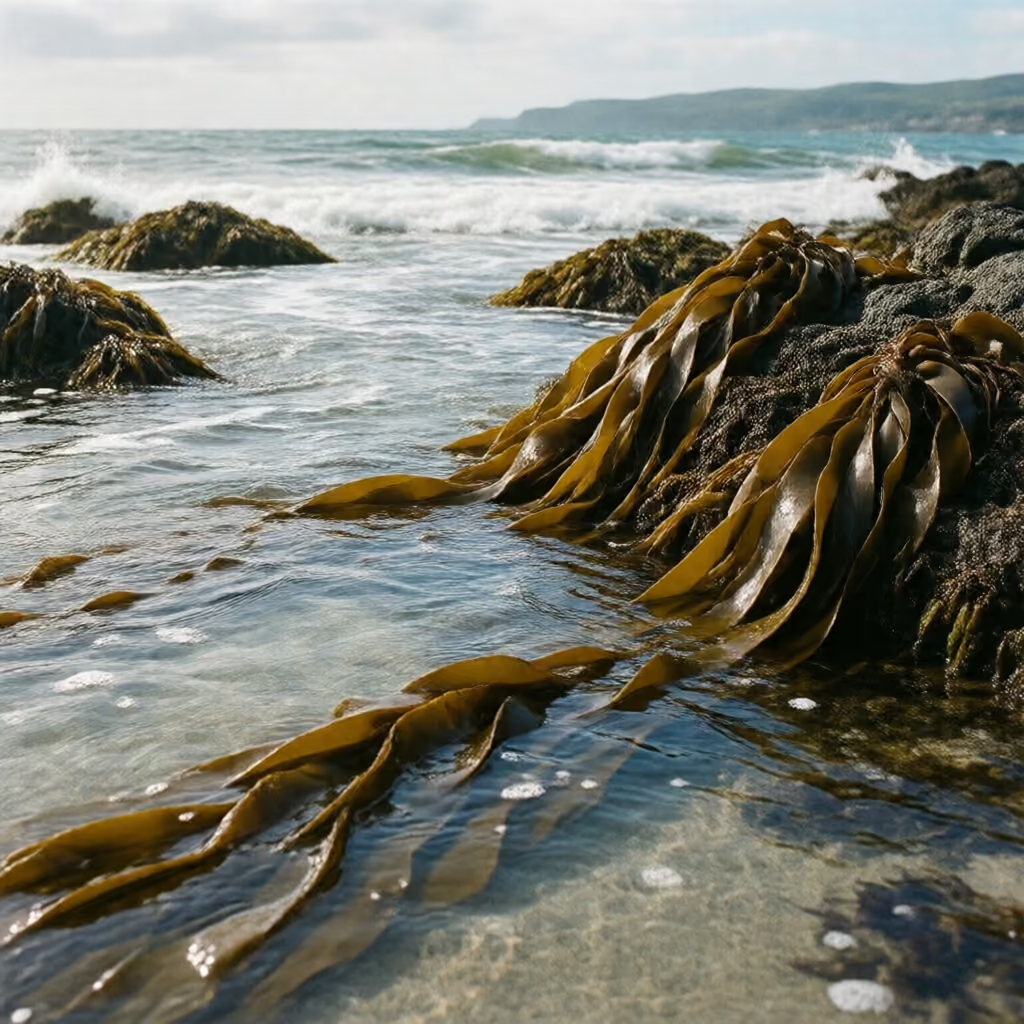
Algae that grow in the sea, usually attached to rocks or the seabed, and often have long, ribbon-like leaves.
EXAMPLE
Bei Ebbe lag viel Seetang am Strand.
At low tide, there was a lot of seaweed on the beach.
seaweed
der Seetang, die Seetange
Loading your saved state.
seaweed
Algae that grow in the sea, usually attached to rocks or the seabed, and often have long, ribbon-like leaves.
Bei Ebbe lag viel Seetang am Strand.
At low tide, there was a lot of seaweed on the beach.
| gender | masculine der |
|---|---|
| plural | die Seetange |
| genitive | des Seetanges |
| singular | plural | |
|---|---|---|
| nominative | der Seetang | die Seetange |
| accusative | den Seetang | die Seetange |
| dative | dem Seetang | den Seetangen |
| genitive | des Seetanges des Seetangs | der Seetange |
The article changes with the case; it is shown in colour.
„Seetang“ is made up of „See“ (sea) and „Tang“ (seaweed). So it means seaweed from the ocean.
Zwischen den Felsen wächst dichter Seetang.
Dense seaweed grows between the rocks.
„Seetang“ is often used with verbs such as „anspülen“ (to wash ashore), „sammeln“ (to collect), and „verarbeiten“ (to process). The phrase „Seetang als Dünger“ (seaweed as fertilizer) is also common.
Nach dem Sturm wurde viel Seetang an den Strand gespült.
After the storm, a lot of seaweed was washed ashore.
You typically find „Seetang“ in descriptions of coasts, beaches, rocks, and low tide. Signal words such as „angespült“ (washed ashore), „am Meeresboden“ (on the seabed), or „bei Ebbe“ (at low tide) indicate this context.
Bei Ebbe konnte man den Seetang zwischen den Steinen deutlich sehen.
At low tide, you could clearly see the seaweed between the stones.