

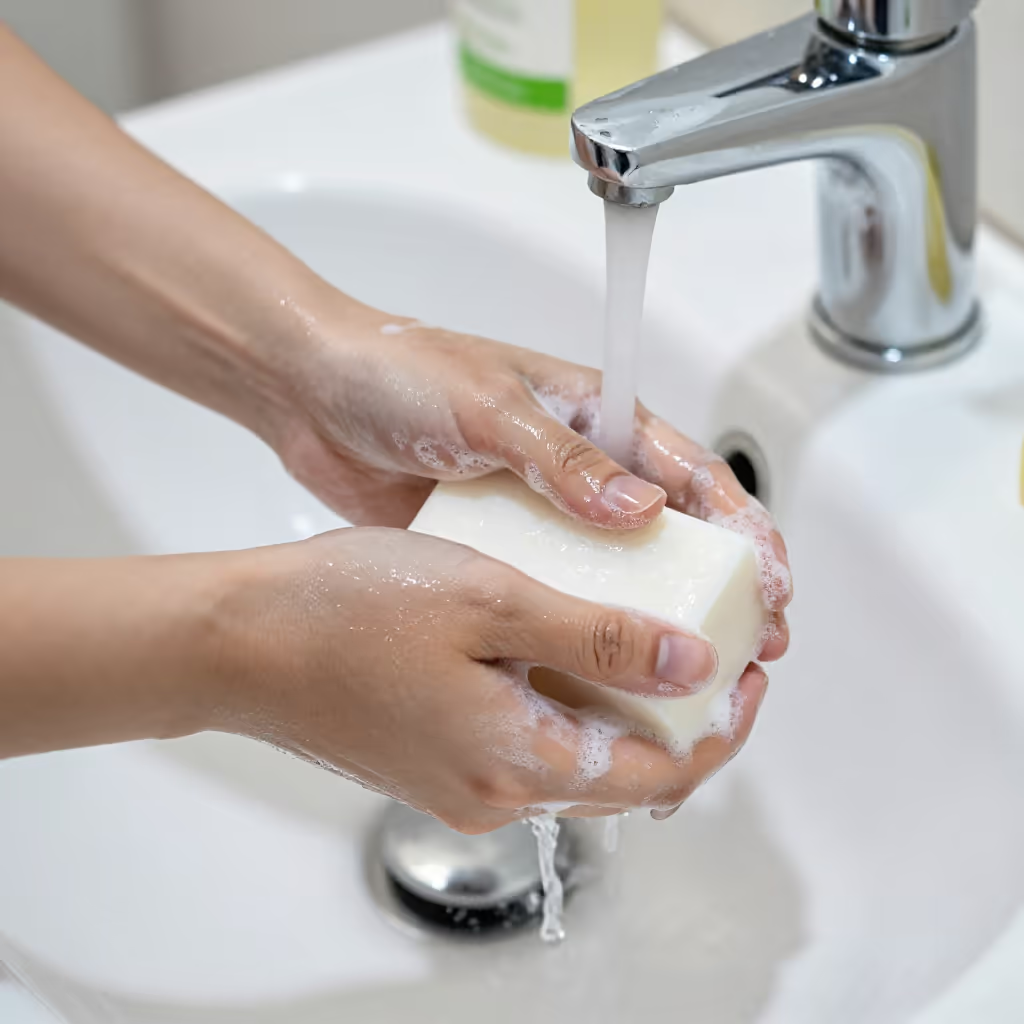
A substance used for cleaning that dissolves dirt when combined with water. It is made from fats or oils and an alkali and is available as a solid bar or in liquid form.
example
Bitte wasch dir vor dem Essen die Hände mit Seife.
Please wash your hands with soap before eating.
Usage tips
Compound words
'Seife' (soap) is the first part of many familiar words. A 'Seifenblase' (soap bubble) is a bubble made from soapy water, and a 'Seifenoper' (soap opera) is a type of television series.
EXAMPLE
Die Kinder lieben es, im Garten Seifenblasen zu machen.
The children love making soap bubbles in the garden.
Countable and uncountable
'Seife' (soap) can be countable or uncountable. When you mean the material, it is uncountable. When you mean a solid bar, you can count it.
EXAMPLE
Wir brauchen noch Seife für das Badezimmer.
We still need soap for the bathroom.
Typical collocations
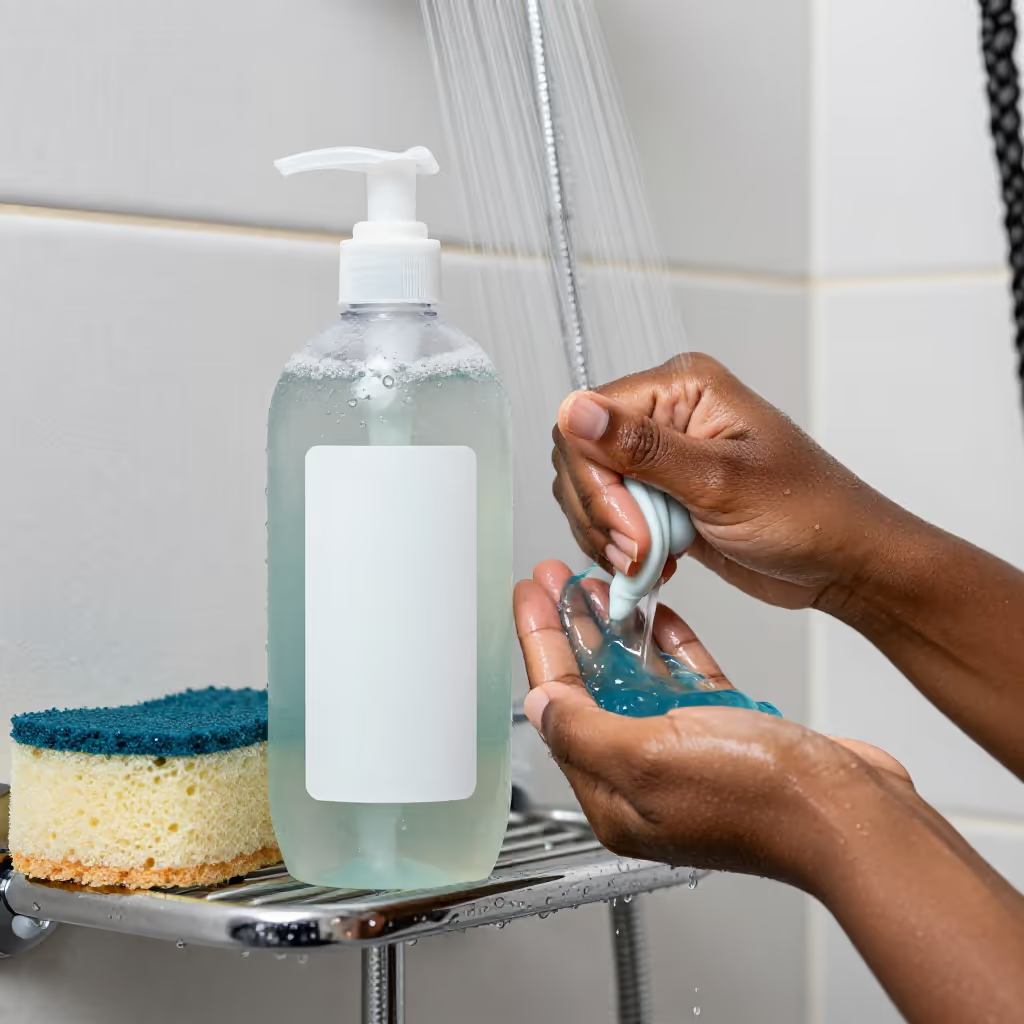
A distinction is made between 'feste Seife' (solid soap, also 'ein Stück Seife' — a bar of soap) and 'flüssige Seife' (liquid soap). The typical sentence is 'sich die Hände mit Seife waschen' (to wash one’s hands with soap).
EXAMPLE
Ich bevorzuge flüssige Seife, weil sie hygienischer ist.
I prefer liquid soap because it is more hygienic.
Compare with
near_synonym · confusable
Seife vs Shampoo
shampoo
'Seife' and 'Shampoo' are both products for washing and cleaning. The main difference is the part of the body: 'Seife' is usually used for hands or the body, while 'Shampoo' is used for hair. Both can be liquid, so they are easy to confuse, especially in the bathroom or when shopping. When it is about hair, 'Shampoo' is natural. When you wash your hands or body, you usually say 'Seife'.
Seife
Im Bad liegt eine neue Seife für die Gäste.
There is a new bar of soap in the bathroom for the guests.
Shampoo
Nach dem Schwimmen wäscht sie ihre Haare mit Shampoo.